As enterprises undertake large-scale agile transformations and recognize the complexity of cultural change, demand for experienced Agile Coaches who can guide these initiatives continues to grow. This senior role offers exceptional opportunities for those with extensive agile experience who want to drive organizational change and help companies realize the full benefits of agile ways of working.
What is an Agile Coach?
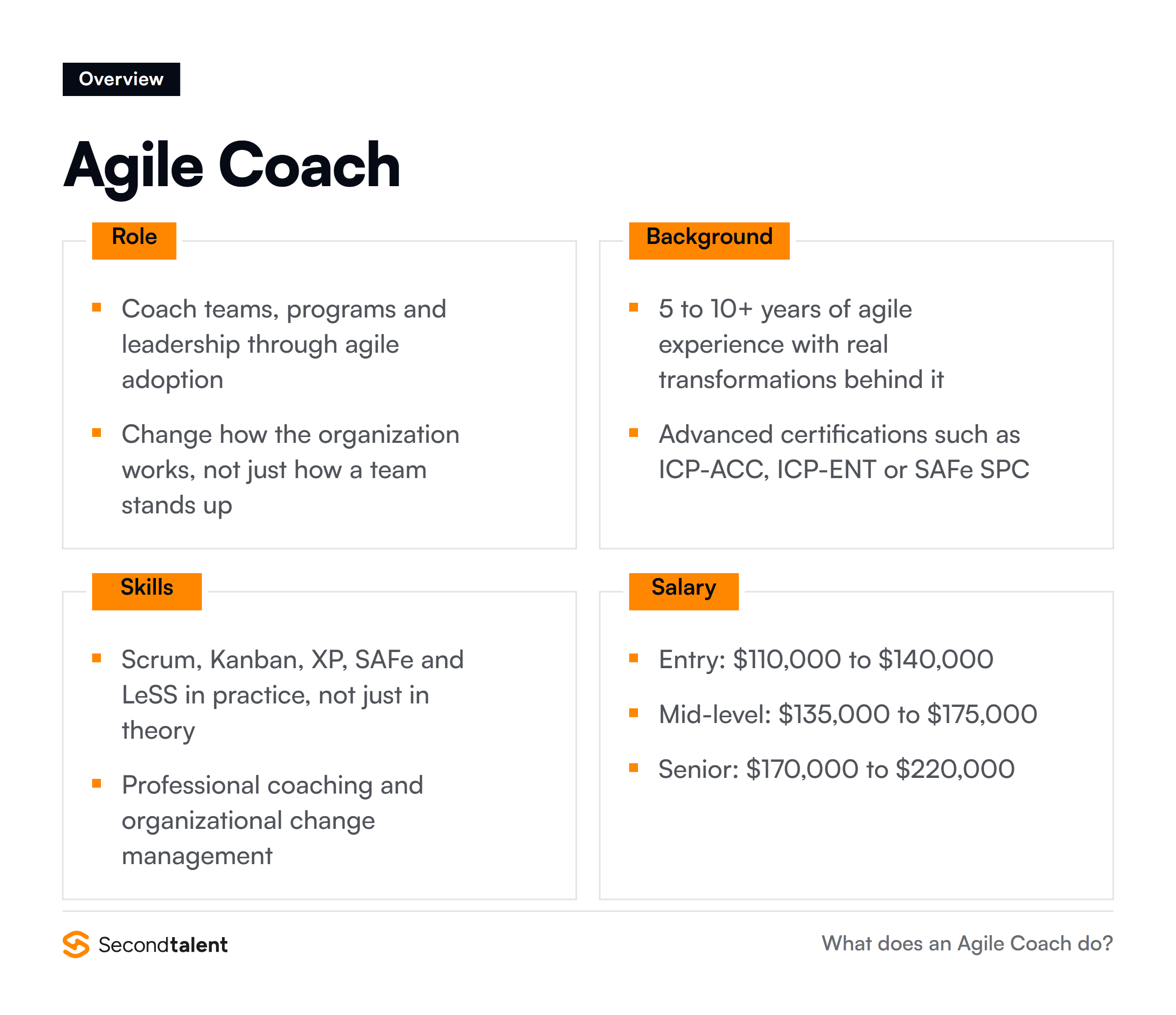
An Agile Coach is a senior change agent and mentor who helps organizations adopt and optimize agile practices beyond individual teams, working at team, program, and enterprise levels to embed agile principles throughout the organization. They assess organizational readiness, design transformation strategies, coach teams and leaders, facilitate large-scale agile adoption, remove organizational impediments, and help build sustainable agile cultures. Agile Coaches work on organizational transformation rather than just facilitating single teams.
These professionals assess current state and agile maturity, develop transformation roadmaps and strategies, coach executives and leaders on agile leadership, mentor Scrum Masters and teams on advanced practices, facilitate workshops on agile values and principles, help design organizational structures that support agility, and measure transformation progress and outcomes.
The position requires extensive agile experience (typically 5-10+ years), deep knowledge of multiple agile frameworks (Scrum, Kanban, SAFe, LeSS), coaching and facilitation expertise, change management skills, business acumen to understand organizational context, and credibility to influence senior leadership. Agile Coaches must think systemically about organizations and address cultural, structural, and process changes simultaneously.
Agile Coach Job Market and Career Opportunities
The job market for Agile Coaches is strong as organizations undertake large-scale agile transformations. Large enterprises, consulting firms, government agencies, and mid-size companies scaling agile beyond single teams actively seek experienced Agile Coaches to guide transformation initiatives.
Salary ranges for Agile Coaches reflect seniority and organizational impact:
- Entry-Level Coach (0-2 years coaching): $110,000 – $140,000 annually, typically transitioning from senior Scrum Master roles and learning coaching practices.
- Mid-Level (2-5 years): $135,000 – $175,000 annually, coaching multiple teams and leading transformation initiatives independently.
- Senior-Level (5-10 years): $170,000 – $220,000 annually, leading enterprise transformations and coaching executive leadership.
- Principal/Enterprise Coach (10+ years): $215,000 – $300,000+ annually, designing transformation strategies for large organizations and building coaching practices.
Consultancies specializing in agile transformation, large enterprises undergoing agile adoption, and technology companies offer the most opportunities. Independent consulting is common for experienced coaches, often commanding $200-400+ per hour. Advanced certifications (ICP-ACC, ICP-ENT, SAFe SPC) enhance marketability and compensation significantly.
Essential Agile Coach Skills and Qualifications
Success as an Agile Coach requires comprehensive agile knowledge and advanced soft skills:
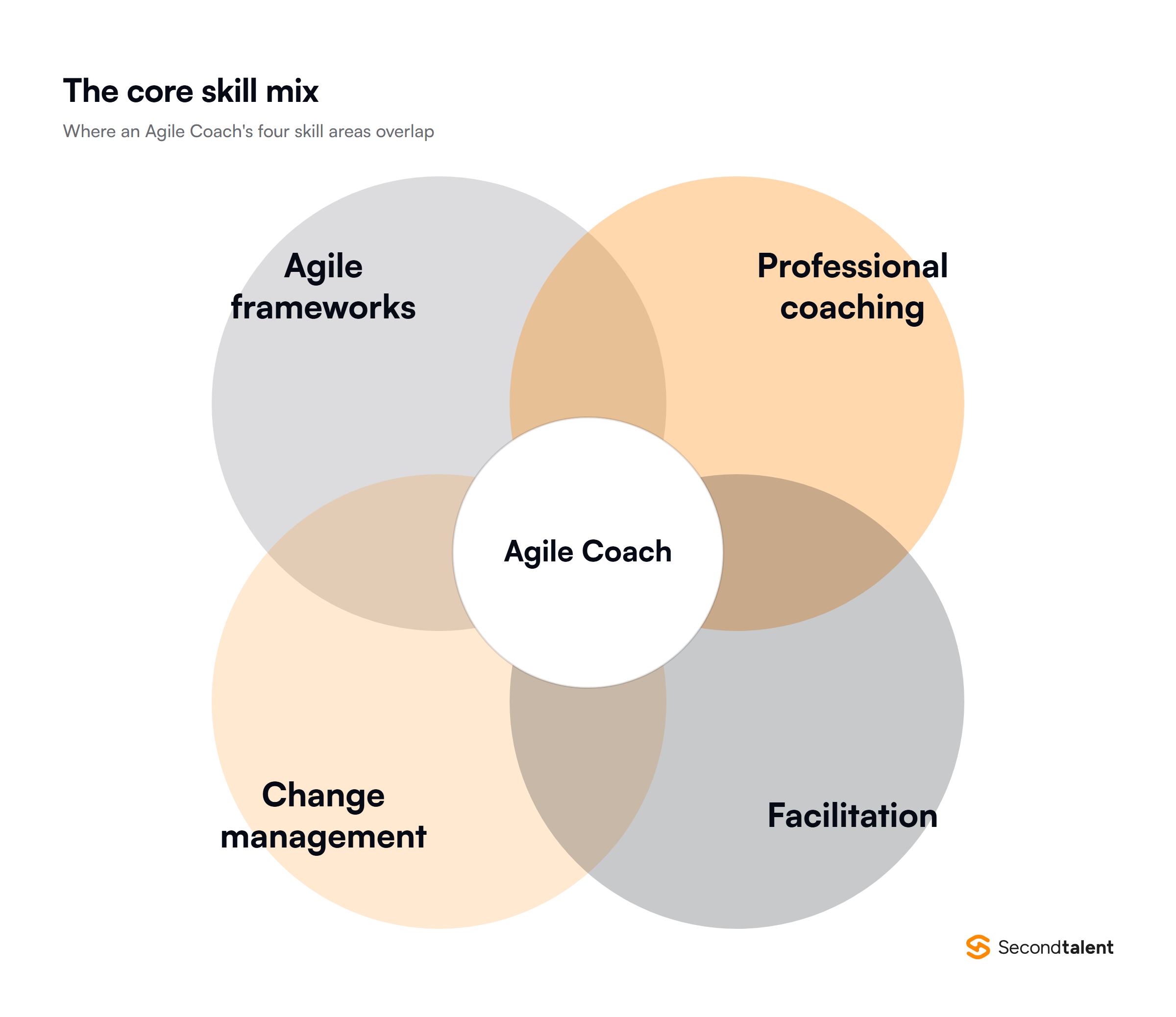
- Deep Agile Expertise: Mastery of multiple agile frameworks including Scrum, Kanban, XP, SAFe, LeSS, and Scrum@Scale.
- Professional Coaching: Formal coaching skills to guide individuals and teams toward self-discovery and improvement.
- Change Management: Understanding of organizational change theories and ability to guide transformation initiatives.
- Systems Thinking: Ability to see organizations as systems and understand how changes ripple through structures.
- Leadership Coaching: Skills in coaching executives and senior leaders on agile leadership principles.
- Facilitation Mastery: Advanced facilitation skills for workshops, offsites, and large group sessions.
- Organizational Design: Knowledge of organizational structures and how to design for agility.
- Mentoring: Ability to mentor Scrum Masters, coaches, and agile practitioners.
- Stakeholder Management: Skills in navigating complex stakeholder relationships at all organizational levels.
- Business Acumen: Understanding of business strategy, finance, and operations to speak the language of executives.
- Technical Awareness: Sufficient technical knowledge to understand engineering practices and challenges.
- Metrics & Measurement: Expertise in defining and tracking transformation success metrics.
- Emotional Intelligence: High EQ to navigate organizational politics, resistance, and cultural dynamics.
Most positions require extensive agile experience (5-10+ years) with proven track record of successful transformations. Advanced agile certifications (ICP-ACC, ICP-ENT, SAFe SPC, Kanban Coaching Professional) are highly valued. Many coaches have backgrounds as Scrum Masters, engineers, or product managers before transitioning to coaching.
Agile Coach Career Paths and Specializations
Agile Coaches can specialize in various aspects or advance to senior roles:
- Enterprise Agile Coach: Focus on large-scale transformations across entire organizations or divisions.
- Technical Agile Coach: Specialize in coaching engineering practices like CI/CD, TDD, and DevOps.
- Executive Coach: Focus on coaching C-level and senior leadership on agile leadership.
- SAFe Practice Consultant: Specialize in SAFe framework implementation and coaching.
- Lean Portfolio Coach: Focus on lean portfolio management and strategic alignment.
- Team of Teams Coach: Specialize in coordinating and aligning multiple interconnected teams.
- Transformation Lead: Lead organization-wide agile transformation programs.
- Director of Agile Transformation: Oversee transformation initiatives across large organizations.
- Independent Consultant: Provide coaching services across multiple client organizations.
- Agile Training/Speaking: Focus on training, speaking, and thought leadership in agile community.
The role represents a senior position in agile careers, often leading to executive positions, consulting leadership, or independent practice.
Agile Coach Tools and Technologies
Agile Coaches work with various frameworks, tools, and assessment instruments:
- Agile Frameworks: Deep knowledge of Scrum, SAFe, LeSS, Scrum@Scale, DAD, Kanban, and others.
- Collaboration Tools: Miro, Mural, MURAL for virtual workshops and visual collaboration.
- Assessment Tools: Agile maturity assessments, team health checks, organizational assessments.
- Agile Management: Jira, Rally, VersionOne, Azure DevOps for understanding tooling teams use.
- Communication: Slack, Teams, Zoom for remote coaching and facilitation.
- Documentation: Confluence, Notion for capturing transformation strategies and playbooks.
- Facilitation: Liberating Structures, Design Thinking tools, retrospective frameworks.
- Metrics Platforms: Flow metrics tools, value stream mapping tools, transformation dashboards.
- Coaching Frameworks: GROW model, Co-Active coaching, systemic coaching approaches.
- Presentation: PowerPoint, Keynote, Visme or Prezi for executive presentations and training.
Expertise across multiple frameworks and tools enables coaches to tailor approaches to organizational context.
Building Your Agile Coach Portfolio
A compelling portfolio demonstrates transformation experience and coaching impact:
- Advanced Certifications: Obtain ICP-ACC, ICP-ENT, SAFe SPC, or other advanced coaching certifications.
- Transformation Case Studies: Document organizational transformations you’ve led, including challenges and outcomes.
- Quantified Impact: Show measurable improvements in time-to-market, quality, employee engagement, or business outcomes.
- Coaching Success Stories: Share anonymized examples of teams or leaders you’ve successfully coached.
- Speaking Engagements: Present at major agile conferences, company events, or industry forums.
- Published Content: Write articles, blog posts, or books about agile transformation and coaching.
- Training Programs: Develop and deliver agile training programs or workshops.
- Assessment Frameworks: Create custom assessment tools or transformation frameworks.
- Community Leadership: Lead agile communities, user groups, or open space events.
- Client Testimonials: Gather recommendations from executives, teams, and organizations you’ve coached.
- Thought Leadership: Establish yourself as thought leader through consistent content creation and speaking.
Focus on demonstrating organizational impact, leadership coaching success, and your unique perspective on agile transformation.
Agile Coach Methodology and Best Practices
Effective Agile Coaches follow established practices and principles:
- Start with Why: Help organizations understand the purpose and benefits of agility before implementing practices.
- Assess Current State: Thoroughly understand current culture, practices, and constraints before recommending changes.
- Meet People Where They Are: Adapt coaching to organization’s maturity and readiness for change.
- Coach the Whole System: Address culture, structure, practices, and leadership simultaneously.
- Build Pull, Don’t Push: Create desire for change rather than forcing adoption.
- Lead by Example: Model agile values and behaviors in your own work.
- Focus on Outcomes: Emphasize business outcomes and customer value over process compliance.
- Enable Self-Sufficiency: Build internal capability rather than creating dependency on coaches.
- Embrace Resistance: Treat resistance as valuable information about organizational dynamics.
- Measure Progress: Track meaningful transformation metrics while avoiding vanity metrics.
- Adapt Frameworks: Tailor agile frameworks to organizational context rather than applying dogmatically.
- Partner with Leadership: Ensure executive sponsorship and alignment throughout transformation.
- Celebrate Small Wins: Recognize progress to maintain momentum during long transformations.
Following these practices enables coaches to guide sustainable transformations that stick beyond the coaching engagement.
Future of Agile Coach Careers
The future for Agile Coaches is evolving as agile becomes mainstream:
As basic agile adoption matures, coaches will focus more on advanced topics like business agility, customer-centricity, and continuous innovation. The role may evolve toward broader organizational transformation coaching beyond just agile. Remote and distributed work will remain prominent, requiring coaches skilled in virtual facilitation and async collaboration.
Integration of agile with product management, design thinking, and lean startup approaches will require coaches with broader expertise. The focus will shift from implementing frameworks toward developing adaptive organizational cultures. AI and digital transformation will create new contexts requiring agile coaches who understand emerging technologies.
Demand may consolidate around truly experienced coaches while entry-level coaching opportunities decrease as organizations build internal capability. Coaches specializing in specific industries or domains (healthcare, government, finance) will command premiums. The profession will likely see more standardization through professional associations and credentials.
Agile Coaches who develop business acumen, stay current with organizational trends, and focus on sustainable culture change will have the strongest prospects.
Getting Started as an Agile Coach
Becoming an Agile Coach requires building extensive experience before transitioning:
- Gain Deep Agile Experience: Spend 5-10+ years as Scrum Master, product owner, or agile practitioner.
- Master Multiple Frameworks: Learn Scrum, Kanban, SAFe, LeSS, and other frameworks comprehensively.
- Get Advanced Certifications: Pursue ICP-ACC, SAFe SPC, or other advanced coaching credentials.
- Develop Coaching Skills: Study professional coaching through ICF programs or coaching training.
- Learn Change Management: Study organizational change theory and transformation approaches.
- Build Business Knowledge: Understand business strategy, finance, and operations.
- Coach at Scale: Gain experience working with multiple teams or agile at scale initiatives.
- Mentor Others: Mentor Scrum Masters and team members to develop coaching capabilities.
- Lead Transformations: Take on transformation initiatives to build change leadership experience.
- Build Thought Leadership: Write, speak, and contribute to agile community.
- Network with Coaches: Connect with experienced coaches and learn from their experiences.
- Consider Consulting: Join agile consulting firms to gain diverse transformation experience.
The path to Agile Coach typically requires 7-15+ years of professional experience including 5-10 years specifically in agile roles. This is a senior position that builds on extensive practical experience. Continuous learning and staying current with organizational and agile trends is essential.
Agile Coaches play a transformative role in helping organizations embrace agility at deep cultural levels. The position offers significant influence on organizational direction, excellent compensation, and the satisfaction of enabling large-scale change. As organizations continue pursuing business agility, experienced Agile Coaches will remain highly valued.
For experienced agile practitioners who enjoy coaching, facilitating change, and working at organizational levels, agile coaching offers a rewarding senior career path. The combination of deep expertise, coaching skills, and organizational impact makes this one of the most influential and well-compensated roles in the agile profession.