Cloud Network Engineers are at the forefront of network infrastructure innovation, designing and implementing sophisticated networking solutions that connect cloud resources across global data centers. These professionals architect the invisible highways that enable modern digital communications, creating secure, scalable, and high-performance networks that support everything from small startups to enterprise-scale applications. From designing multi-cloud connectivity strategies to implementing software-defined networking solutions, Cloud Network Engineers build the foundation that makes cloud computing reliable, fast, and accessible worldwide.
Definition of the Role
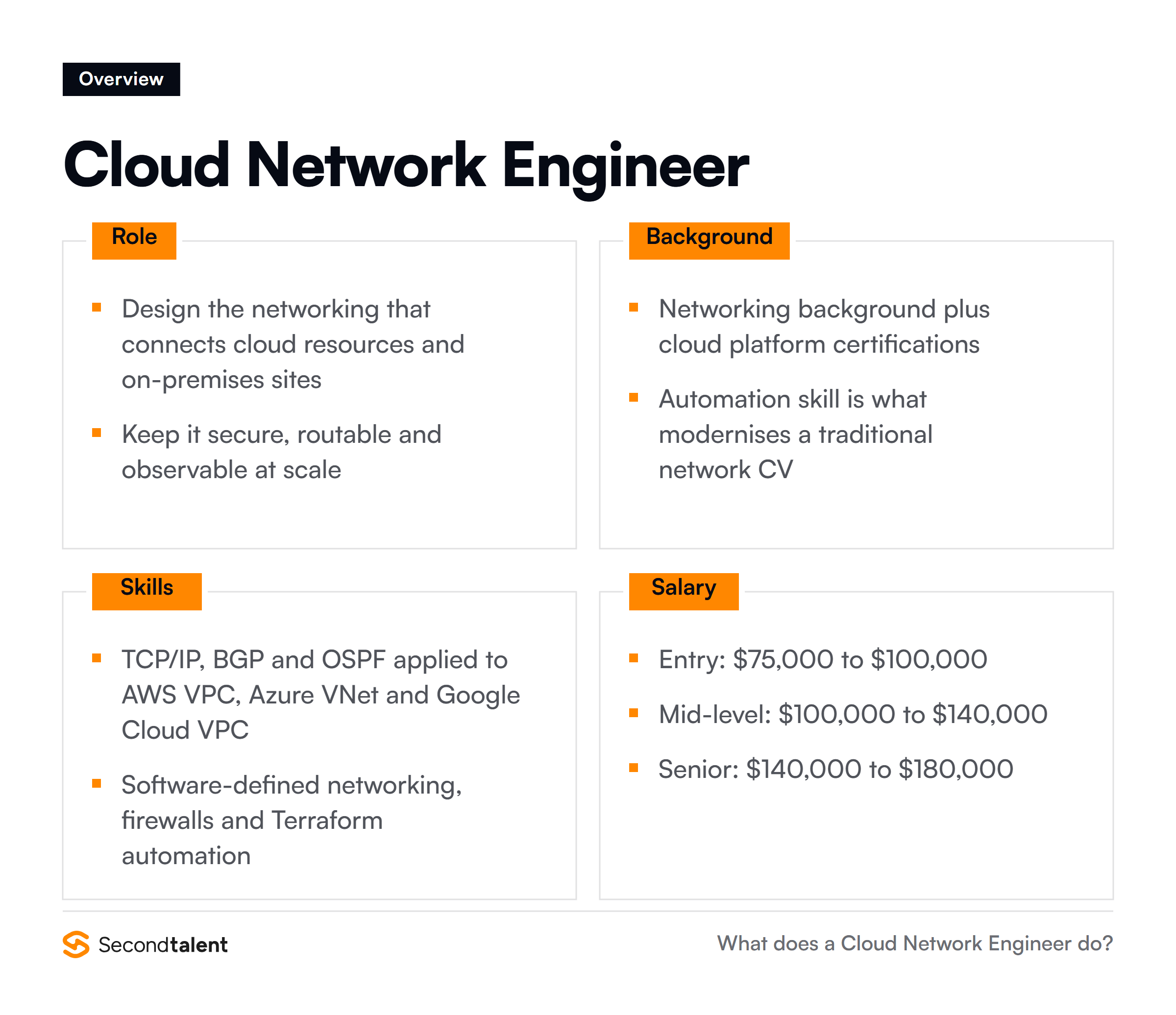
A Cloud Network Engineer specializes in designing, implementing, and managing network infrastructure within cloud environments. These professionals combine traditional networking expertise with cloud-native technologies to create robust, scalable network architectures that span multiple cloud providers and on-premises infrastructure.
- Design and implement network topologies for cloud environments and hybrid infrastructures
- Configure routing protocols, VPNs, and interconnection services across cloud platforms
- Implement security policies, firewalls, and network segmentation strategies
- Monitor network performance, troubleshoot connectivity issues, and optimize traffic flows
- Collaborate with DevOps teams and infrastructure architects on network automation
- Ensure compliance with organizational standards and regulatory requirements
- Plan and execute disaster recovery strategies for network infrastructure
- Provide technical guidance on cloud networking best practices and emerging technologies
Unlike traditional network engineers who focus primarily on physical hardware, Cloud Network Engineers work extensively with software-defined networking (SDN), virtual private clouds (VPCs), and cloud-native networking services. They must understand both the underlying network protocols and the abstraction layers that cloud providers offer.
Job Market and Career Opportunities
The demand for Cloud Network Engineers has surged dramatically as organizations accelerate their cloud adoption strategies. According to recent industry reports, cloud networking jobs have grown by over 41% in the past two years, with median salaries ranging from $95,000 for entry-level positions to $180,000+ for senior specialists.
- Major tech companies building scalable cloud infrastructures and platforms
- Financial institutions requiring secure, high-performance networking for trading systems
- Healthcare organizations implementing compliant cloud networking for patient data
- Government agencies modernizing infrastructure with secure cloud connectivity
- Telecommunications companies offering cloud networking services to enterprise clients
- Consulting firms helping organizations design and implement cloud network strategies
Geographic hotspots for Cloud Network Engineer positions include Seattle, San Francisco, New York, Austin, and emerging tech hubs like Denver and Atlanta. Remote opportunities are increasingly common, with many companies offering hybrid or fully remote positions to access global talent.
- Career advancement paths include Senior Network Architect, Cloud Infrastructure Manager, or Technical Leadership roles
- Specialization opportunities in network security, multi-cloud architecture, or performance optimization
- Strong potential for independent consulting or founding cloud networking service companies
- Excellent job security due to the fundamental role of networking in cloud infrastructure
Essential Skills and Qualifications
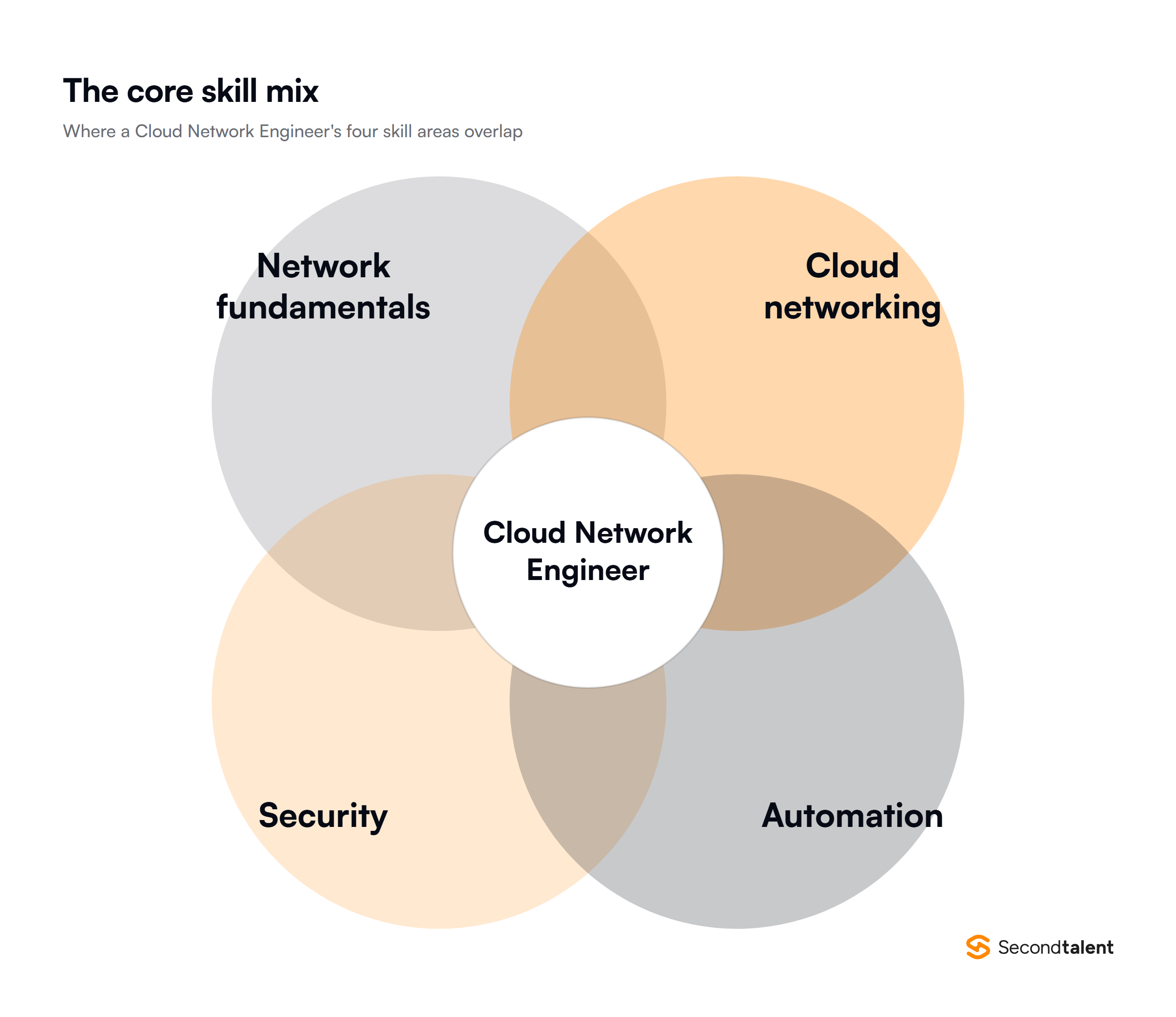
Success as a Cloud Network Engineer requires a strong foundation in traditional networking concepts combined with cloud-specific knowledge. Essential technical skills span multiple domains and continue evolving with new technologies.
- Network Fundamentals: TCP/IP, routing protocols (BGP, OSPF), switching, and VPN technologies
- Cloud Platforms: AWS VPC, Azure Virtual Networks, Google Cloud VPC, and their networking services
- Software-Defined Networking: SDN controllers, network virtualization, and programmable networking
- Security: Network security principles, firewall configuration, and intrusion detection systems
- Automation: Python, PowerShell, Infrastructure as Code tools like Terraform and CloudFormation
- Monitoring Tools: Network monitoring platforms, performance analysis, and troubleshooting utilities
- Load Balancing: Application and network load balancers, traffic distribution strategies
- DNS and CDN: Domain name services, content delivery networks, and global traffic management
Industry certifications that significantly enhance career prospects:
- AWS Certified Advanced Networking – Specialty for AWS cloud networking expertise
- Microsoft Azure Network Engineer Associate for Azure networking competency
- Google Cloud Professional Cloud Network Engineer for GCP networking skills
- Cisco CCNP Enterprise or CCIE for vendor-neutral networking knowledge
- CompTIA Network+ for fundamental networking concepts
Career Paths and Specializations
Cloud Network Engineers can pursue various specialization paths based on their interests and market demands. Each specialization offers unique opportunities for expertise development and career advancement.
- Network Security Specialist: Implement zero-trust architectures, secure network segments, and compliance frameworks
- Multi-Cloud Architect: Design seamless connectivity between different cloud providers and hybrid environments
- Performance Optimization Specialist: Focus on latency reduction, bandwidth optimization, and CDN strategies
- Automation and DevOps Specialist: Bridge networking and software development with infrastructure automation
- Edge Computing Specialist: Design networking for edge locations, IoT devices, and distributed computing
- Telecommunications Integration: Work with 5G networks, SD-WAN, and carrier-grade networking solutions
- Disaster Recovery Specialist: Design robust backup, failover, and business continuity networking strategies
- Compliance and Governance: Ensure regulatory compliance and implement network governance frameworks
Leadership and advancement opportunities:
- Senior Network Architect designing enterprise-wide networking strategies
- Cloud Infrastructure Manager leading network operations and engineering teams
- Chief Technology Officer roles focusing on networking and infrastructure strategy
- Independent consulting specializing in complex cloud networking implementations
- Product management roles at cloud providers or networking technology companies
Tools and Technologies
Cloud Network Engineers work with a diverse ecosystem of tools and technologies that enable comprehensive network design, implementation, and management across cloud and hybrid environments.
- Cloud-Native Services: AWS VPC, Azure Virtual Networks, Google Cloud VPC, and associated networking services
- Monitoring and Observability: DataDog, New Relic, Splunk, AWS CloudWatch, Azure Monitor, Google Cloud Operations
- Infrastructure as Code: Terraform, AWS CloudFormation, Azure Resource Manager templates, and Pulumi
- Network Security: Palo Alto Networks Prisma, Fortinet FortiGate, cloud-native firewalls and security groups
- Configuration Management: Ansible, Puppet, SaltStack for consistent network configurations
- Load Balancing: F5, NGINX, HAProxy, and cloud-native load balancing services
- Service Mesh: Istio, Linkerd, AWS App Mesh for microservices networking
- Network Analysis: Wireshark, tcpdump, and cloud-native network flow analysis tools
Automation and development tools:
- Programming Languages: Python for automation, Go for network tools, and Bash for system scripts
- API Integration: REST APIs for cloud services, webhook automation, and service integration
- Version Control: Git for infrastructure code management and collaborative development
- CI/CD Platforms: Jenkins, GitLab CI, GitHub Actions for automated network deployments
- Container Networking: Docker networking, Kubernetes CNI plugins, and container orchestration
Portfolio Building Guidance
Building a compelling portfolio as a Cloud Network Engineer requires demonstrating both technical expertise and practical problem-solving abilities through documented projects and real-world implementations.
- Multi-Region Network Architecture: Design and implement disaster recovery networking across geographic regions
- Hybrid Cloud Connectivity: Create seamless integration between on-premises and cloud infrastructure
- Network Automation Project: Develop Infrastructure as Code solutions for network provisioning and management
- Security Implementation: Document zero-trust network architecture and security control implementations
- Performance Optimization: Showcase network tuning efforts and measurable performance improvements
- Multi-Cloud Integration: Demonstrate expertise in connecting different cloud providers
- Monitoring and Alerting: Build comprehensive network monitoring and automated alerting systems
- Cost Optimization: Implement network cost monitoring and optimization strategies
Documentation and professional development strategies:
- Create detailed network architecture diagrams and implementation documentation
- Contribute to open-source networking projects and share automation scripts
- Write technical blog posts about complex networking challenges and solutions
- Develop case studies highlighting problem-solving approaches and outcomes
- Participate in cloud networking communities and professional organizations
- Maintain GitHub repositories showcasing networking automation and tools
Methodology and Best Practices
Effective Cloud Network Engineers follow established methodologies and best practices to ensure reliable, secure, and scalable network infrastructure that meets business requirements and performance expectations.
- Design Principles: High availability, fault tolerance, scalability, and security by design
- Security Framework: Defense-in-depth approach, network segmentation, and zero-trust principles
- Performance Optimization: Continuous monitoring, baseline establishment, and predictive analytics
- Infrastructure as Code: Version-controlled, repeatable network deployments and configurations
- Change Management: Gradual rollout strategies, automated testing, and rollback procedures
- Documentation Standards: Comprehensive network documentation, runbooks, and troubleshooting guides
- Compliance Management: Regular audits, policy enforcement, and regulatory adherence
- Disaster Recovery: Regular testing, automated failover, and business continuity planning
Implementation and operational best practices:
- Implement redundant connections and automated failover mechanisms for high availability
- Use network segmentation and micro-segmentation to minimize security risks
- Establish clear network performance metrics and service level agreements
- Automate routine network configuration and management tasks
- Conduct regular network security assessments and vulnerability testing
- Maintain comprehensive network inventory and asset management systems
Future of Cloud Network Engineering
The future of cloud network engineering is being shaped by emerging technologies, evolving business requirements, and the continued expansion of cloud-native architectures and edge computing paradigms.
- Software-Defined WAN (SD-WAN): Intelligent traffic routing and optimized connectivity for distributed organizations
- Secure Access Service Edge (SASE): Convergence of networking and security in cloud-delivered services
- Edge Computing Networks: Ultra-low latency networking for edge processing and IoT device connectivity
- AI-Driven Network Management: Machine learning for predictive maintenance, optimization, and automated troubleshooting
- 5G Integration: Network architectures supporting 5G connectivity and mobile edge computing
- Quantum Networking: Quantum key distribution and quantum-safe encryption methods
- Intent-Based Networking: Automated network configuration based on business intent and policies
- Sustainability Focus: Energy-efficient networking and green computing considerations
Emerging opportunities and skill requirements:
- Understanding of AI/ML applications in network optimization and management
- Experience with edge computing architectures and distributed networking
- Knowledge of 5G networking technologies and mobile edge computing
- Expertise in quantum-safe cryptography and future-proof security methods
- Skills in sustainability assessment and energy-efficient network design
Getting Started
Beginning your journey as a Cloud Network Engineer requires building a solid foundation in networking fundamentals while gaining practical experience with cloud platforms and modern networking technologies.
- Networking Fundamentals: Study TCP/IP protocols, routing, switching, and network security principles
- Cloud Platform Experience: Create free accounts with AWS, Azure, and Google Cloud for hands-on practice
- Practical Labs: Work through networking tutorials and build VPC configurations
- Certification Path: Start with foundational certifications and progress to specialized networking credentials
- Programming Skills: Learn Python and PowerShell for network automation and scripting
- Infrastructure as Code: Practice with Terraform or CloudFormation for network automation
- Community Engagement: Join networking communities, attend meetups, and participate in forums
- Open Source Contribution: Contribute to networking projects to gain experience and visibility
Learning resources and career development steps:
- Complete vendor-specific networking courses and certification programs
- Practice with cloud provider free tiers and sandbox environments
- Build a home lab environment for networking experimentation
- Participate in cloud networking communities and professional organizations
- Stay current with networking technology trends through blogs, podcasts, and conferences
- Develop a portfolio of networking projects and automation scripts