An Industrial Automation Engineer designs, builds, and maintains the automated systems that run modern manufacturing and industrial operations. From PLC-controlled production lines to robotic cells and SCADA monitoring, these engineers make factories faster, safer, and more efficient.
As manufacturers adopt Industry 4.0, smart factories, and connected equipment, demand for industrial automation engineers has grown well beyond traditional plant floors into energy, logistics, food processing, and pharmaceuticals.
What is an Industrial Automation Engineer?
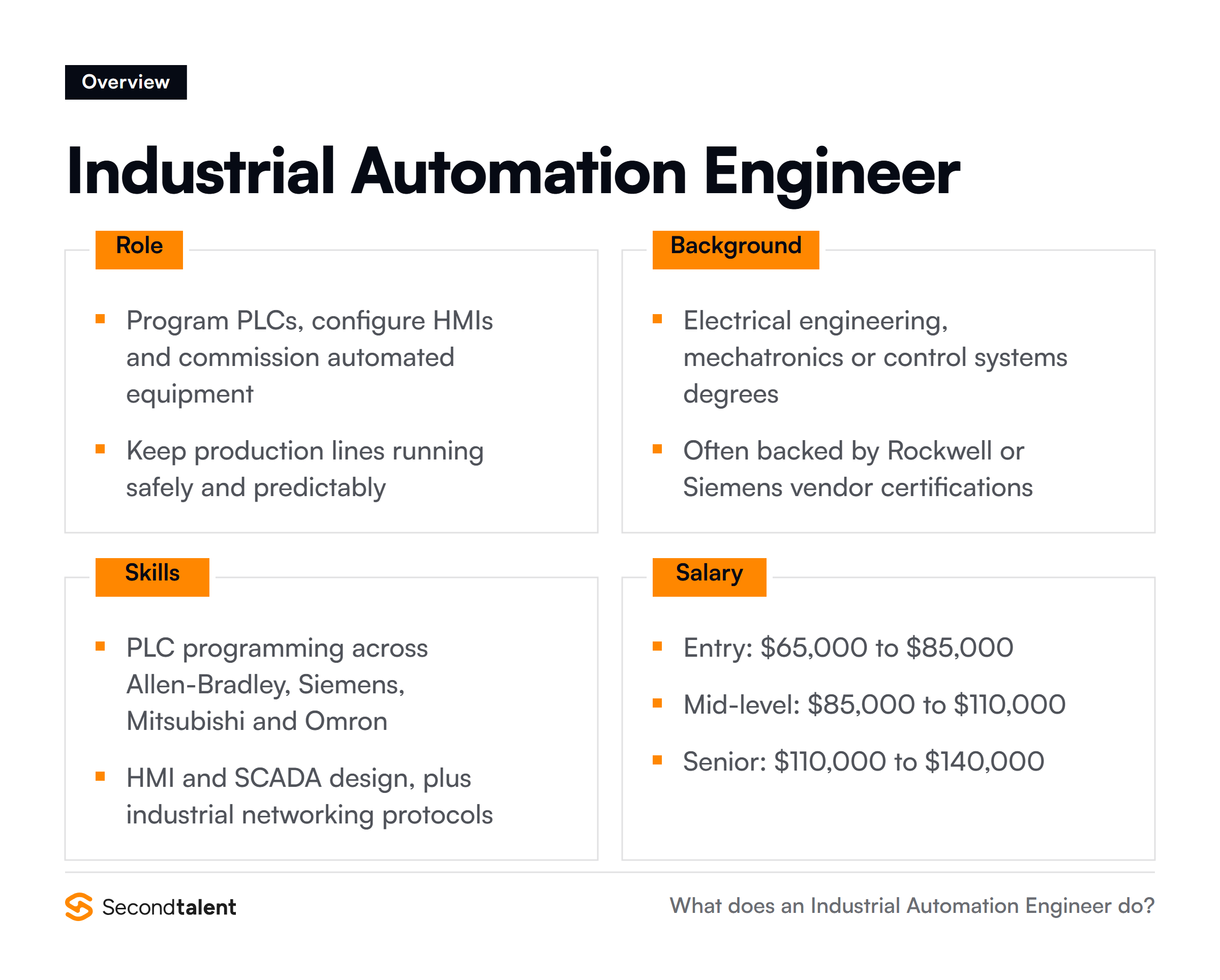
An Industrial Automation Engineer specializes in control systems for physical processes and machinery. They program programmable logic controllers (PLCs), configure human-machine interfaces (HMIs), integrate sensors and actuators, and commission automated equipment on the production floor. Their goal is to keep industrial processes running reliably with minimal manual intervention.
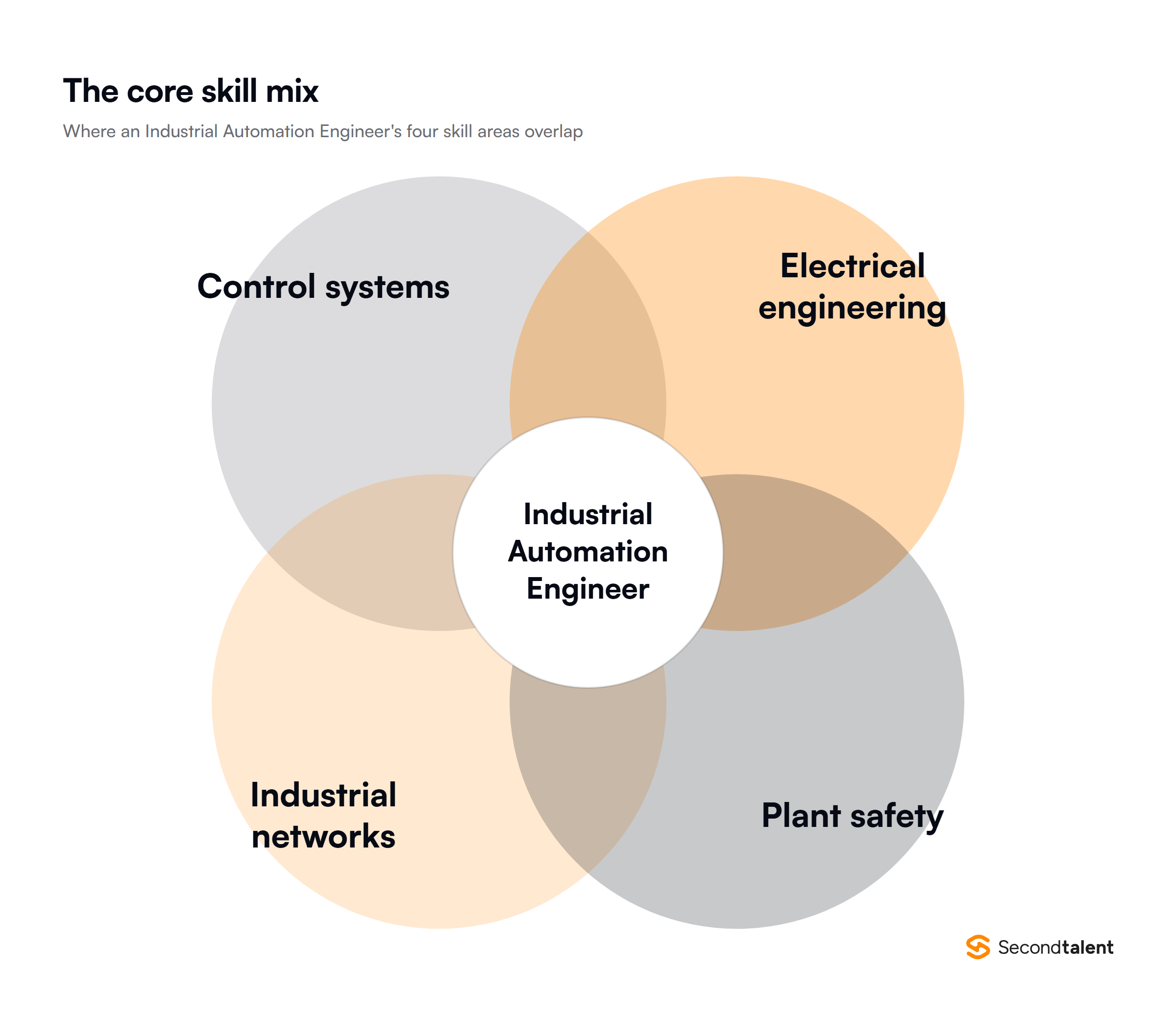
Unlike a software automation engineer who automates digital workflows, the industrial automation engineer works with physical systems: conveyors, motors, robotic arms, and process instrumentation. The role blends electrical engineering, controls programming, and hands-on troubleshooting, often in manufacturing, energy, or process industries.
Industrial Automation Engineer Job Market and Salary
Global investment in factory automation and robotics continues to accelerate as manufacturers pursue efficiency, quality, and resilience. This sustained investment keeps demand high for engineers who can design and maintain automated production systems.
Average Salary Ranges (US market):
- Entry-level Industrial Automation Engineer: $65,000 – $85,000
- Mid-level Industrial Automation Engineer: $85,000 – $110,000
- Senior Industrial Automation Engineer: $110,000 – $140,000
- Lead / Controls Engineering Manager: $140,000 – $175,000+
Major employers include manufacturers, automotive plants, food and beverage producers, pharmaceutical companies, energy and utilities, and systems integrators. Hiring skilled controls talent remotely can help teams scale engineering capacity cost-effectively.
Essential Industrial Automation Engineer Skills and Qualifications
Core Controls Skills:
- PLC programming (Allen-Bradley, Siemens, Mitsubishi, Omron)
- HMI and SCADA configuration and design
- Ladder logic, function block, and structured text programming
- Industrial networking (Ethernet/IP, Profinet, Modbus)
- Sensor, actuator, and instrumentation integration
Engineering Competencies:
- Electrical schematics and control panel design
- Motion control and robotics integration
- Process control and PID tuning
- Commissioning, troubleshooting, and root-cause analysis
- Machine safety standards and functional safety
Educational Background: Most industrial automation engineers hold degrees in electrical engineering, mechatronics, control systems, or a related discipline, often supported by vendor certifications from Rockwell, Siemens, or similar.
Industrial Automation Career Paths and Specializations
Career Progression:
- Controls Technician → Industrial Automation Engineer → Senior Controls Engineer → Lead Automation Engineer → Controls Engineering Manager
Specialization Areas:
- Robotics Integration: Programming and deploying industrial robots
- SCADA and Process Control: Plant-wide monitoring and control
- Motion Control: High-precision servo and drive systems
- Industrial IoT: Connected equipment and predictive maintenance
- Functional Safety: Safety systems and compliance
Industrial Automation Tools and Technologies
Controls Platforms:
- Rockwell Studio 5000 and FactoryTalk
- Siemens TIA Portal and WinCC
- Ignition and Wonderware SCADA
- Robot programming environments (FANUC, ABB, KUKA)
Engineering and Networking:
- EPLAN and AutoCAD Electrical for panel design
- Industrial Ethernet and fieldbus configuration tools
- Historian and MES integration platforms
- Simulation and digital twin tools for commissioning
Building Your Industrial Automation Portfolio
Portfolio Components:
- Line Automation Projects: Document systems you programmed and commissioned
- PLC and HMI Code: Show clean, well-structured control logic
- Robotics Cells: Present integration and cycle-time improvements
- Reliability Wins: Highlight uptime and efficiency gains
Employers value engineers who can show real, commissioned systems and quantify the throughput, quality, or uptime they delivered.
Future of Industrial Automation
Industrial automation is being transformed by smart manufacturing, industrial IoT, and AI-driven optimization. Engineers who combine traditional controls expertise with data and connectivity skills will lead the next generation of automated plants.
- Industry 4.0 and connected smart factories
- Predictive maintenance powered by machine learning
- Collaborative robots (cobots) on the production floor
- Digital twins for commissioning and optimization
How to Hire an Industrial Automation Engineer
Look for hands-on commissioning experience with your PLC and SCADA platforms, and ask candidates to walk through a system they built end to end, including how they troubleshot failures on a live line.
Second Talent connects you with pre-vetted, senior industrial automation engineers across Asia in as little as 24 hours, with no upfront cost. Browse, shortlist, and hire on one platform.