Definition of the Role
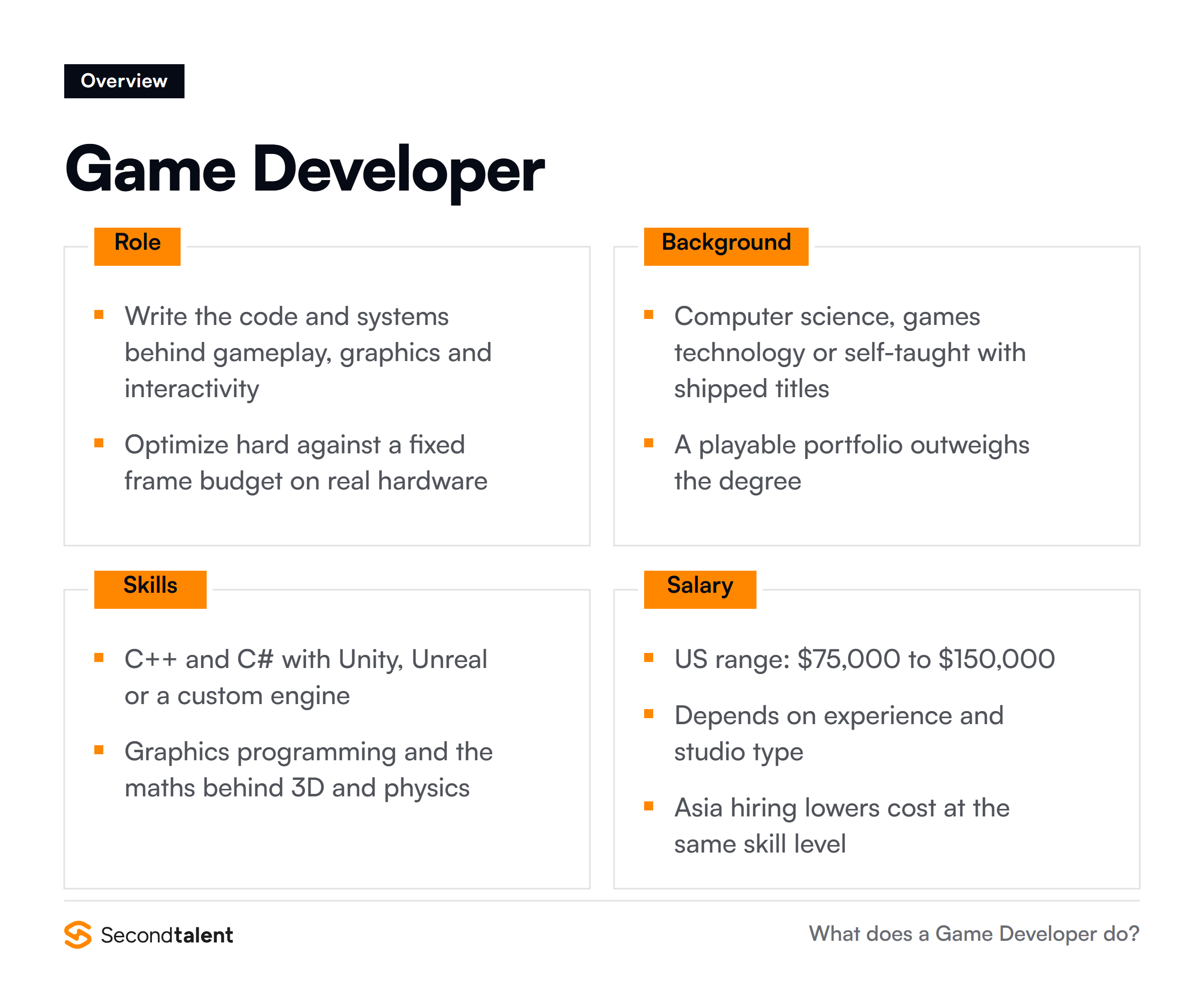
A Game Developer specializes in creating interactive entertainment software, working across multiple disciplines to design, program, and implement video games for various platforms. These professionals combine technical programming skills with creative design sensibilities to build engaging gaming experiences that resonate with diverse audiences.- Design and implement game mechanics, systems, and interactive gameplay features
- Develop games for multiple platforms including PC, console, mobile, and VR/AR systems
- Program game logic, physics systems, artificial intelligence, and user interfaces
- Integrate graphics, audio, animations, and other multimedia assets into cohesive experiences
- Collaborate with artists, designers, and audio engineers to realize creative visions
- Optimize game performance for target platforms and hardware specifications
- Implement multiplayer networking, social features, and online game services
- Debug, test, and refine gameplay experiences based on player feedback and analytics
Job Market and Career Opportunities
The demand for Game Developers continues to expand as the gaming industry grows into a dominant entertainment medium valued at over $200 billion globally. Industry reports show that game development roles have increased by over 90% in recent years, with median salaries ranging from $70,000 for entry-level positions to $1100,000+ for senior game programmers and technical directors.- AAA game studios developing blockbuster console and PC games with massive budgets
- Mobile game companies creating casual and social games for smartphones and tablets
- Independent game studios producing innovative and experimental gaming experiences
- Virtual and augmented reality companies pioneering immersive gaming technologies
- Educational technology companies developing serious games and gamified learning platforms
- Technology companies integrating gaming elements into non-gaming applications and services
- Career advancement paths include Senior Game Programmer, Technical Director, or Lead Developer roles
- Specialization opportunities in areas like graphics programming, AI systems, or platform-specific development
- Strong potential for transitioning into game design, production, or founding independent game studios
- Excellent entrepreneurial opportunities for creating and publishing independent games
Essential Skills and Qualifications
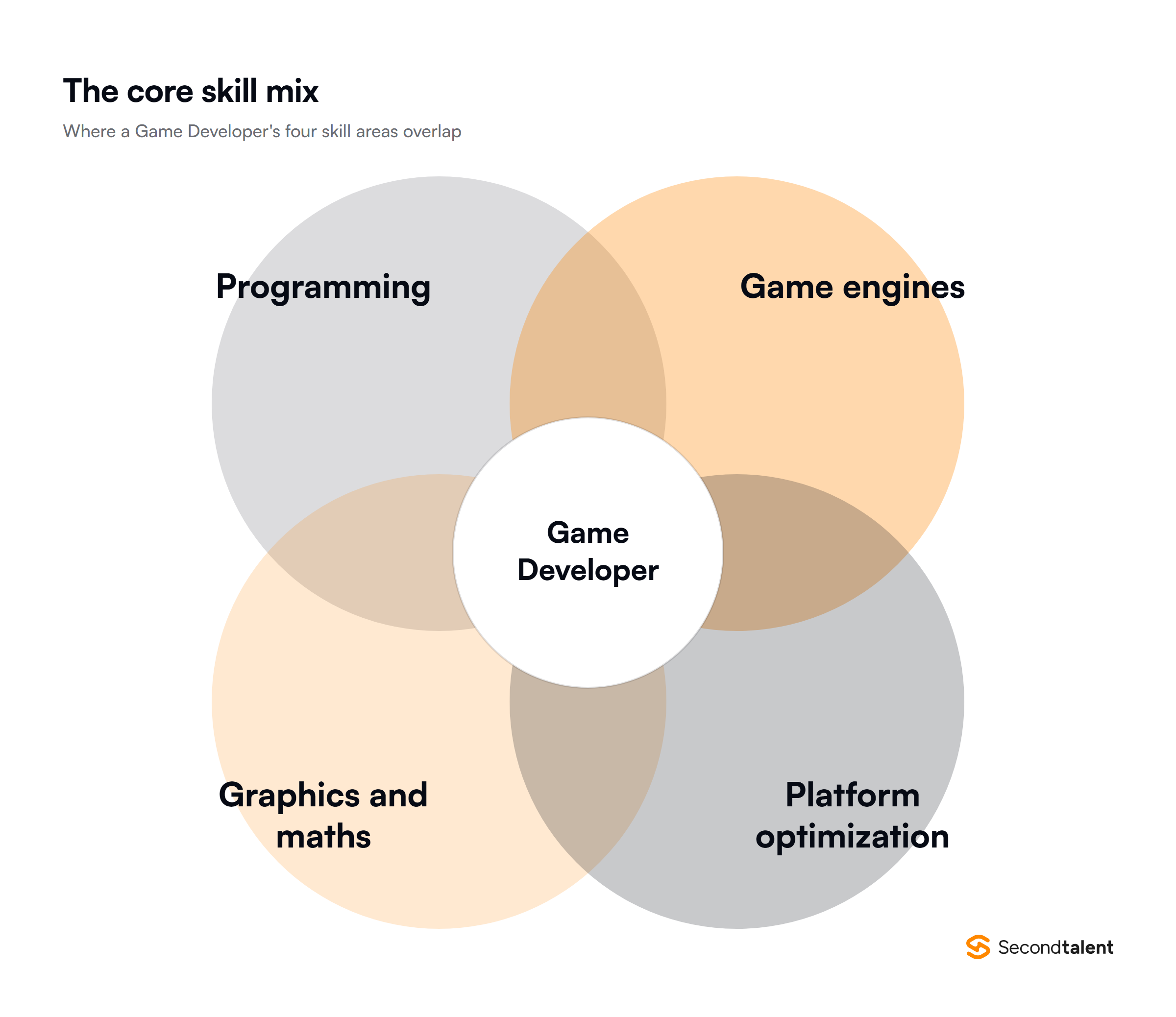
Success as a Game Developer requires a diverse skill set combining programming proficiency, mathematical understanding, and creative problem-solving abilities. The role demands both technical expertise and appreciation for player psychology and entertainment design.- Programming Languages: C++, C#, Java, Python, and scripting languages for game logic implementation
- Game Engines: Unity, Unreal Engine, Godot, and custom engine development and modification
- Graphics Programming: OpenGL, DirectX, Vulkan, and shader programming for visual effects
- Mathematics: Linear algebra, trigonometry, physics simulation, and 3D mathematics
- Platform Development: Console SDKs, mobile platforms, and platform-specific optimization techniques
- Networking: Multiplayer systems, client-server architecture, and real-time communication protocols
- Performance Optimization: Profiling tools, memory management, and platform-specific performance tuning
- Version Control: Git, Perforce, and collaborative development workflows for large teams
- Understanding of game design principles, player psychology, and engagement mechanics
- Basic knowledge of 3D modeling, animation, and digital art creation workflows
- Audio integration and interactive sound design implementation
- User interface design and user experience optimization for gaming contexts
- Familiarity with game monetization models, analytics, and live service operations
Career Paths and Specializations
Game Developers can pursue various specialization paths based on their interests, technical strengths, and the types of gaming experiences they want to create. Each specialization offers opportunities for deep expertise and creative fulfillment.- Gameplay Programming: Focus on core game mechanics, systems design, and player interaction implementation
- Graphics Programming: Specialize in rendering engines, visual effects, shaders, and graphics optimization
- Engine Programming: Develop and maintain game engines, tools, and core technology infrastructure
- AI Programming: Create intelligent game characters, procedural content generation, and adaptive systems
- Network Programming: Build multiplayer systems, online services, and distributed game architectures
- Mobile Game Development: Focus on iOS and Android games with touch interfaces and mobile-specific features
- VR/AR Development: Create immersive experiences for virtual and augmented reality platforms
- Tools Programming: Develop editor tools, pipeline automation, and developer productivity software
- Technical Director overseeing technology strategy and architectural decisions for game projects
- Lead Programmer managing development teams and coordinating technical implementation
- Game Designer combining technical knowledge with creative design and systems thinking
- Independent Game Developer creating and publishing original games as solo developer or small team
- Technology Consultant helping game studios adopt new technologies and solve technical challenges
Tools and Technologies
Game Developers work with specialized tools and technologies designed specifically for interactive entertainment creation. Proficiency with these tools is essential for efficient game development workflows and high-quality output.- Game Engines: Unity 3D, Unreal Engine, Godot, GameMaker Studio, and specialized engines
- Development Environments: Visual Studio, Xcode, Android Studio, and platform-specific IDEs
- Graphics Tools: Blender, Maya, 3ds Max, Substance Suite, and texture creation software
- Audio Tools: FMOD, Wwise, Audacity, and interactive audio implementation systems
- Version Control: Git, Perforce, Subversion, and large asset management systems
- Debugging Tools: Platform-specific debuggers, profilers, and performance analysis tools
- Analytics Platforms: GameAnalytics, Unity Analytics, and player behavior tracking systems
- Build Systems: Jenkins, TeamCity, and automated build and deployment pipelines
- Console Development: PlayStation, Xbox, and Nintendo development kits and certification tools
- Mobile Platforms: iOS and Android SDKs, device testing frameworks, and app store tools
- PC Gaming: Steam SDK, Epic Games Store, and PC gaming platform integration
- VR/AR Platforms: Oculus SDK, SteamVR, ARKit, ARCore, and immersive technology frameworks
- Cloud Gaming: Google Stadia, NVIDIA GeForce Now, and cloud gaming platform SDKs
Portfolio Building Guidance
Building a compelling portfolio as a Game Developer requires demonstrating your ability to create engaging, polished gaming experiences that showcase both technical competence and creative vision. Focus on projects that highlight different aspects of game development expertise.- Complete Game Projects: Finish and publish complete games that demonstrate full development lifecycle experience
- Technical Demos: Create focused demos showcasing specific technical skills like graphics programming or AI systems
- Game Jam Entries: Participate in game jams to demonstrate rapid prototyping and creative problem-solving
- Platform Diversity: Develop games for different platforms to show versatility and platform-specific knowledge
- Genre Exploration: Create games in different genres to demonstrate understanding of various gameplay mechanics
- Multiplayer Systems: Build networked games that showcase understanding of distributed systems and online play
- Performance Optimization: Document optimization efforts and performance improvements in existing projects
- Tool Development: Create editor tools or development utilities that improve workflow efficiency
- Include playable builds and video demonstrations of all projects
- Document technical architecture, algorithms used, and implementation challenges overcome
- Highlight specific contributions in team projects and collaborative development experiences
- Showcase iteration and improvement processes based on playtesting feedback
- Include code samples demonstrating clean, well-structured programming practices
- Document post-mortem analyses reflecting on lessons learned and areas for improvement
Methodology and Best Practices
Effective Game Developers follow established methodologies and best practices that ensure project success, code quality, and sustainable development processes while maintaining the creative flexibility essential for innovative game creation.- Agile Development: Iterative development cycles, sprint planning, and regular playtesting integration
- Prototyping: Rapid prototyping of core mechanics before full implementation commitment
- Code Architecture: Modular design, component systems, and maintainable code organization
- Performance Profiling: Regular performance analysis and optimization throughout development
- Playtesting: Regular player feedback collection and data-driven design iteration
- Documentation: Technical design documents, code comments, and system architecture documentation
- Quality Assurance: Comprehensive testing across platforms, devices, and player scenarios
- Post-Launch Support: Bug fixing, content updates, and community engagement strategies
- Implement robust version control workflows for code and large binary assets
- Establish clear coding standards and review processes for team development
- Use data-driven design approaches with configurable parameters and analytics integration
- Plan for localization and accessibility from early development stages
- Implement automated testing for critical game systems and functionality
- Maintain regular communication with artists, designers, and other team members
Future of Game Development
The future of game development is being shaped by emerging technologies, evolving player expectations, and new distribution models that expand the possibilities for interactive entertainment and player engagement.- Cloud Gaming: Streaming technologies enabling high-end gaming on any device with internet connectivity
- Artificial Intelligence: AI-generated content, intelligent NPCs, and procedural game world creation
- Virtual and Augmented Reality: Immersive technologies becoming mainstream with improved hardware and experiences
- Blockchain Integration: NFTs, digital ownership, and decentralized gaming economies
- Cross-Platform Play: Universal multiplayer experiences spanning all gaming platforms and devices
- Real-Time Ray Tracing: Photorealistic graphics and lighting becoming standard in gaming
- Haptic Feedback: Advanced tactile experiences and multi-sensory gaming interactions
- Social Gaming Evolution: Persistent virtual worlds and shared gaming experiences
- Understanding of machine learning and AI applications in procedural content generation
- Experience with cloud gaming architectures and distributed rendering systems
- Knowledge of blockchain technologies and cryptocurrency integration in gaming
- Expertise in VR/AR development and spatial computing principles
- Skills in real-time ray tracing implementation and advanced graphics programming
Getting Started
Beginning your journey as a Game Developer requires building both technical programming skills and understanding of game design principles while developing practical experience through personal projects and community engagement.- Programming Foundation: Master C# or C++ and fundamental programming concepts and data structures
- Game Engine Proficiency: Learn Unity or Unreal Engine through tutorials and personal projects
- Mathematics Skills: Study linear algebra, trigonometry, and 3D mathematics essential for game programming
- Game Design Understanding: Learn game design principles, player psychology, and engagement mechanics
- Project Development: Create increasingly complex game projects to build practical experience
- Community Participation: Join game development communities, participate in game jams, and share projects
- Platform Familiarity: Experiment with different gaming platforms and their unique development requirements
- Continuous Learning: Stay current with new technologies, tools, and industry trends
- Complete game development courses from reputable online platforms and universities
- Build a portfolio of diverse game projects demonstrating different skills and genres
- Participate in game jams and development competitions to practice rapid prototyping
- Contribute to open-source game projects to gain collaborative development experience
- Seek internships or entry-level positions at game studios or related technology companies
- Network with other game developers and attend industry conferences and events
Game Developer FAQs
What is a game developer?
A game developer designs and builds video games, writing the code and systems that bring gameplay, graphics, and interactivity to life. Game developers (sometimes called game programmers) work across engines like Unity and Unreal on PC, console, and mobile titles.
What does a game developer do? (Job description)
A game developer job description includes programming gameplay mechanics, building game systems, integrating art and audio, optimizing performance, and fixing bugs. Game programmers may specialize in graphics, physics, AI, networking, or gameplay.
What skills does a game developer need?
Core game developer skills include strong programming (C++, C#), a game engine (Unity or Unreal), mathematics and physics, and performance optimization. Game programmers also benefit from understanding graphics, gameplay design, and version control.
How do you become a game developer?
To become a game developer, learn a game engine, build and ship small games, and grow a portfolio that demonstrates working gameplay. Many game developers study computer science or game development, but a strong portfolio matters most.
How much does a game developer earn?
US game developers typically earn between $75,000 and $150,000 depending on experience and studio. Hiring game developers remotely across Asia can reduce cost while accessing strong engine and programming talent.
Related Roles
Explore related roles you can hire on Second Talent: XR Experience Designer, WebAssembly Developer, Digital Twin Developer.
Second Talent connects you with pre-vetted game developers across Asia in as little as 24 hours, with no upfront cost.