TL;DR: Master LLMs in 2026 with these 7 essential books, from beginner-friendly guides to advanced research texts for production-ready AI engineering.
The global LLM market is projected to reach $82.1 billion by 2033, growing at a staggering 33.7% CAGR. With demand for AI skills still running ahead of supply, there has never been a better time to invest in your LLM knowledge. Whether you are a startup founder looking to understand AI capabilities, a developer transitioning into machine learning, or an experienced engineer seeking production-grade expertise, the right books can accelerate your journey significantly.
This guide presents the top 7 books on Large Language Models for 2026, carefully selected to cover every skill level. You will learn which books provide foundational understanding, which offer hands-on coding experience, and which prepare you for enterprise-scale AI deployment. Each recommendation includes practical insights on what makes it valuable for your specific learning goals. These book below can be found physically or via book apps for IOS and Android.
What’s your LLM learning goal?
Select your situation below.
You need practical coding skills before diving into LLMs. Start with full-stack development fundamentals—over 67% of AI engineers have strong software engineering backgrounds. Build real applications first, then layer in ML expertise. Hire full-stack mentors →
You’re a developer ready to specialize in AI. The AI talent shortage means 1.6 million open positions globally—companies pay premium rates for engineers who can implement LLMs in production. Your existing coding skills give you a major advantage. Find AI/ML developers →
You need engineers who already know LLMs, not those still learning. Demand for LLM-experienced engineers still outruns supply, and building the skill set in-house takes months. Get experienced AI developers from Southeast Asia at 50-70% lower costs than US rates. Compare AI engineer rates →
You’re expanding beyond your first AI hire. The $82.1B LLM market demands speed—EOR services let you hire top AI talent across Vietnam, Philippines, and Singapore in 2-3 weeks instead of months, with full compliance handled for you. Get EOR pricing →
Quick Overview: Best LLM Books by Skill Level
Before diving into detailed reviews, here is a summary table to help you quickly identify which books match your current expertise and learning objectives.
| Book Title | Author(s) | Skill Level | Best For | Rating |
|---|---|---|---|---|
| The Hundred-Page Language Models Book | Andriy Burkov | Beginner | Quick conceptual foundation | 4.8/5 |
| Hands-On Large Language Models | Jay Alammar, Maarten Grootendorst | Beginner to Intermediate | Visual learners, practical applications | 4.7/5 |
| Build a Large Language Model (From Scratch) | Sebastian Raschka | Intermediate | Deep technical understanding | 4.6/5 |
| Natural Language Processing with Transformers | Tunstall, von Werra, Wolf | Intermediate | Production NLP with Hugging Face | 4.6/5 |
| AI Engineering | Chip Huyen | Intermediate to Advanced | Scaling AI in production | 4.7/5 |
| Foundations of Large Language Models | Tong Xiao, Jingbo Zhu | Advanced | Theoretical depth, research | 4.5/5 |
| Speech and Language Processing (3rd Ed.) | Jurafsky, Martin | Advanced/Reference | Comprehensive NLP reference | 4.8/5 |
Why Learning LLMs Matters in 2026
The demand for LLM expertise has fundamentally reshaped the technology hiring landscape. According to industry research, AI roles now command 67% higher salaries than traditional software positions, with 38% year-over-year growth across all experience levels. LLM developers specifically earn 25-40% salary premiums over general machine learning engineers due to their specialized expertise.
For startups and growing tech companies, understanding LLMs is no longer optional. These models power everything from customer support automation to code generation, content creation, and data analysis. CTOs and technical founders who grasp LLM fundamentals make better decisions about AI integration, measure ROI effectively, and communicate more effectively with their engineering teams.
The books in this guide represent the collective wisdom of leading AI researchers and practitioners. They have been selected based on technical accuracy, practical applicability, reader feedback, and relevance to the 2026 AI landscape.
1. The Hundred-Page Language Models Book
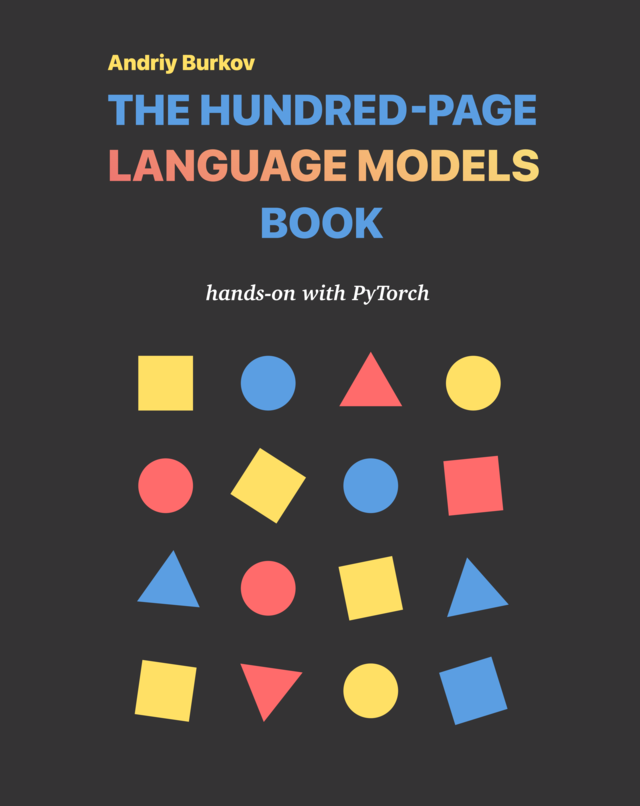
Author: Andriy Burkov
Andriy Burkov, known for his bestselling “The Hundred-Page Machine Learning Book,” delivers another concise masterpiece focused specifically on language models. This book is perfect for busy professionals who need a solid foundation without investing months of study time.
The book guides readers through the evolution of language models systematically. Rather than jumping straight to transformers, it builds understanding step by step. You start with simple count-based methods, progress through recurrent neural networks, and finally arrive at modern architectures like GPT and BERT. Each concept is grounded in clear mathematical foundations and illustrated with working Python code.
What makes this book exceptional is its efficiency. In roughly 100 pages, you gain the conceptual framework needed to understand industry discussions, evaluate AI tools, and communicate effectively with AI developers on your team. For founders and CTOs at early-stage startups, this book provides maximum learning value per hour invested.
Key Takeaways
- Historical evolution from n-grams to transformers
- Core mathematical concepts explained accessibly
- Practical Python code examples
- Efficient learning path for time-constrained professionals
2. Hands-On Large Language Models
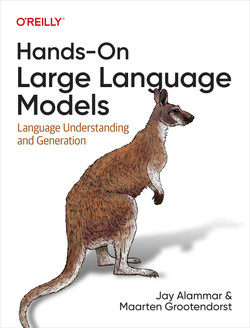
Authors: Jay Alammar and Maarten Grootendorst
Jay Alammar is renowned in the machine learning community for his exceptionally clear visual explanations. His blog posts on transformers and attention mechanisms have been cited by over 100,000 learners preparing for technical interviews. Partnering with Maarten Grootendorst, an expert in topic modeling and NLP applications, this duo has created one of the most visually engaging LLM books available.
The book features over 250 custom-made illustrations that break down complex concepts into digestible visual representations. This approach makes it particularly valuable for visual learners and those who struggle with purely text-based technical explanations. Published by O’Reilly Media, it maintains the high production quality expected from this publisher.
Practical applications covered include using pretrained models for copywriting and summarization, building semantic search systems, and implementing text classification solutions. Each chapter includes working code that readers can immediately apply to real projects. For developers looking to quickly add LLM capabilities to existing applications, this book provides the fastest path from concept to implementation.
Key Takeaways
- Visual explanations of attention and transformer architecture
- Practical code for text generation and summarization
- Semantic search implementation guides
- Text classification and clustering techniques
3. Build a Large Language Model (From Scratch)

Author: Sebastian Raschka
Sebastian Raschka is a legendary figure in the machine learning education space. His previous books and courses have taught millions of developers worldwide. With this Manning publication, he tackles the challenge of truly understanding LLMs by building one from the ground up using PyTorch.
This book takes no shortcuts. You implement every component yourself: tokenization, attention mechanisms, positional encoding, and the complete transformer architecture. By the end, you have not just used an LLM but created one. This deep understanding proves invaluable when debugging production issues, optimizing performance, or customizing models for specific use cases.
Reader reviews consistently praise this as the most thorough technical treatment of LLM internals available. One reviewer noted it as “the best technical book I have ever studied by a large margin” after 20+ years in the industry. For software engineers seeking to transition into AI engineering roles or understand what their AI team is actually building, this book is essential.
Key Takeaways
- Complete transformer implementation in PyTorch
- Tokenization and vocabulary building from scratch
- Attention mechanism deep dive
- Training strategies and optimization techniques
4. Natural Language Processing with Transformers
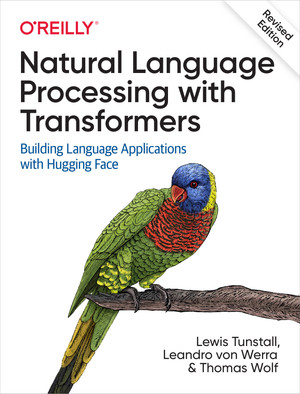
Authors: Lewis Tunstall, Leandro von Werra, and Thomas Wolf
Written by engineers at Hugging Face, the company behind the most popular open-source transformer library, this book provides authoritative guidance on production NLP. The authors have direct access to the tools they teach, ensuring accuracy and relevance that outside authors cannot match.
The revised 2025 edition covers Hugging Face Transformers version 4.40+, incorporating the latest architectural improvements and best practices. Topics include fine-tuning pretrained models, building custom datasets, implementing efficient inference pipelines, and deploying models at scale. The emphasis on practical, production-ready code distinguishes this from more theoretical treatments.
For teams building NLP features into their products, this book serves as both learning resource and ongoing reference. The code examples translate directly to production environments, reducing the gap between tutorial and real-world implementation. Companies looking to cut engineering time on AI projects will find the practical patterns here invaluable.
Key Takeaways
- Hugging Face ecosystem mastery
- Fine-tuning techniques for custom tasks
- Efficient inference optimization
- Production deployment patterns
5. AI Engineering: Building Applications with Foundation Models
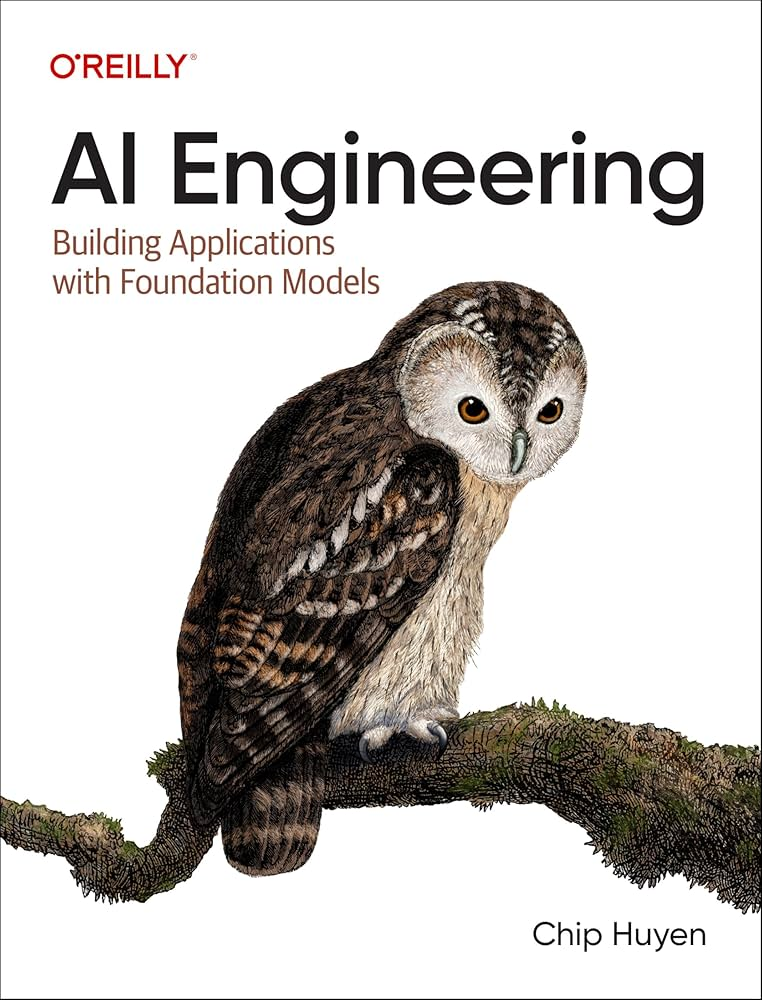
Author: Chip Huyen
Chip Huyen brings extensive experience from companies like Netflix, NVIDIA, and Snorkel AI to this comprehensive guide on AI engineering. Her previous work on ML systems has influenced how companies worldwide approach production machine learning. This 2025 O’Reilly publication focuses on the engineering discipline required to build reliable AI applications.
The book addresses challenges that most LLM resources skip entirely: reproducibility, monitoring, CI/CD for ML systems, data pipelines, and infrastructure scaling. If you understand how LLMs work but struggle to deploy them reliably, this book bridges that gap. The emphasis on engineering best practices makes it particularly valuable for teams transitioning from proof-of-concept to production.
Topics covered include building evaluation frameworks, implementing observability for AI systems, managing model versioning, and designing for cost efficiency. For companies concerned about measuring ROI on AI investments, the operational frameworks in this book provide concrete guidance on tracking and improving AI system performance.
Key Takeaways
- Production ML system architecture
- Monitoring and observability for AI
- Cost optimization strategies
- CI/CD pipelines for machine learning
6. Foundations of Large Language Models
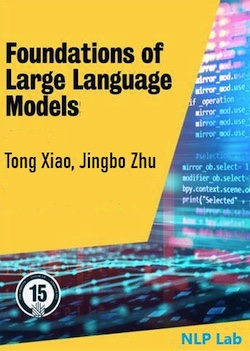
Authors: Tong Xiao and Jingbo Zhu
Published in early 2025, this book has quickly become recognized as one of the most well-structured and conceptually clear advanced texts on LLM theory. Unlike books that chase every new architecture or trend, it carefully explains the core mechanisms behind models like GPT, BERT, and LLaMA with academic rigor.
The authors emphasize foundational thinking about pre-training methodologies, generative model theory, prompting strategies, and alignment techniques. This depth prepares readers to understand not just current models but future developments as well. For those pursuing research roles or leading AI strategy at their organizations, this theoretical grounding proves essential.
The book assumes familiarity with machine learning fundamentals and linear algebra. Readers without this background should complete a beginner resource first. However, for those prepared for advanced content, this book provides insights unavailable in more application-focused texts. Understanding these foundations helps technical leaders evaluate new AI developments and make informed AI integration strategies.
Key Takeaways
- Theoretical foundations of transformer architectures
- Pre-training and fine-tuning methodology
- Alignment and RLHF deep dive
- Prompting theory and optimization
7. Speech and Language Processing (3rd Edition)
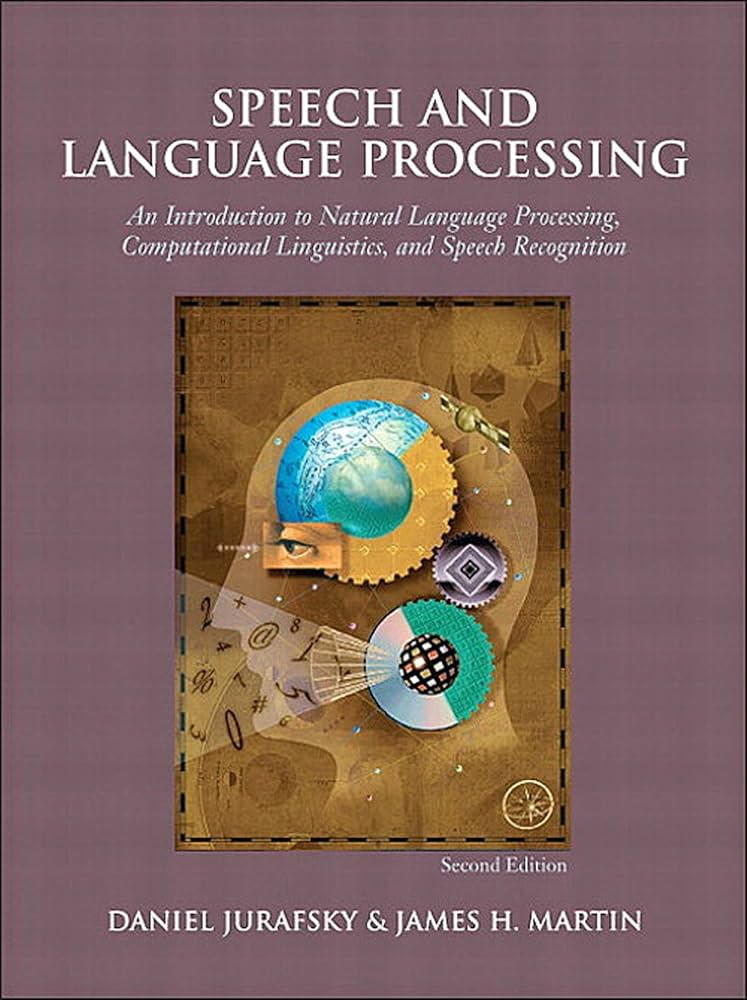
Authors: Dan Jurafsky and James H. Martin
This textbook has educated generations of NLP practitioners and researchers. Dan Jurafsky (Stanford) and James Martin (University of Colorado Boulder) are leading figures in computational linguistics, and their book is used in top university programs worldwide. The third edition, with the draft completed in August 2025, fully incorporates modern NLP including transformers, LLMs, and speech recognition systems like Whisper.
Unlike focused tutorials, this book provides comprehensive coverage of the entire NLP field. From linguistic foundations to cutting-edge neural approaches, it serves as both textbook and reference. The free availability of the draft PDF makes it accessible to self-learners, while the rigorous academic treatment satisfies formal education requirements.
For professionals seeking to deeply understand language processing rather than just apply APIs, this book is unmatched. It explains why techniques work, not just how to use them. This understanding proves valuable when customizing models, debugging unexpected behavior, or designing novel solutions to language problems.
Key Takeaways
- Comprehensive NLP theory and practice
- Linguistic foundations for language understanding
- Modern transformer and LLM coverage
- Speech recognition and synthesis
Choosing the Right Book for Your Goals
Selecting the best starting point depends on your current knowledge, available time, and specific objectives. The following table provides guidance based on common reader profiles.
| Reader Profile | Recommended Starting Book | Follow-Up Book | Time Investment |
|---|---|---|---|
| Startup Founder (Non-Technical) | The Hundred-Page Language Models Book | AI Engineering | 2-3 weeks |
| Software Developer (New to ML) | Hands-On Large Language Models | Build a Large Language Model | 4-6 weeks |
| ML Engineer (Expanding to LLMs) | Natural Language Processing with Transformers | AI Engineering | 3-4 weeks |
| Senior AI Engineer | Foundations of Large Language Models | Speech and Language Processing | 6-8 weeks |
| CTO/Technical Lead | The Hundred-Page Language Models Book | AI Engineering | 3-4 weeks |
| Career Changer into AI | Hands-On Large Language Models | Natural Language Processing with Transformers | 8-10 weeks |
Building Your LLM Learning Path
The most effective approach combines multiple resources in a structured sequence. Here is a recommended progression for comprehensive LLM mastery.
Phase 1: Foundation (Weeks 1-4)
Start with “The Hundred-Page Language Models Book” to build conceptual understanding quickly. Supplement with “Hands-On Large Language Models” for visual reinforcement and practical code examples. By the end of this phase, you should understand transformer architecture, attention mechanisms, and basic LLM applications.
Phase 2: Deep Technical (Weeks 5-10)
Progress to “Build a Large Language Model (From Scratch)” for complete technical understanding. Work through every code example, implementing components yourself rather than just reading. Parallel study of “Natural Language Processing with Transformers” provides production context for your learning.
Phase 3: Production and Scale (Weeks 11-16)
Complete your journey with “AI Engineering” for deployment expertise and “Foundations of Large Language Models” for theoretical depth. Keep “Speech and Language Processing” as an ongoing reference for specific topics as needed.
Supplementing Books with Practical Experience
Reading alone does not create expertise. Combine book learning with hands-on projects that reinforce concepts and build your portfolio. Consider implementing projects like a document question-answering system, a code review assistant, or a domain-specific chatbot.
Open-source projects provide excellent learning opportunities. Contributing to libraries like Hugging Face Transformers or LangChain exposes you to production-quality code and connects you with the broader AI community. The open-source AI coding assistants ecosystem offers particularly accessible entry points for contributors.
For those seeking structured practical experience, consider joining teams actively building LLM applications. The most in-demand AI engineering skills are best developed through real project work alongside experienced practitioners.
The Growing Importance of LLM Expertise
This investment creates massive demand for professionals who understand these systems.
For technology companies, LLM expertise has become a competitive advantage. Teams that understand how to effectively integrate, customize, and deploy language models ship better products faster. The books in this guide provide the knowledge foundation for that capability.
The talent shortage in AI remains severe. With demand exceeding supply by more than 3:1, professionals with genuine LLM expertise command premium compensation and enjoy abundant career opportunities. Investing in this knowledge now positions you for the decade ahead.
Frequently Asked Questions
Do I need a PhD to learn LLMs?
No. According to industry data, 48.6% of AI positions accept candidates with Master’s or Bachelor’s degrees, emphasizing practical experience over advanced degrees. The books in this guide are designed for self-directed learners.
How long does it take to become proficient in LLMs?
With dedicated study of 10-15 hours per week, expect 3-4 months to reach intermediate proficiency and 6-12 months for advanced expertise. Prior programming experience, particularly in Python, significantly accelerates the learning curve.
Which programming language should I learn first?
Python is essential. All books in this guide use Python for code examples, and the major LLM frameworks (PyTorch, Hugging Face, LangChain) are Python-based.
Are free resources sufficient for learning LLMs?
Free resources can provide a foundation. The draft of “Speech and Language Processing” is freely available, and many books offer sample chapters. However, the structured progression and comprehensive coverage of published books typically accelerate learning compared to piecing together free tutorials.
Conclusion
The seven books presented in this guide represent the best resources for learning Large Language Models in 2026. From Burkov’s concise introduction through Jurafsky and Martin’s comprehensive reference, each book serves a specific purpose in your learning journey. The key is matching your starting point and goals to the appropriate resources.
Start with one book that matches your current level, commit to completing it, and build from there. The investment you make in learning today will compound throughout your career as AI becomes increasingly central to how software is built and businesses operate.
Hire vetted remote AI developers with Second Talent to accelerate your LLM projects and build production-ready AI applications.



![Singapore AI Companies Leading Southeast Asia. Top 10 Singapore AI Companies Leading Southeast Asia [2026], by Second Talent.](https://www.secondtalent.com/wp-content/uploads/2026/09/singapore-ai-companies-featured-v2-768x403.jpg)
![AI Recruiting Tools. Top 7 AI Recruiting Tools in 2026 [Tried & Tested], by Second Talent.](https://www.secondtalent.com/wp-content/uploads/2026/09/top-ai-recruiting-tools-featured-v2-768x403.jpg)