China’s AI industry is accelerating at a pace that’s hard to ignore, and two names stand out at the center of this surge: Doubao and DeepSeek. These companies are not only shaping China’s technological landscape but also influencing the global AI race.
Why are they so significant? Both have achieved remarkable breakthroughs in large language models, cloud-based AI solutions, and generative applications that rival leading Western players.
Their innovations are redefining user experiences while setting new standards for efficiency, scalability, and cost-effectiveness. With international businesses and governments closely watching, their progress could alter the global balance of AI power.
The following comparison explores their origins, technological strengths, performance metrics, and strategies for market dominance, offering insight into what makes each a major force in the world of artificial intelligence.
What’s your AI development priority?
Select your situation below.
Building an AI chatbot or LLM application? You need developers who understand both Western frameworks and China’s AI ecosystem. Our AI/ML engineers have shipped products using GPT, Claude, and Chinese models like Doubao. Average project start: 2 weeks. Hire AI developers →
Growing your product team to compete in the AI race? Our full-stack developers in Vietnam and Philippines cost 60-70% less than US hires while delivering enterprise-grade code. Build faster without burning cash on inflated salaries. Compare full-stack rates →
Expanding to Asia to tap into the AI boom? Our EOR service handles payroll, compliance, and benefits in 6+ countries so you can hire top engineers without setting up entities. Get your first developer onboarded in 14 days. Get EOR pricing →
Running AI models at scale demands rock-solid backend architecture. Our backend engineers specialize in Python, Node.js, and cloud infrastructure that handles millions of API calls. They’ve built systems for companies processing 500K+ daily AI requests. Hire backend engineers →
China’s AI Chatbot Boom – Setting the Stage
Early leaders included Baidu with Ernie Bot and Alibaba’s Tongyi Qianwen, but the competitive landscape has dramatically shifted. By December 2025, the top five AI-native apps by monthly active users in China were Doubao, DeepSeek, Tencent Yuanbao, Ant Afu, and Alibaba Qwen reflecting a much broader and faster-moving ecosystem than anticipated.
Two names anchor this race: Doubao, developed by ByteDance, and DeepSeek, a research-focused challenger backed by quantitative hedge fund High-Flyer. ByteDance whose short-video playbook has been so widely imitated that a TikTok clone is now a standard app category, brings the scale, data, while DeepSeek counters with agility, academic rigor, and a strategy aimed at building smarter, leaner systems.
Several factors drove this boom:
- Regulatory restrictions prevented foreign AI services from operating freely, giving local companies a clear path to capture the market.
- Massive investment from China’s tech giants accelerated innovation in large language models.
- High consumer adoption rates for AI-powered services created fertile ground for rapid growth.
Early leaders included Baidu with Ernie Bot and Alibaba’s Tongyi Qianwen, but the spotlight has shifted. Two names now dominate conversations: Doubao, developed by ByteDance, and DeepSeek, a research-focused upstart challenging established giants.
ByteDance brings the scale, data, and global presence of a tech titan, while DeepSeek counters with agility, academic rigor, and a strategy aimed at building smarter, leaner systems.
Both companies are shaping not only China’s AI future but also influencing how the next wave of chatbots will compete on the world stage.
Doubao:

Image credit: Doubao
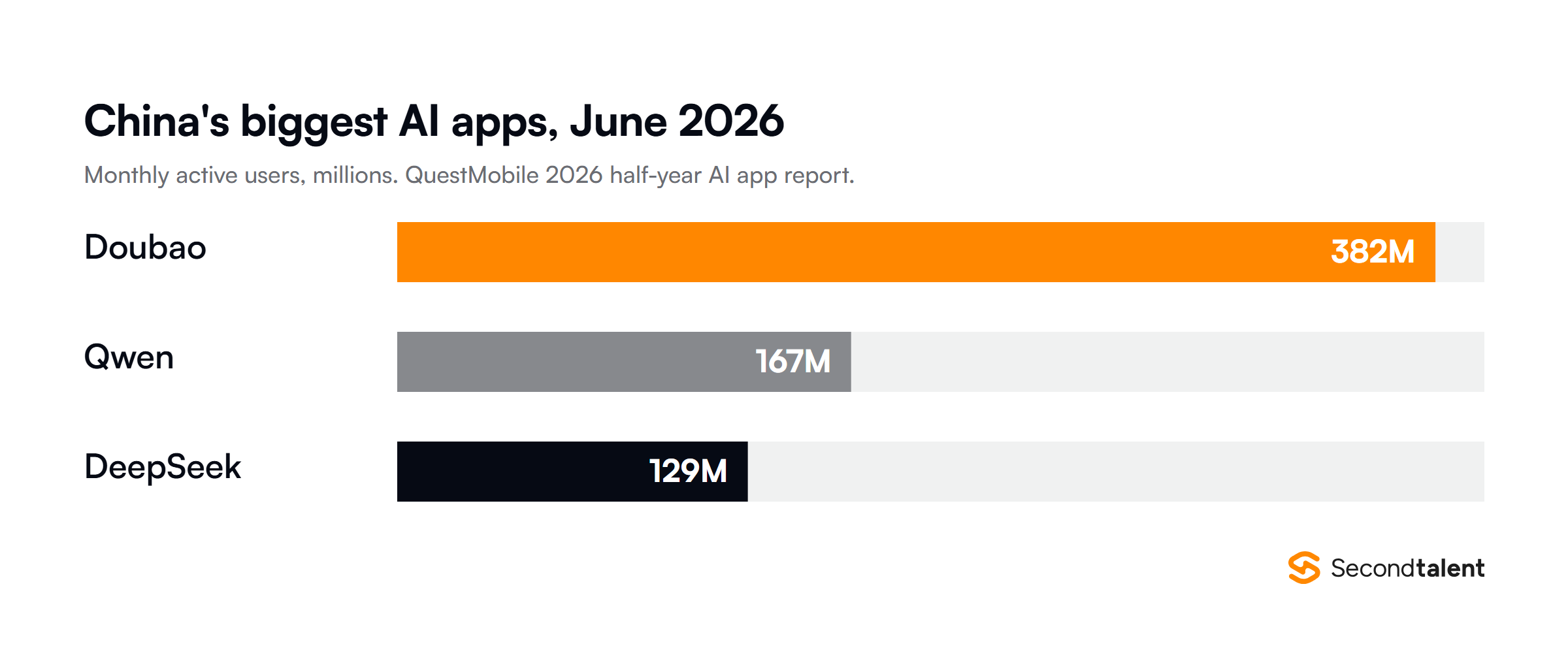
Doubao’s daily active user count has exceeded 100 million 36Kr, and as of the end of 2025, Doubao leads the domestic AI-native application market with 226 million monthly active users. Aibase This puts it well ahead of every domestic competitor and firmly establishes it as China’s dominant consumer AI platform. ByteDance achieved this with the lowest user growth and marketing expenses of any ByteDance product ever to surpass 100 million DAUs in the company’s history.
1. Key Features and Capabilities
Doubao stands out for its advanced multimodal functionality, offering a highly versatile user experience.
- Supports multiple modalities: Text, images, audio, and video
- Upcoming text-to-video generation: Designed to enhance creative workflows
- Personalisation through ByteDance ecosystem: Seamless integration with platforms like Douyin
- Aggressive pricing strategy: Makes advanced AI accessible to both individuals and businesses
2. Technical Strengths
The platform is optimized for comprehensive interaction across various content formats:
- Full range of modalities, including text, images, audio, video, and even 3D content
- Vertical scenario optimisation for tasks such as content creation and GUI interaction
- Chinese cultural reinforcement to ensure outputs resonate with the local context
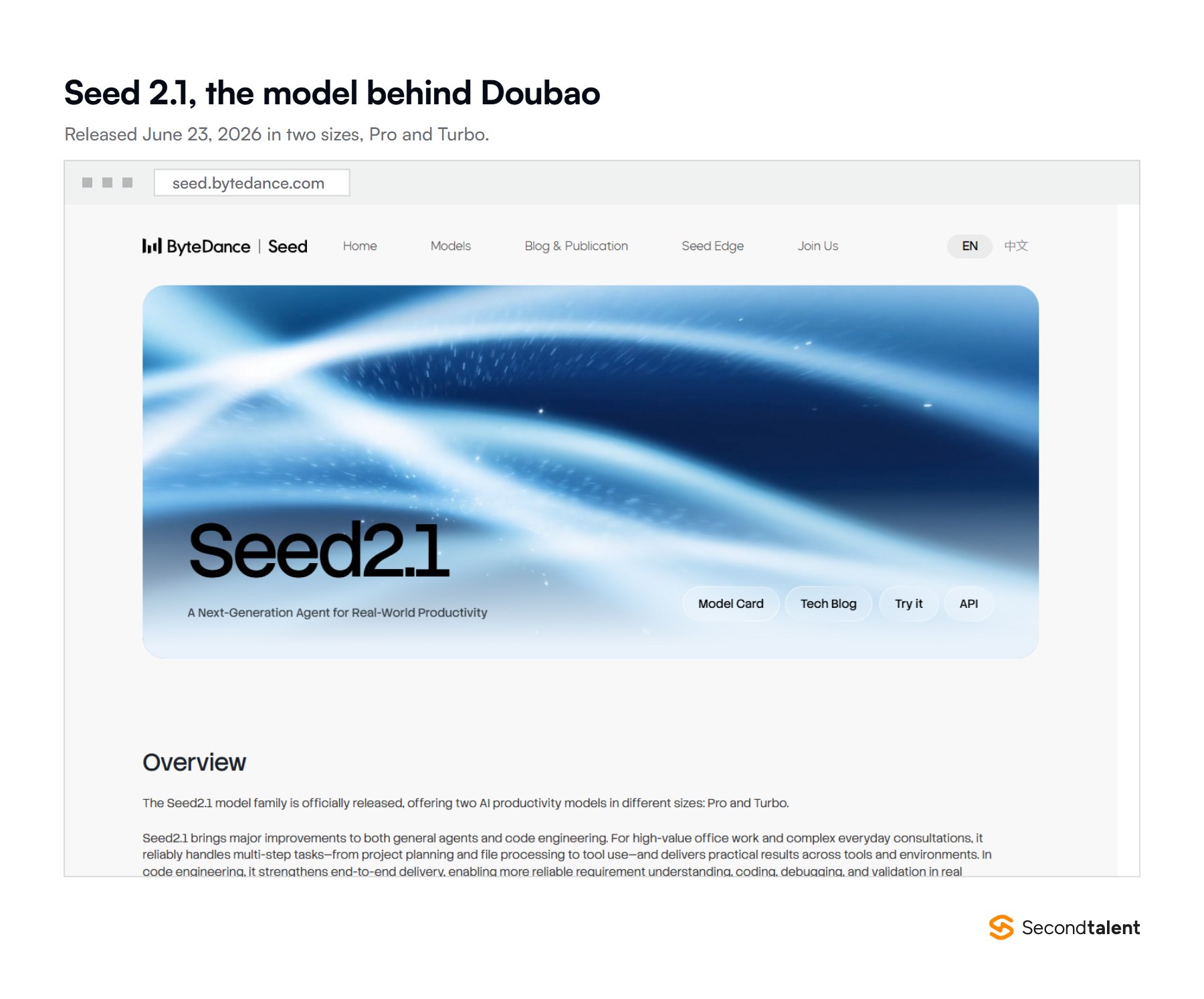
- The latest version 1.6 introduces improved reasoning, multimodal understanding, GUI operation, and programming support
3. Ecosystem and Enterprise Integration
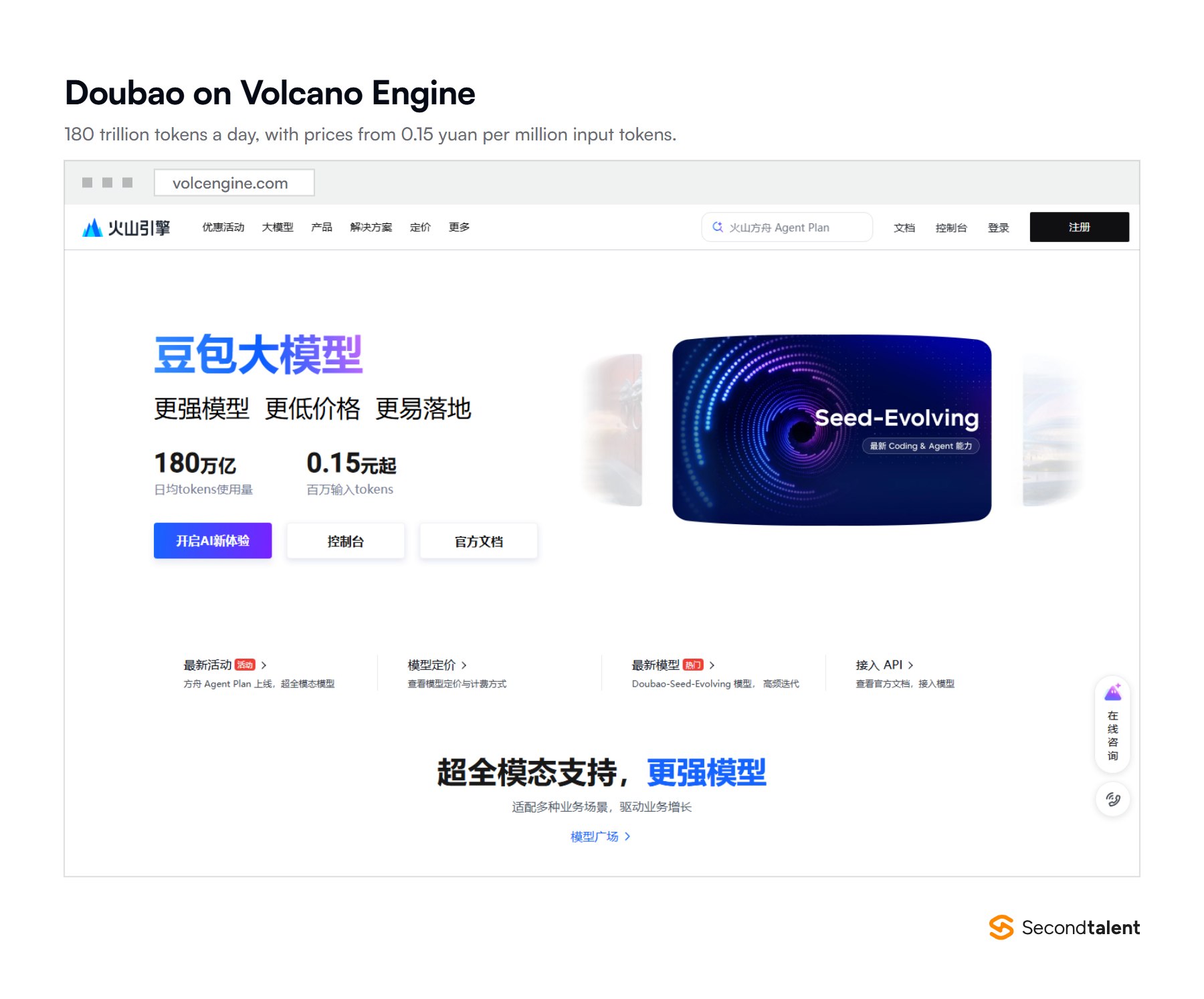
Doubao is deeply integrated into ByteDance’s Volcano Engine, the company’s cloud and AI services arm. This integration offers:
- Model fine-tuning and inference services
- Enterprise-level deployment across industries such as:
- E-commerce
- Autonomous driving
- Security solutions
- E-commerce
- By the time of Doubao 1.8, its tool-calling ability, complex instruction-following ability, and OS Agent ability have all been enhanced, delivering all-around skills described as “seeing, writing, doing, and planning.” In terms of visual understanding, the number of frames for single-video understanding doubled from 640 to 1,280 frames, enabling use in online education and product quality inspection. 36Kr A Doubao 2.0 series, including Seedance 2.0 and Seedream 5.0 Preview, was announced for February 2026.
4. Why Doubao Leads the Pack
Combining cutting-edge multimodal capabilities, strong cultural alignment, and ByteDance’s massive user ecosystem, Doubao has set a new benchmark for AI chatbots in China. Its rapid growth reflects both the maturity of ByteDance’s AI strategy and the increasing demand for conversational AI across business and consumer applications.
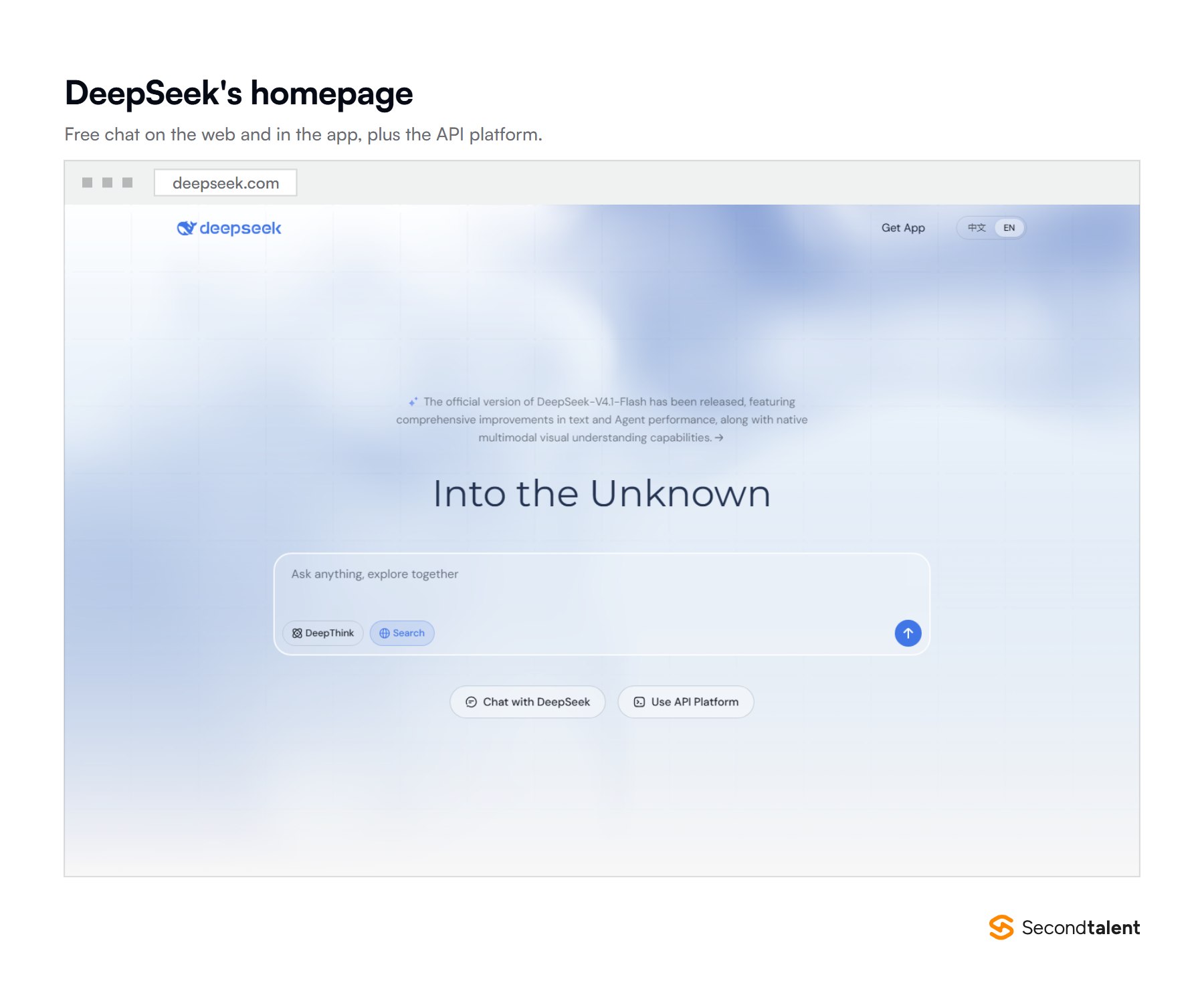
DeepSeek:

Image credit: Deepseek
DeepSeek V4 is expected to be a native multimodal model integrating text, image, and video generation during pre-training for more coherent cross-modal reasoning, and will feature a 1 million token context window.
Nxcode V4 is expected to adopt a 1-trillion parameter MoE architecture — approximately 50% larger than V3’s 671 billion parameters — while keeping active parameters per token at 50–60 billion to maintain inference efficiency.
Meta Intelligence A key architectural innovation called Engram introduces conditional memory, allowing the model to store factual recall separately from active reasoning, enabling enterprise-grade local deployment at dramatically lower cost.
1. Core Features and Strengths
DeepSeek stands out for its technical innovation, open philosophy, and practical versatility:
- Open-Source Models: Flagship models such as DeepSeek-R1 and DeepSeek-V3 are available under open-source licenses, empowering developers and researchers globally.
- Advanced Reasoning: R1 incorporates 670 billion parameters and incremental reasoning techniques that mimic human logic for complex tasks.
- Multilingual Support: Trained on diverse datasets, offering robust performance in English, Chinese, and other languages.
- Cost Efficiency and Hardware Innovation: Utilizes architectures like Mixture-of-Experts (MoE) and Multi-Head Latent Attention (MLA) to cut computational costs without compromising performance.
- Broad Application Range: Includes specialized models such as:
- DeepSeek-Coder for programming tasks
- DeepSeek-VL for multimodal understanding
- APIs, mobile apps, and web tools for easy integration
- DeepSeek-Coder for programming tasks
- Transparency and Research Focus: Open-sources model code to promote collaboration while safeguarding training data for privacy.
2. Competitive Edge
DeepSeek’s vision is clear: make advanced AI accessible and affordable without sacrificing quality. Reducing dependency on expensive hardware and promoting open research enables it to challenge the dominance of closed, high-cost AI giants. The platform is particularly strong in:
- Mathematical and logical reasoning
- Software development and coding support
- Multilingual conversational AI for global scalability
DeepSeek has positioned itself as the lean, research-driven alternative in China’s AI race, appealing to developers, enterprises, and academics alike. Its combination of transparency, technical sophistication, and affordability makes it a genuine disruptor in the global AI landscape.
Technology Showdown: Under the Hood
When it comes to the tech behind these platforms, Doubao and DeepSeek take very different paths to achieve big results.
Doubao’s Tech Stack
Doubao has the backing of ByteDance, and it shows in the hardware and infrastructure. The system runs on Volcano Engine, ByteDance’s cloud platform, and uses powerful Nvidia H800/H20 GPUs along with Huawei Ascend chips to handle massive workloads.
Key strengths include:
- Smarter architecture: Uses a Mixture-of-Experts (MoE) design, which makes the model faster and more efficient by activating only the parts needed for each task.
- All-in-one multimodal support: Handles text, images, audio, and even music generation, making it versatile for creative and professional use.
- Handles huge content: With a context length of up to 128,000 tokens, it can manage long documents without breaking a sweat. Ideal for research papers, scripts, or legal documents.

DeepSeek’s Tech Stack
DeepSeek plays a different game. Without access to the same level of high-end chips, it focuses on doing more with less. Despite operating under hardware limits, it delivers world-class reasoning and problem-solving at roughly one-tenth of the computing cost of its competitors.
What sets it apart:
- MoE with a twist: Uses a similar expert-based structure but adds its own training tricks for higher efficiency.
- Lightweight but powerful: Models like DeepSeek-V3 and R1 perform at GPT-4 levels while staying resource-friendly.
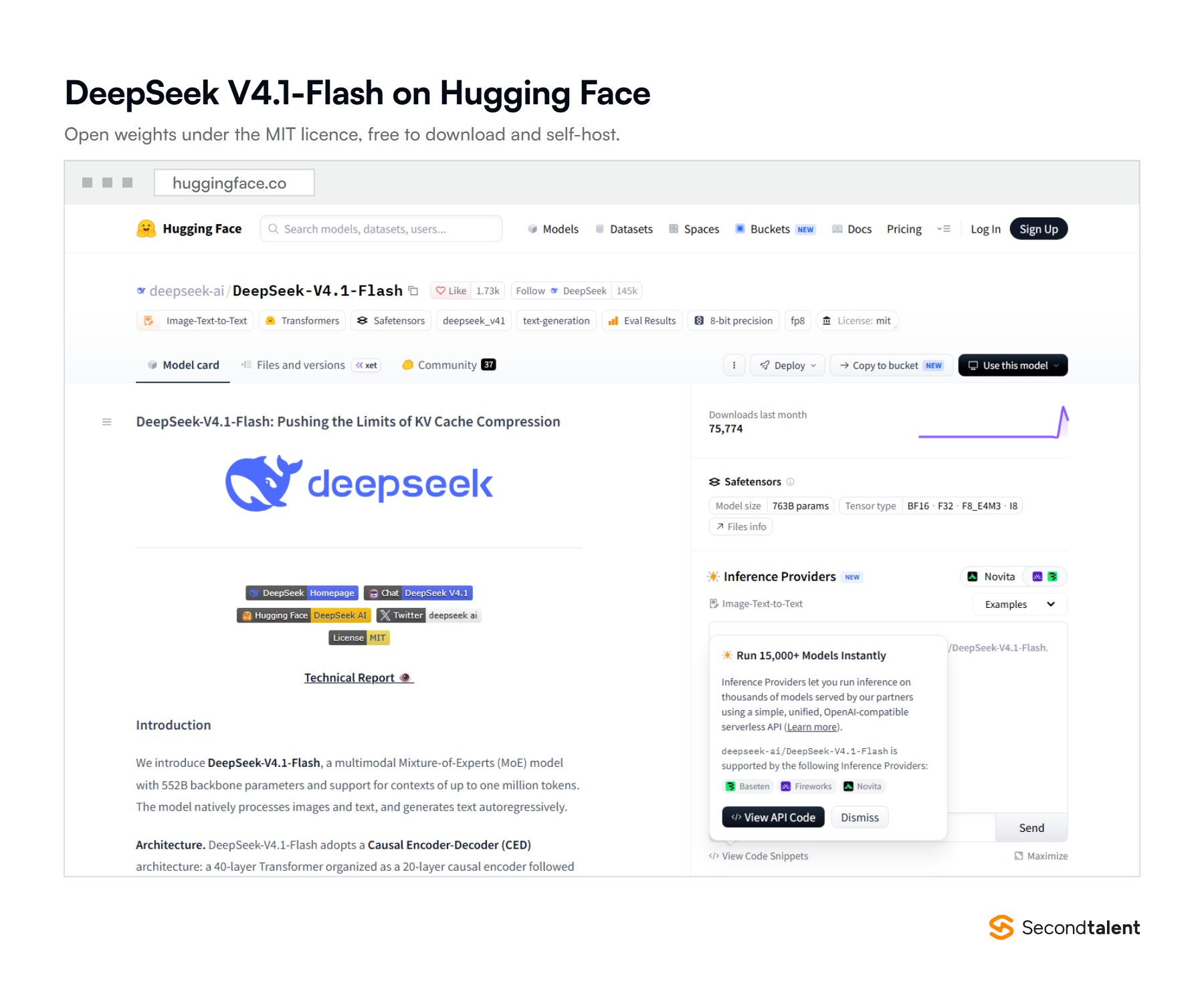
- Open-weight advantage: Sharing its model weights openly allows developers and researchers worldwide to build on its work, fostering a strong collaborative ecosystem.
Bottom line: Doubao wins on hardware muscle and multimedia capabilities, while DeepSeek takes the crown for efficiency, reasoning skills, and openness.
Product Lineup & Features
When comparing Doubao and DeepSeek, their product ecosystems reveal how each company approaches AI adoption.
1. Doubao’s Products
ByteDance has built a comprehensive AI suite around Doubao, aimed at everyday users and businesses alike:
- Doubao Chatbot: With over 78 million monthly active users, it’s China’s most popular AI assistant, widely used for learning, productivity, and entertainment.
- Doubao LLM Family: Offers multiple versions, Lite to Pro that are tailored for different needs, from consumer apps to enterprise-level APIs.
- Creative AI Tools:
- Seed-Music for AI-generated music
- PixelDance for creating stunning visuals
- Seaweed for generating dynamic video content
- Seed-Music for AI-generated music
This combination makes Doubao not just a chatbot but a complete creative and productivity hub tightly integrated into ByteDance’s ecosystem.
2. DeepSeek’s Products
DeepSeek takes a more developer-focused and open-source-first approach:
- DeepSeek V4 (upcoming) — Expected to be the flagship open-weight model of 2026, with native multimodal capabilities, a 1M token context window, and a new Engram memory architecture. As of March 23, 2026, V4 has not yet launched publicly, though a “V4 Lite” appeared on DeepSeek’s website on March 9, suggesting an incremental rollout strategy.
- DeepSeek R2 — The next-generation reasoning model, also anticipated in 2026, designed to build on R1’s GPT-4-level reasoning with improved efficiency on domestic chips including Huawei Ascend.
Key Difference: Doubao focuses on consumer engagement and creative tools, leveraging ByteDance’s social platforms.
DeepSeek, on the other hand, positions itself as a developer’s dream, prioritising openness, flexibility, and technical depth.
Performance & Benchmark Battle
Both Doubao and DeepSeek deliver top-tier AI performance, but they shine in different ways.
1. Doubao
Doubao’s token processing grew from 12.7 trillion to 50+ trillion daily in just nine months, representing over 10x growth and accounting for nearly half of China’s entire AI cloud market. The Doubao-1.5-Pro model matches GPT-4o and Claude 3.5 Sonnet across multiple evaluation metrics, while Doubao-Seed-Code outperforms GPT-5 across 9 out of 9 tested benchmarks with particular advantages in coding and tool use.
- 50 times cheaper than GPT-4
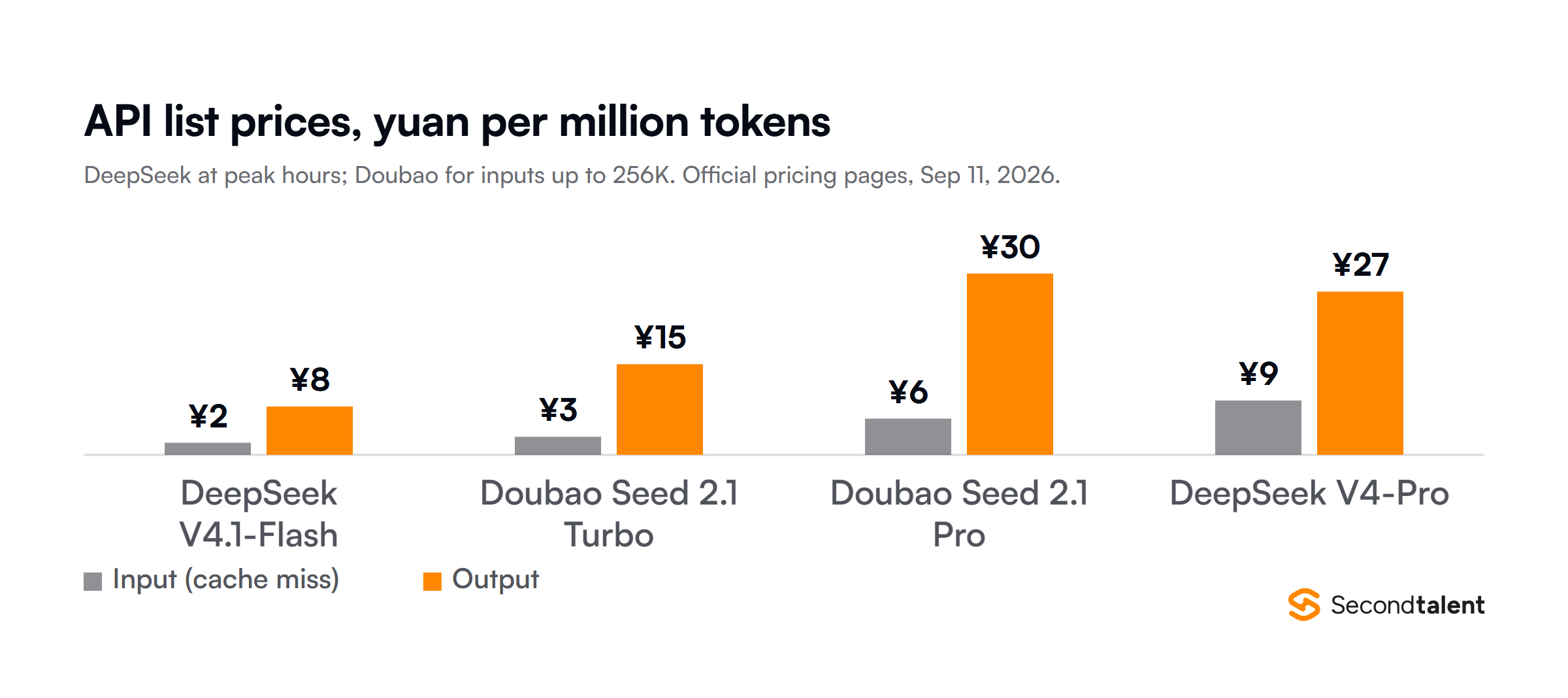
- 5 times cheaper than DeepSeek for enterprise use
This makes it extremely attractive for businesses that need powerful AI without breaking the bank.

2. DeepSeek
DeepSeek is all about doing more with less. It reaches GPT-4-level reasoning ability while keeping training costs down to about $6 million, compared to the $100+ million spent by global competitors. It’s especially strong in:
- Coding tasks
- Complex reasoning problems like maths or algorithm design
Bottom Line: Both models undercut global giants on cost, but Doubao pushes affordability even further, making it a top pick for large-scale enterprise use.
DeepSeek, meanwhile, offers elite reasoning and coding skills with unmatched efficiency in development cost.
8. Pricing and Business Models
Pricing is where these two AI giants take very different paths.
1. Doubao
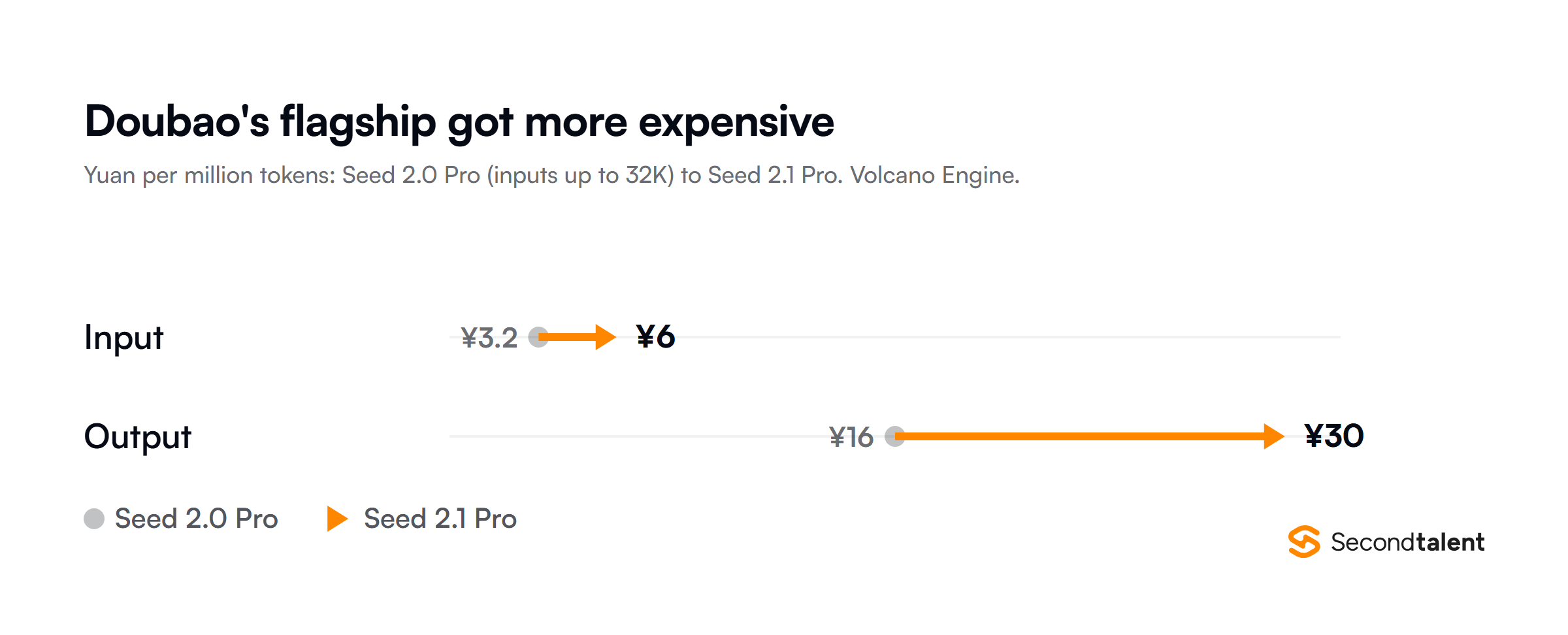
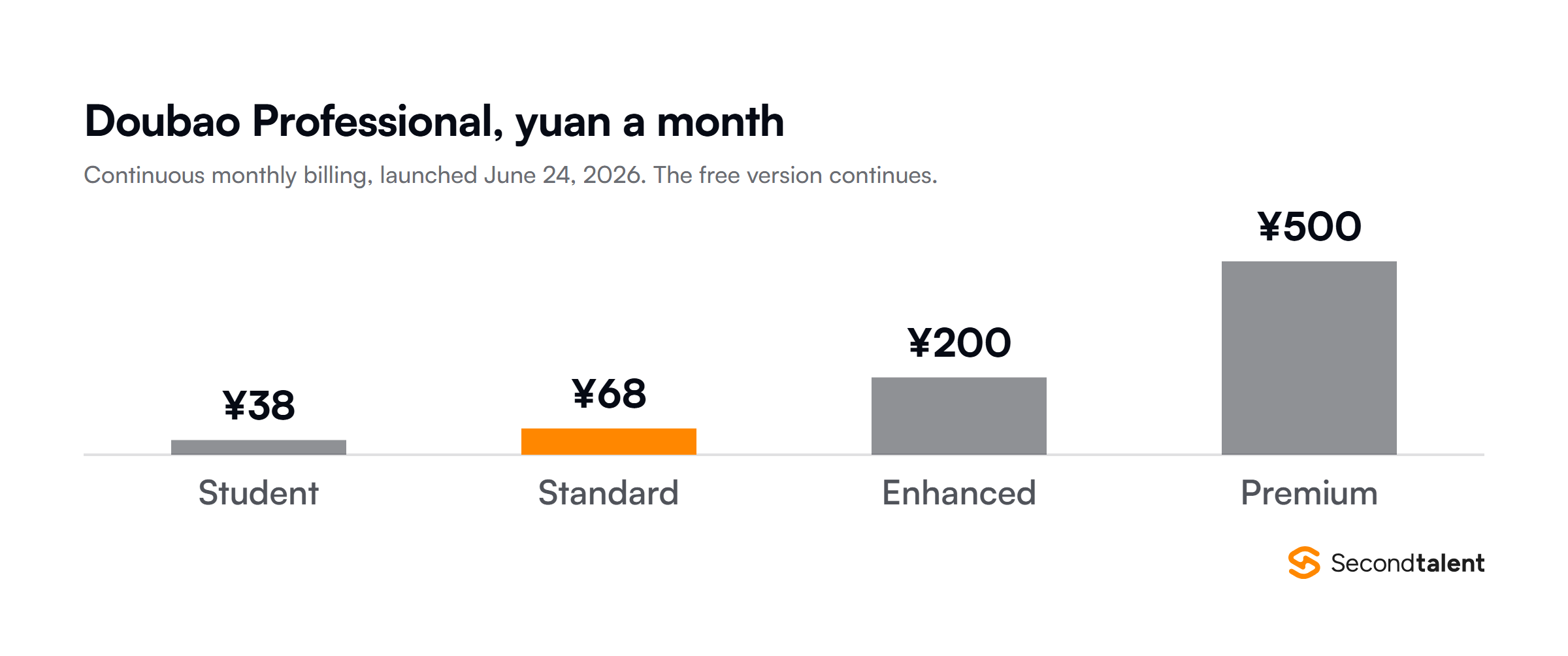
Doubao uses an aggressive freemium approach to win users fast. The chatbot is free for consumers, making it highly accessible. For businesses and developers, its API pricing is incredibly low at just ¥0.0008 for every 1,000 tokens, which is one of the cheapest rates in the market.
This strategy ensures that even small businesses can integrate advanced AI without heavy costs. ByteDance makes money mainly through its Volcano Engine cloud services, offering enterprises additional features like fine-tuning and deployment.

2. DeepSeek
DeepSeek’s model focuses more on openness and research than profit. Most of its large models are open-weight, meaning developers can access and customize them freely.
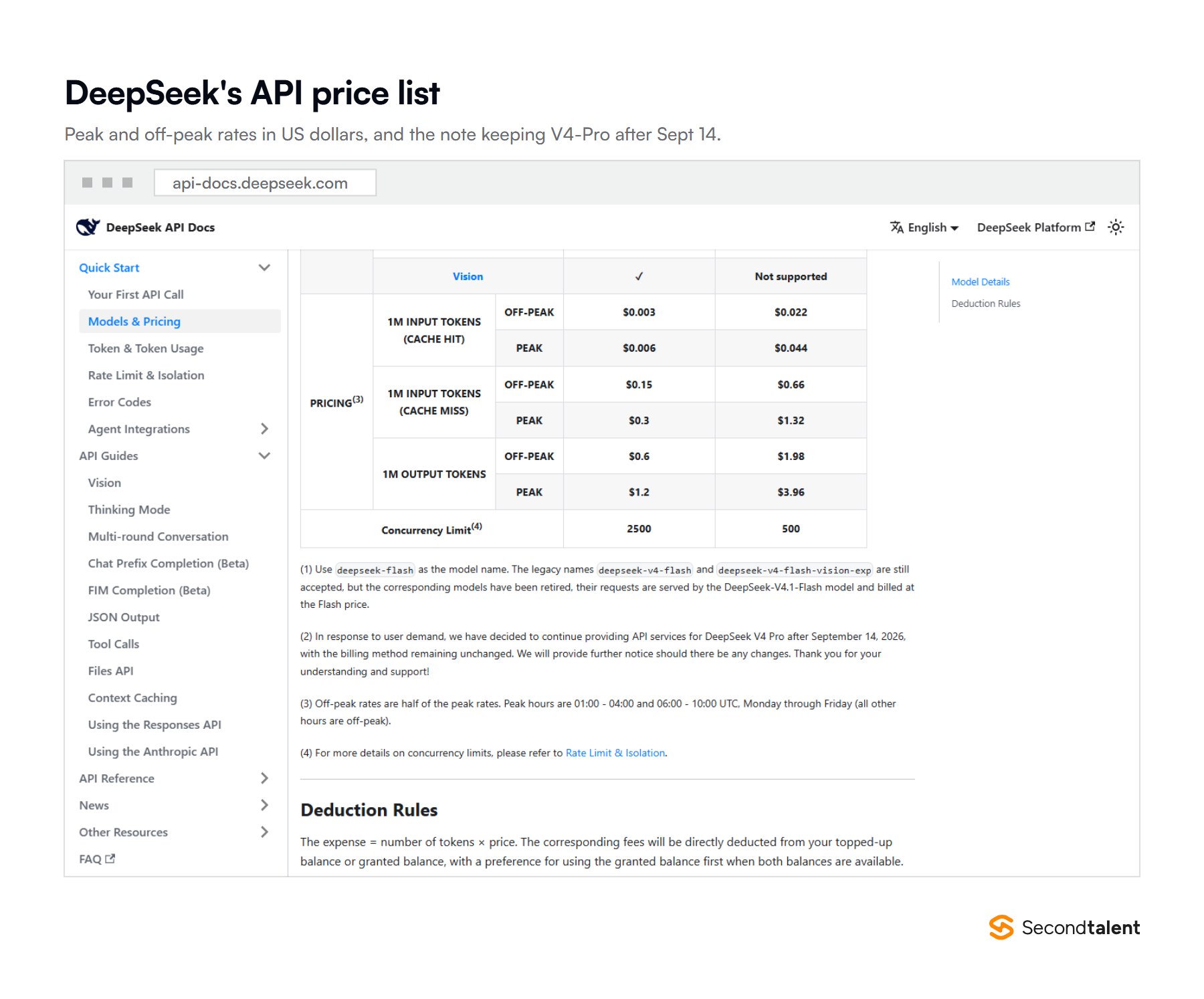
For commercial use, DeepSeek offers affordable APIs, particularly for its coding-focused models, priced at about $0.14 per million tokens.
Rather than prioritizing revenue, DeepSeek runs on hedge fund support and aims for long-term impact by creating a strong developer ecosystem.
Key Difference: Doubao aims for scale and monetisation via enterprise services, while DeepSeek prioritizes community-driven growth and cost transparency, keeping barriers low for innovators and researchers.
Market Reach & Adoption
1. Duobao
As of December 2025, Doubao ranks first among all AI-native applications in China by monthly active users, with DeepSeek, Tencent Yuanbao, Ant Afu, and Alibaba Qwen rounding out the top five. Aibase Doubao has also launched AI e-commerce functionality in March 2026, integrating large model natural language understanding with Douyin’s e-commerce supply chain for a “one-sentence shopping” experience.

2. DeepSeek
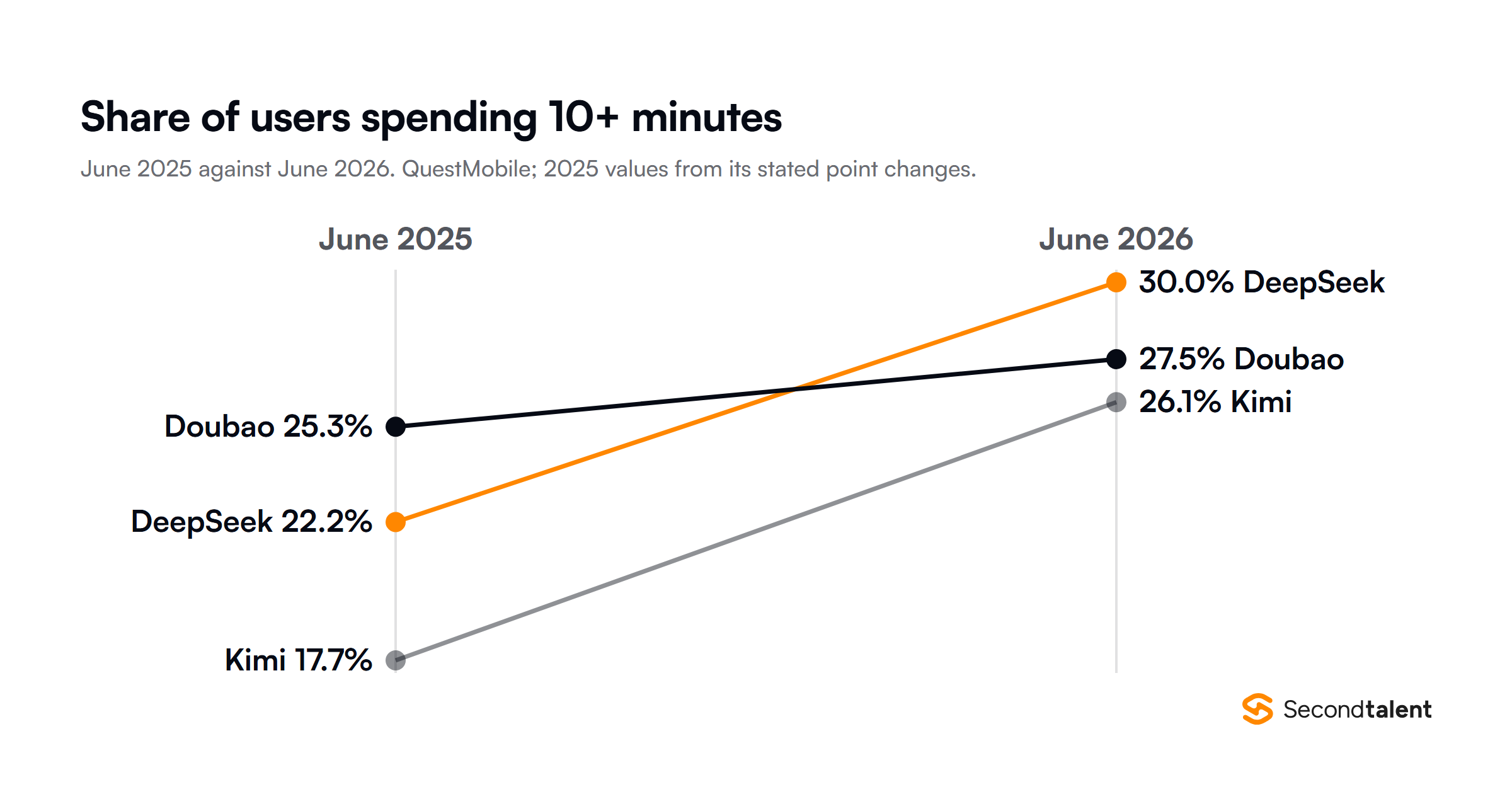
DeepSeek takes a different route. Instead of chasing mass consumer adoption, it focuses on open-source models and research partnerships. This approach has made it a favorite among developers, academics, and tech innovators worldwide.
Although DeepSeek hasn’t reached mass consumer adoption, it holds a strong position within the AI research community. Its status is further reinforced by official recognition from the Chinese government, marking it as a key player in the country’s AI development strategy.
Key Difference: Doubao dominates the consumer market and is eyeing global growth, while DeepSeek commands respect in the technical and research world with a strong collaborative ecosystem.
Strengths & Weaknesses
Both Doubao and DeepSeek bring unique strengths to the AI race, but each also faces its own challenges. Here’s a quick look at what sets them apart:
1. Doubao
Strengths:
- Multimodal capabilities (text, image, audio, video)
- Strong backing from ByteDance’s infrastructure and funding
- Massive consumer adoption with 78M+ active users
Weaknesses:
- Primarily focused on the Chinese market
- Regulatory hurdles limit global expansion

2. DeepSeek
Strengths:
- Open-weight models that promote innovation
- Extremely efficient and cost-effective training methods
- Exceptional reasoning and coding performance
Weaknesses:
- Multimodal capability gap is being closed with V4, but full release and independent benchmark verification remain pending as of Q1 2026
- Delayed flagship releases (V4/R2 missed multiple launch windows) have allowed rivals like Alibaba Qwen to gain ground in the open-source space
China’s AI Chatbot Revolution: Two Titans, Different Roads
Doubao and DeepSeek aren’t just competing; they represent two philosophies shaping the future of AI. Doubao thrives on scale, accessibility, and a multimodal vision, while DeepSeek pushes the boundaries of efficiency and openness.
Both are redefining what AI can deliver for businesses, developers, and everyday users. For companies planning AI-driven growth, understanding these shifts is critical. The next leap in AI will come from those who can combine innovation with practical application.
Want to build AI-powered solutions or integrate cutting-edge chatbot technology into your business? Second Talent connects you with skilled AI developers who understand emerging trends like Doubao and DeepSeek.
Contact us today to explore flexible, cost-effective AI talent solutions tailored to your goals.
Frequently Asked Questions
1. Which is better – Doubao or DeepSeek?
Neither is universally “better”. It depends on what you need. Doubao is perfect for users and businesses looking for multimodal features (text, images, audio, video) and strong ecosystem integration.
DeepSeek, on the other hand, is ideal for developers and researchers who value open-source models, cost efficiency, and top-notch reasoning abilities.
2. Is Doubao available outside China?
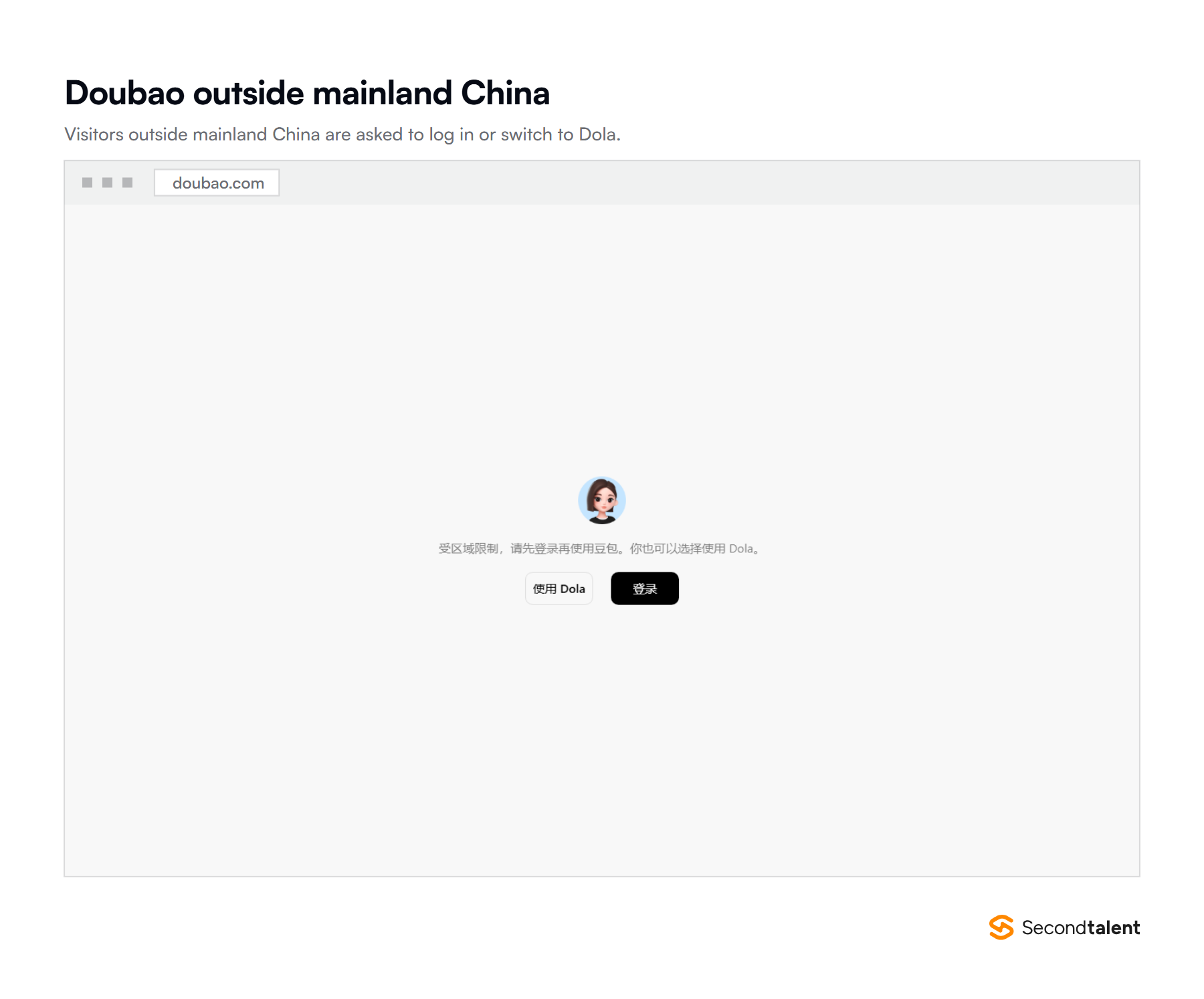
Not yet. Doubao currently operates within China, mainly because of strict regulatory frameworks. However, with ByteDance’s global reach through TikTok, there’s a strong chance parts of Doubao’s technology will appear in international products in the future.
3. Why is DeepSeek called a disruptor?
DeepSeek is considered disruptive because it delivers GPT-4-level reasoning with a development cost of just $6 million, compared to the $100 million+ used by other AI giants. It makes cutting-edge AI far more accessible because it combines efficient training techniques with an open-weight approach,
4. Can businesses integrate Doubao or DeepSeek into their systems?
Yes. Doubao offers enterprise APIs at ultra-low prices, making it attractive for large-scale use. DeepSeek provides open-weight models and APIs, giving businesses flexibility to fine-tune and deploy models on their own infrastructure.
5. Which one is better for coding tasks?
DeepSeek is the clear winner here. Its specialized models, such as DeepSeek-Coder, are optimized for programming and algorithm-heavy work. Doubao supports coding features but is primarily focused on general chat and multimodal applications.