TL;DR: LinkedIn Hiring Assistant is the strongest pick for teams already paying for LinkedIn Recruiter, and Pin is the best-value engineering sourcer, from $99 a user a month. HackerRank's Chakra handles the technical first round and BrightHire the interview notes. ChatGPT Business and Claude Team, both $20 a seat a month on annual billing, cover the writing, research and scheduling work around them.
HackerRank's AI interviewer, Chakra, had run more than 500,000 candidate interviews by its general release on October 5, 2026, TechCrunch reported.
A year earlier, LinkedIn opened its Hiring Assistant to all English-language Recruiter customers. The tools below split by the part of the job they take over: finding engineers, screening them, or the writing around both.
- 1Recruiting is where HR uses AI most: 27% of organizations use it there, ahead of every other HR function, in SHRM's State of AI in HR 2026.
- 2Only Pin, hireEZ, ChatGPT and Claude publish a price. LinkedIn, HackerRank and BrightHire sell by quote.
- 3An AI tool that screens or ranks candidates for a New York City job needs a bias audit within the year before use, under the city's Local Law 144.
- 4Ownership is moving: Zoom agreed to buy BrightHire in November 2025 and kept it as a standalone brand.
Quick comparison
| Assistant | Takes over | Engineering signal | Price |
|---|---|---|---|
| LinkedIn Hiring Assistant | Intake, search, outreach, applicant review | LinkedIn profiles and activity | Quote, add-on to Recruiter |
| Pin | Sourcing, outreach, scheduling | GitHub, Stack Overflow, patents, papers | Free; $99 to $135 a user a month |
| hireEZ | Sourcing, screening, scheduling on your ATS | Profiles from 45+ platforms | From $494 a month, solo |
| HackerRank Chakra | Technical first-round interview | Live coding and follow-up questions | Quote |
| BrightHire | Interview notes, AI screen, scorecards | What candidates said in interviews | Quote |
| ChatGPT | Research, drafting, agent tasks | Whatever you give it | $20 a user a month, Business |
| Claude | Drafting, research, email and calendar | Whatever you give it | $20 a seat a month, Team |
1. LinkedIn Hiring Assistant
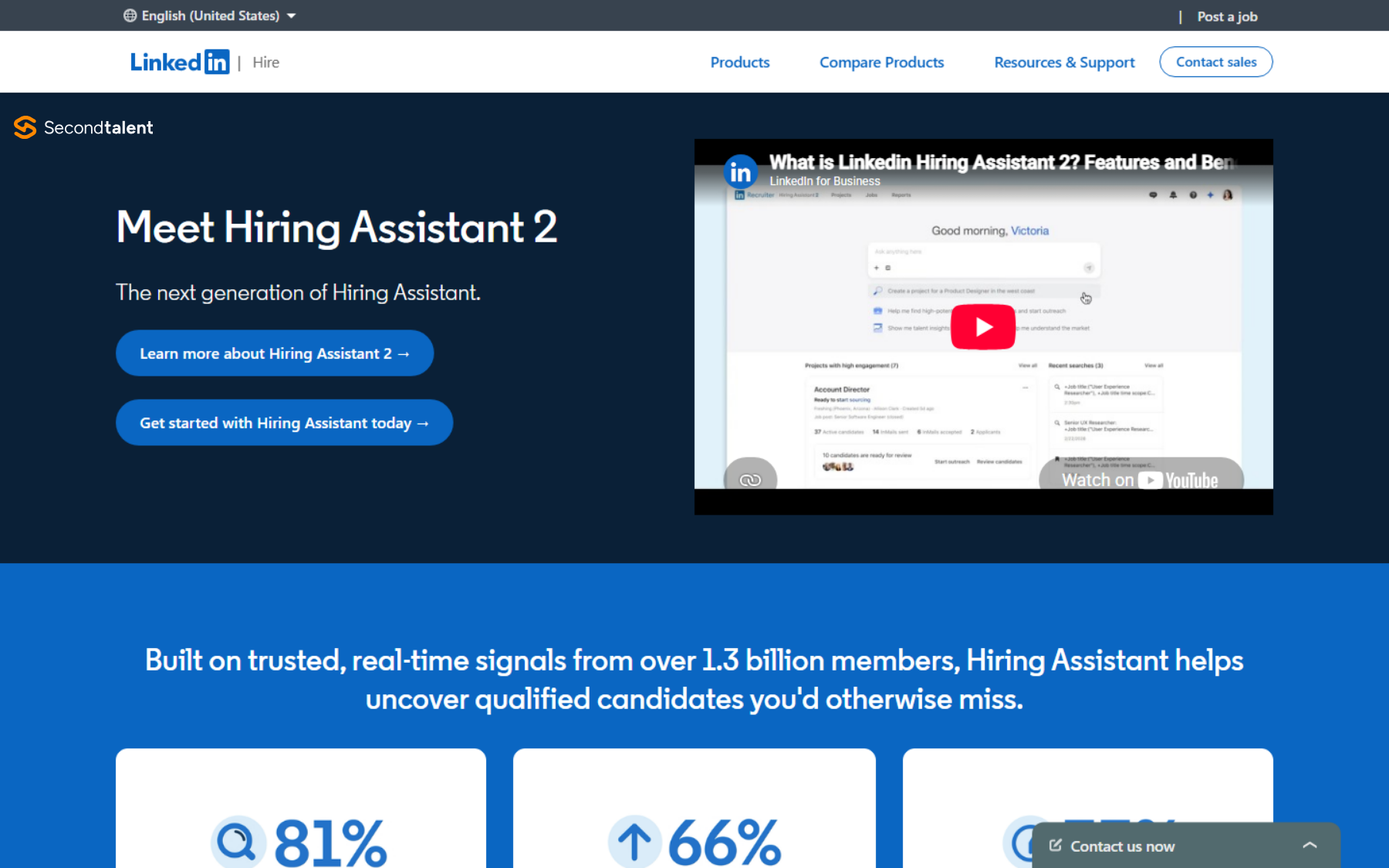
Hiring Assistant is the agent inside LinkedIn Recruiter, and its edge is the data it sits on. It starts with an intake talk about the role and turns it into a sourcing plan.
Then it runs searches across LinkedIn, reviews applicants from LinkedIn and connected tracking systems, and drafts personal messages.
It learns from the candidates you accept and reject. More than 20,000 companies now use LinkedIn's agentic hiring tools, HR Dive reported in October 2026.
LinkedIn launched it with selected customers in October 2024. It opened to all English-language Recruiter customers in September 2025, Social Media Today reported.
Hiring Assistant 2, rolling out from October 2026, adds signals such as Open to Work status and InMail reply history. It also adds identity checks and voice pre-screening.
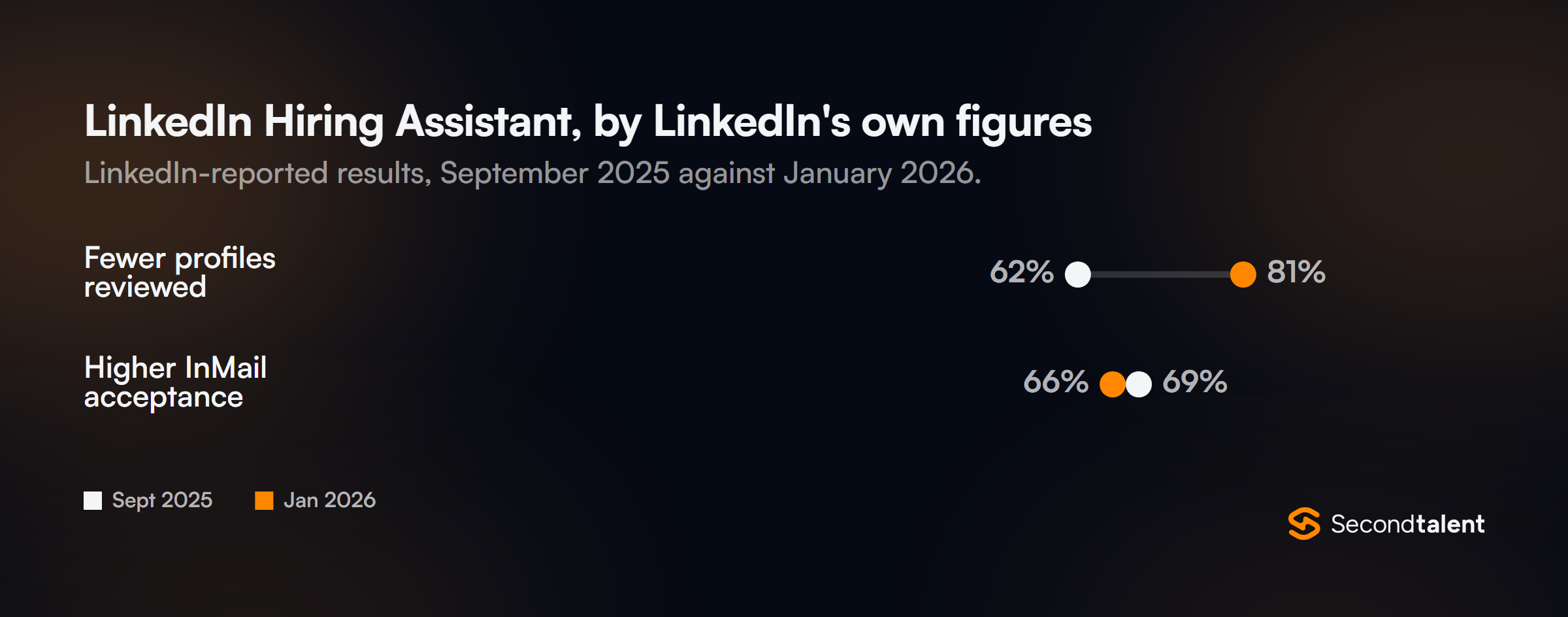
LinkedIn's own results improved on one measure and slipped on the other between its two published rounds. Both come from LinkedIn's customers, not an independent test.
- Best for: recruiting teams that already pay for LinkedIn Recruiter and hire engineers who keep their profiles current.
- Where it struggles: engineers who seldom use LinkedIn. It sees GitHub only through links on a profile.
- Price: sold as an add-on to Recruiter, by quote.
2. Pin
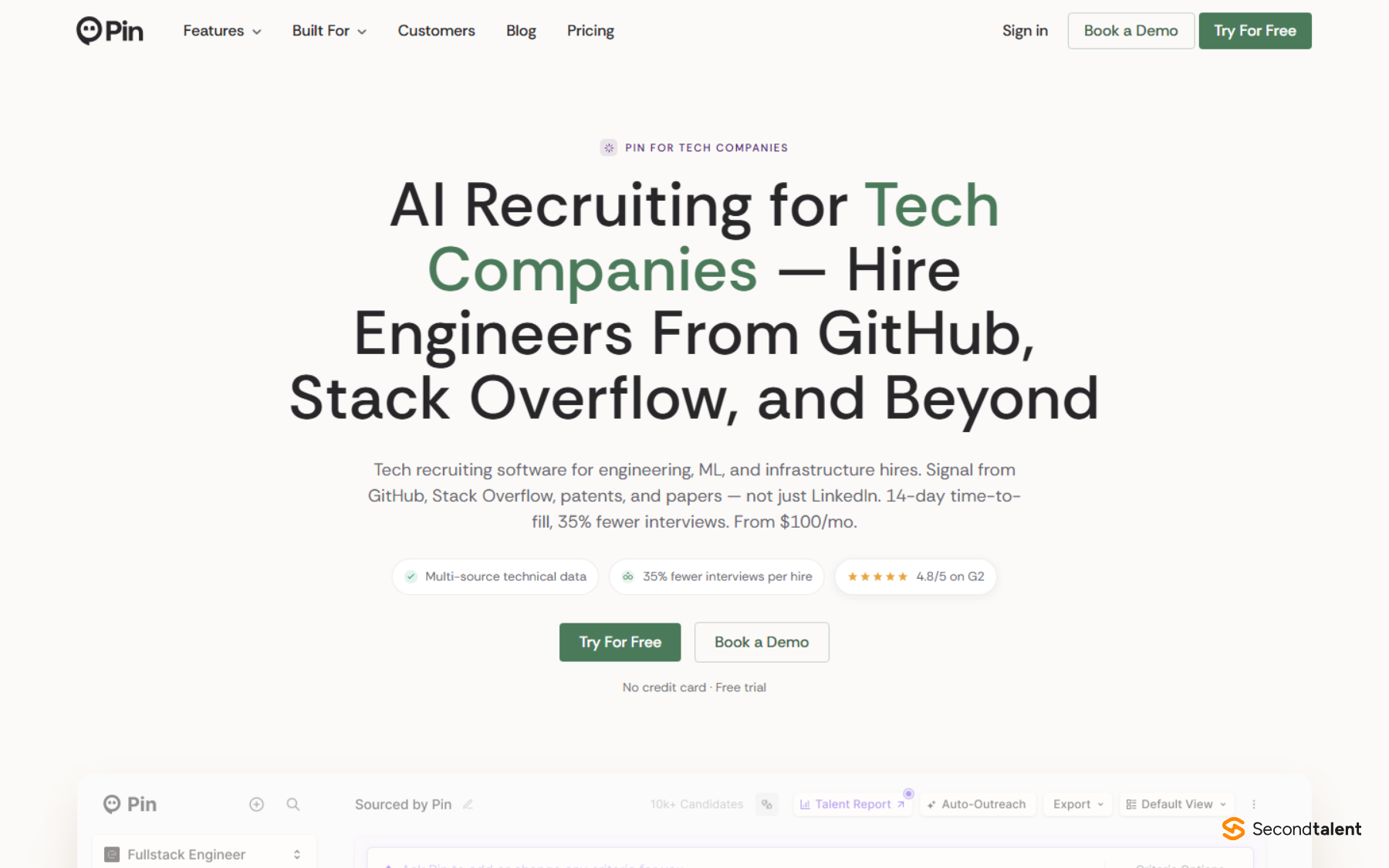
Pin reads the parts of an engineer's work that a profile leaves out. It indexes public GitHub activity: who owns a repository, the commit history and the mix of languages.
Each candidate comes with links to their repositories, Stack Overflow answers, patents or papers.
You describe the person you need in plain English instead of a Boolean string. Pin then searches more than 850 million profiles from dozens of data providers.
Outreach uses the same evidence. Pin drafts messages that mention a candidate's own repository or answer, runs follow-ups across channels, and books interviews. It connects to more than 120 tracking systems, Greenhouse and Lever among them.
Pin reports a 14-day average time to fill for engineering roles, from a survey of its own users. It raised a $3 million seed round led by Expa in December 2024, Pulse 2.0 reported.
- Best for: startup and agency recruiters hiring engineers who want sourcing, outreach and scheduling in one tool.
- Where it struggles: it does not name its data providers, and no one has tested its GitHub matching yet.
- Price: free with 5 lookups a week; Solo $99 and Professional $135 a user a month on annual billing; Business by quote.
3. hireEZ
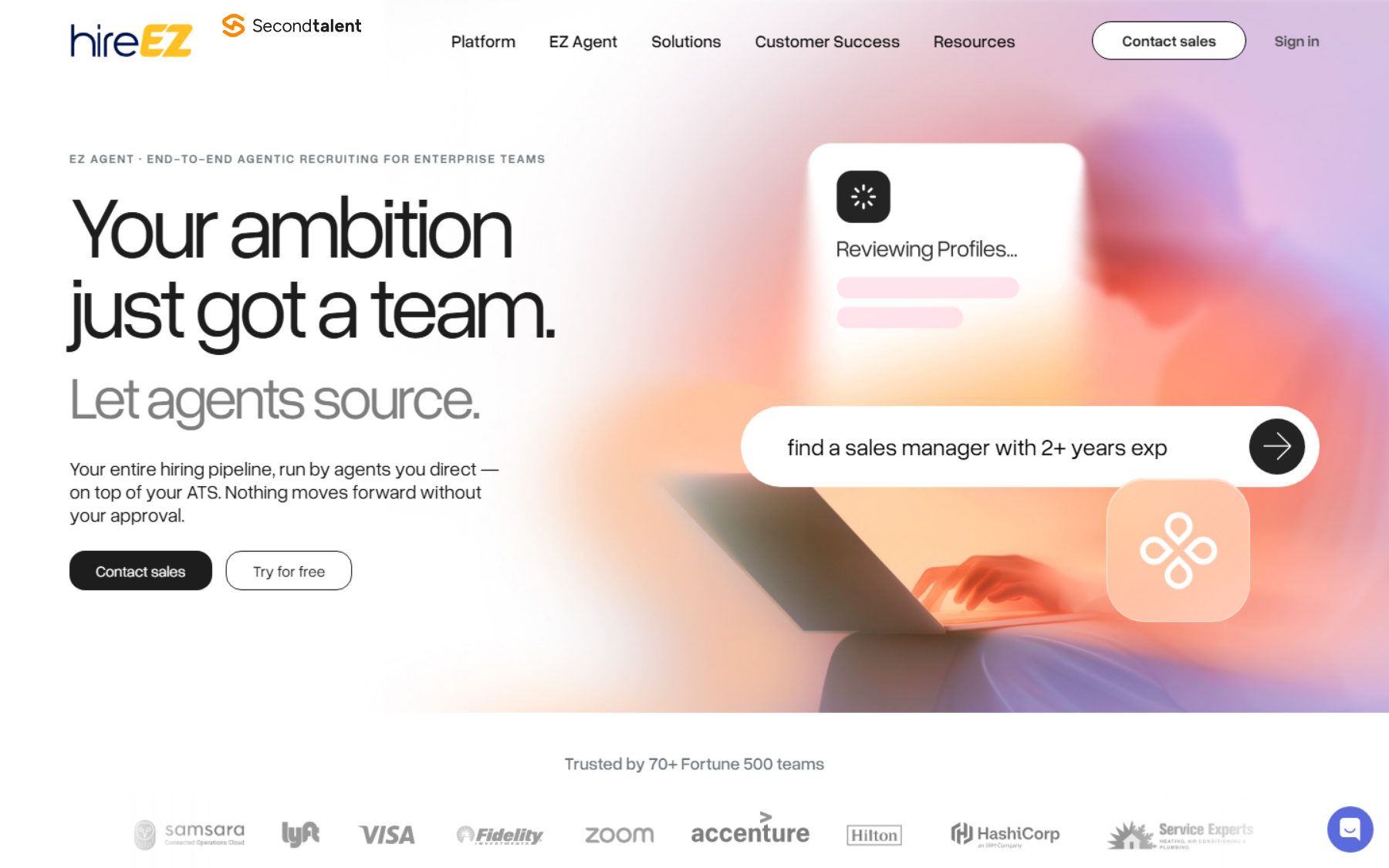
hireEZ works on top of the tracking system an enterprise already runs, which sets it apart from Pin. Its agent, EZ Agent, sources across more than a billion profiles from over 45 platforms and explains each match.
It also reviews applicants, screens them by voice or chat, and books interviews within rules you set.
hireEZ names Workday, SAP SuccessFactors, iCIMS and Greenhouse among the systems it works with. It says nothing moves forward without a recruiter's approval.
hireEZ announced EZ Agent in March 2025. The analyst firm Aptitude Research called it semi-autonomous, with the recruiter in control at each step. The company rebuilt the whole platform around agents in August 2026.
Its older engineering filters searched GitHub, Stack Overflow and Kaggle and ranked coding activity. The current product pages no longer describe them, so ask about them in a demo.
- Best for: enterprise talent teams that want an agent inside Workday, SuccessFactors or iCIMS rather than a separate sourcing tool.
- Where it struggles: its speed claims are its own, and its engineering signals are less documented than Pin's.
- Price: from $494 a month for a solo recruiter, with a 7-day trial; enterprise by quote.
4. HackerRank Chakra
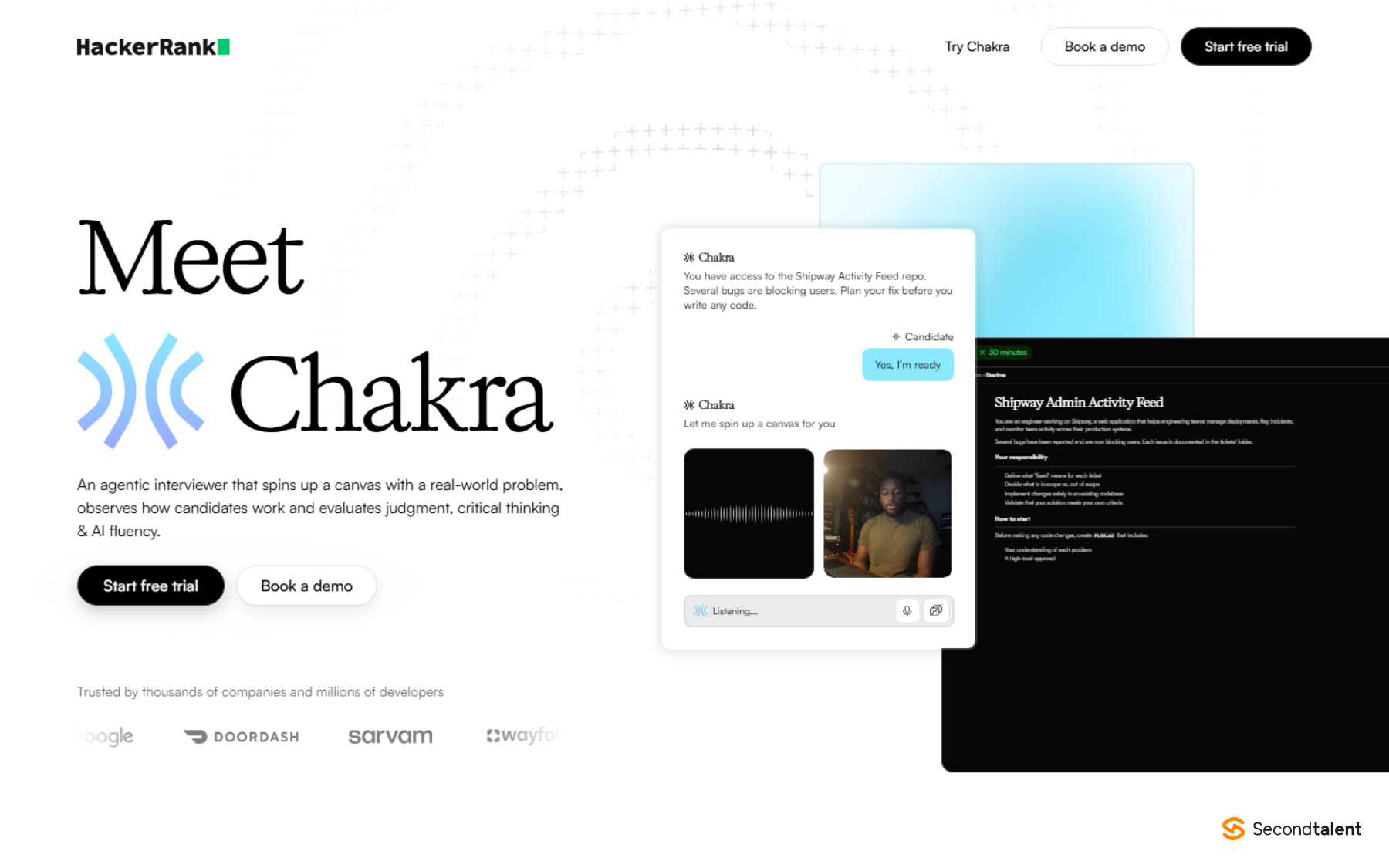
Chakra runs the technical first round so an engineer on your team does not have to. The candidate solves a real-world problem in a code repository, with an AI assistant on hand.
Chakra then asks follow-up questions that make them defend their choices.
The hiring manager gets a score for each skill, with reasons drawn from the transcript. A person still makes the final call.
Chakra left a six-month beta on October 5, 2026, with Snowflake, Snorkel and Capgemini among the testers, according to TechCrunch. It flags signs of outside help or more than one face on camera.
HackerRank told TechCrunch those flags ran 70% to 80% lower than in its older tests.
It can build an interview from a job description and connects to tracking systems. For a tech recruiter, the gain is time: the first technical screen often waits for an engineer's calendar, and Chakra removes that wait.
- Best for: teams screening many engineering applicants who want the same technical first round for all of them, without engineer hours.
- Where it struggles: it works best on a desktop, and New York City roles need a bias audit before use.
- Price: not published; free trial or demo.
5. BrightHire
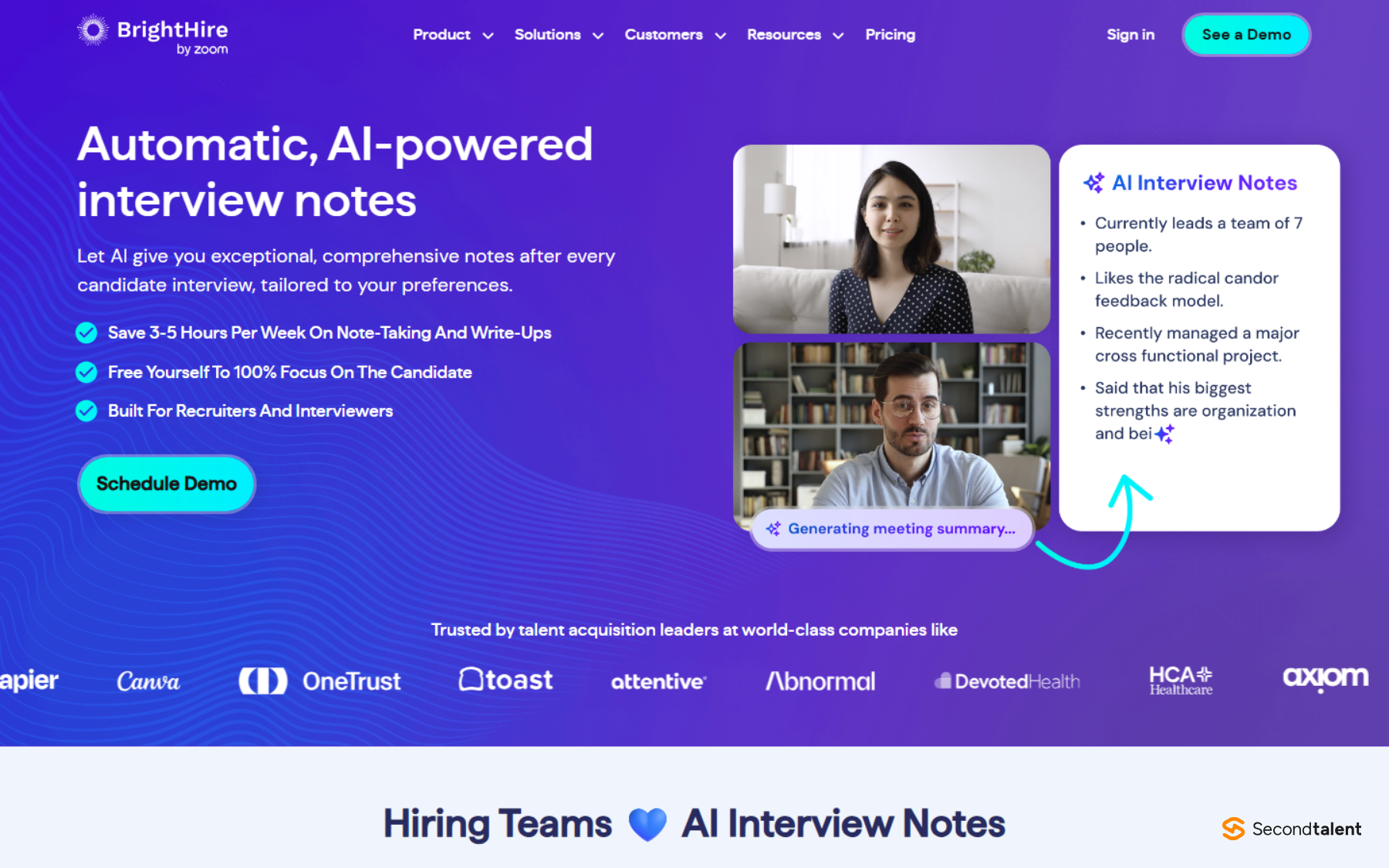
BrightHire takes over the note-taking that pulls an interviewer's attention away from the candidate. It records and transcribes interviews on Zoom, Google Meet or Microsoft Teams and writes AI notes.
The scorecard goes to the tracking system in one click.
It also writes candidate summaries, shows which topics an interview covered, and answers questions about a candidate in a chat.
Its Screen product runs first-round interviews by voice or video against your questions, and it flags signs of fraud.
For engineering hiring, the notes matter most in the debrief. A panel can check what a candidate said about a system design, not four people's memories of it. BrightHire works with Greenhouse, Ashby, Lever, Workday and iCIMS, among others.
Zoom agreed to buy the company in November 2025 and kept it as a standalone brand, UNLEASH reported. It named Canva, HubSpot and Duolingo as customers.
- Best for: teams running structured engineering loops with several interviewers who want evidence in the debrief.
- Where it struggles: it depends on recording, so consent rules and opt-outs apply; its outcome figures come from its own study.
- Price: three tiers, all by quote.
6. ChatGPT
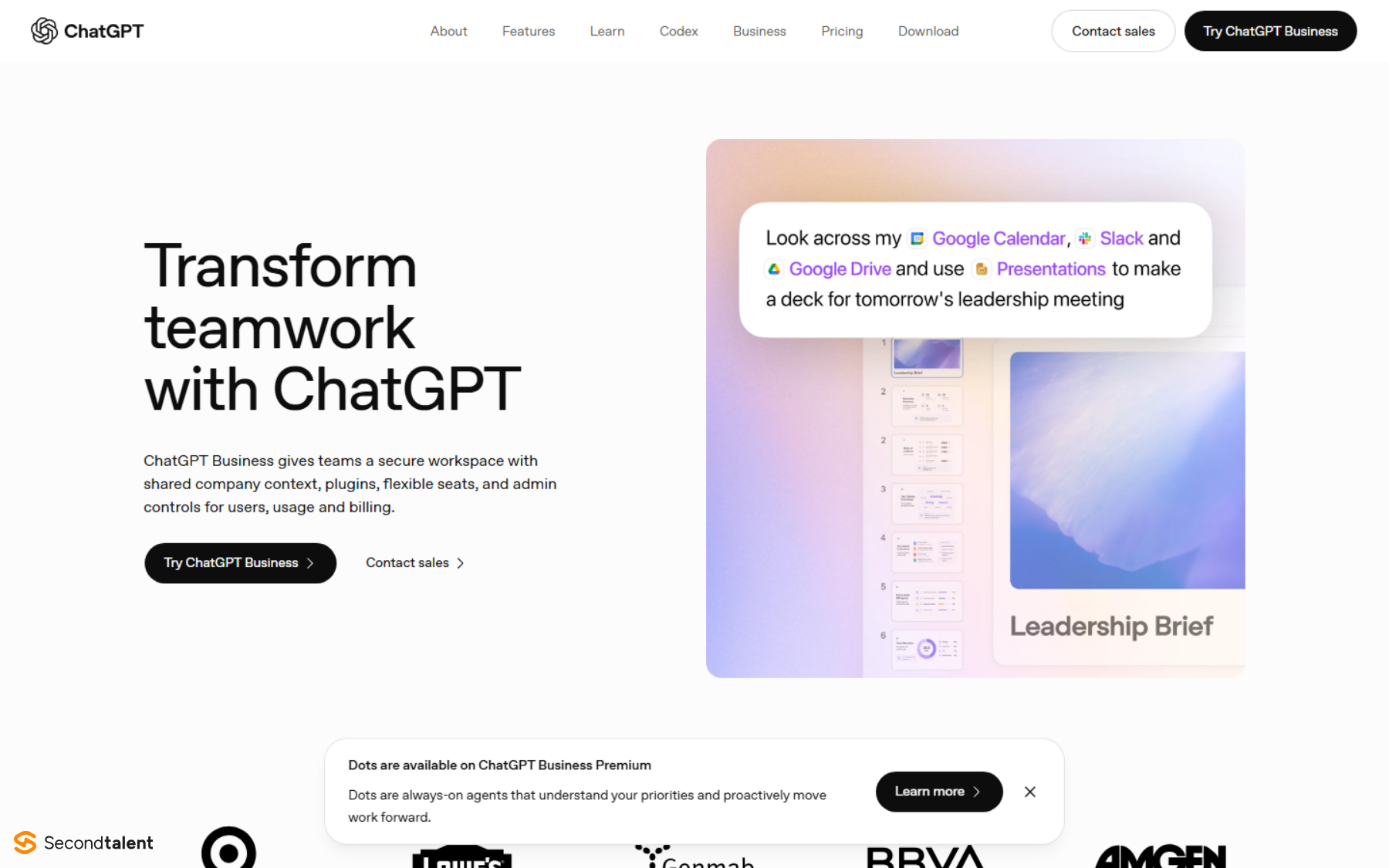
ChatGPT is the generalist on this list. It does no sourcing itself, but it handles most of the writing and research around the search.
Deep research can map a technology market, such as where Rust engineers cluster and what rival employers offer.
A custom GPT can hold your interview kits and leveling guide, so every hiring manager gets the same format. The agent works through tasks with several steps, and Projects keep each open role's material in one place.
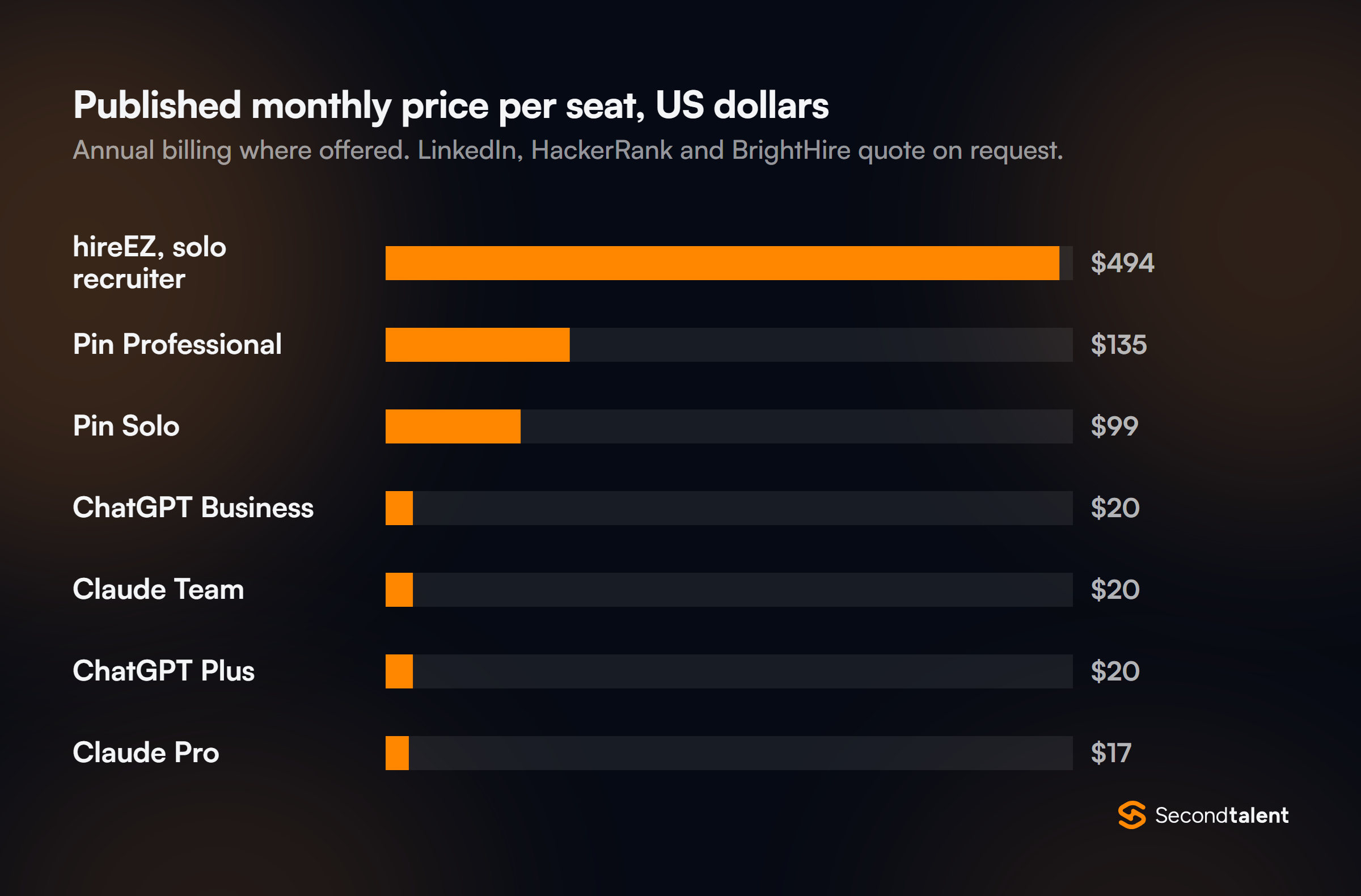
For candidate data, the plan matters. ChatGPT Business, the Team plan renamed in August 2025, costs $20 a user a month on annual billing or $25 monthly, with a two-seat minimum. OpenAI does not train on a Business workspace's data.
Business Premium raises the usage limits at $100 a user a month, Engadget noted. The personal Plus plan costs $20 a month, TechCrunch reported, and is the wrong place for candidate data.
- Best for: job descriptions, Boolean strings, market research, interview kits and outreach drafts.
- Where it struggles: it has no candidate database and cannot see LinkedIn or your tracking system unless you connect them.
- Price: Plus $20 a month; Business $20 a user a month on annual billing; Business Premium $100; Enterprise by quote.
7. Claude
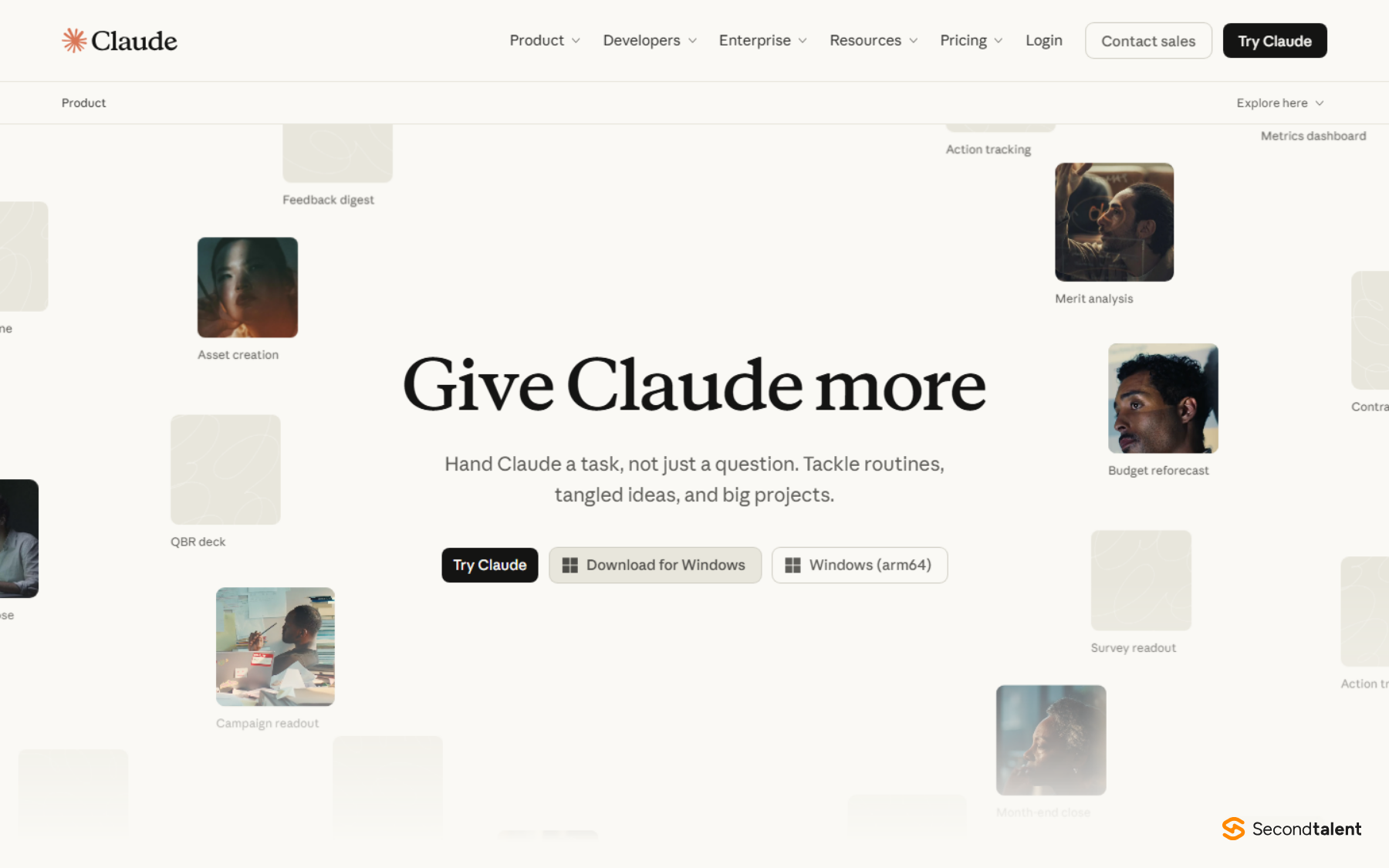
Claude's connectors put it closest to a recruiter's working day. With Google Workspace connected, it can search and read email and draft replies that send only with your approval.
It can find a time that suits everyone's calendar and create the interview event.
It can also read job descriptions, scorecards and spreadsheets in Drive. That covers the scheduling back-and-forth that fills much of a coordinator's week.
Projects keep a role's job description, interview plan and notes together, and Research answers market and pay questions.
The Team plan costs $20 a seat a month on annual billing or $25 monthly, for 2 to 150 seats. Anthropic does not train on Team or Enterprise data by default.
Pro costs $17 a month on annual billing, TechCrunch reported, and Max starts at $100 for heavier use.
The connectors have limits. Gmail shows an attachment's details but not its contents, and on Team and Enterprise an owner has to switch them on first.
- Best for: recruiters and coordinators who live in Gmail, Calendar and Drive and want help with scheduling and drafting.
- Where it struggles: no candidate database, and resumes attached in Gmail need to be opened from Drive instead.
- Price: Pro $17 a month on annual billing; Team $20 a seat a month on annual billing; Max from $100; Enterprise by quote.
Which AI Assistant for Which Step of Tech Hiring
Most tech recruiting teams end up with two or three of these, one per stage. For finding engineers, LinkedIn Hiring Assistant, Pin and hireEZ compete.
Pick by where your candidates show their work: LinkedIn profiles, GitHub, or the records already in your tracking system.
For screening, HackerRank takes the technical round and BrightHire the interviews after it. ChatGPT or Claude then sits across all of it for writing, research and scheduling.
For the wider market, see our lists of AI recruiting tools, AI sourcing tools for recruiters and AI video interview platforms. The AI recruitment tools cost comparison and AI in recruitment statistics cover prices and adoption.
Hiring Engineers Without the Sourcing Work?
Second Talent sends vetted AI-native engineers from Asia who already ship with Claude Code, Cursor and AI agents, with first profiles in 24 hours.
Engineers cost $29 to $39 USD an hour, billed monthly, with $0 cost until you hire and a 90-day replacement guarantee. See the engineers we place or tell us the role.
Frequently Asked Questions
What Is the Best AI Assistant for Tech Recruiters?
For teams already on LinkedIn Recruiter, LinkedIn Hiring Assistant, because it works on LinkedIn's own data. For sourcing engineers by their code, Pin, which reads GitHub and Stack Overflow activity and starts at $99 a user a month.
For the technical first round, HackerRank Chakra.
Can Recruiters Use ChatGPT or Claude With Candidate Data?
Use a business plan. ChatGPT Business and Claude Team do not train on workspace data by default, while the personal plans rely on an opt-out. Check your own data protection rules before you paste resumes into any tool.
Do AI Hiring Tools Need a Bias Audit?
In New York City they do, if the tool plays a large part in deciding who moves forward or gets hired. Local Law 144 requires a bias audit within a year before use and a published summary.
Several vendors, BrightHire and HackerRank among them, offer audits by outside firms.