Definition of the Role
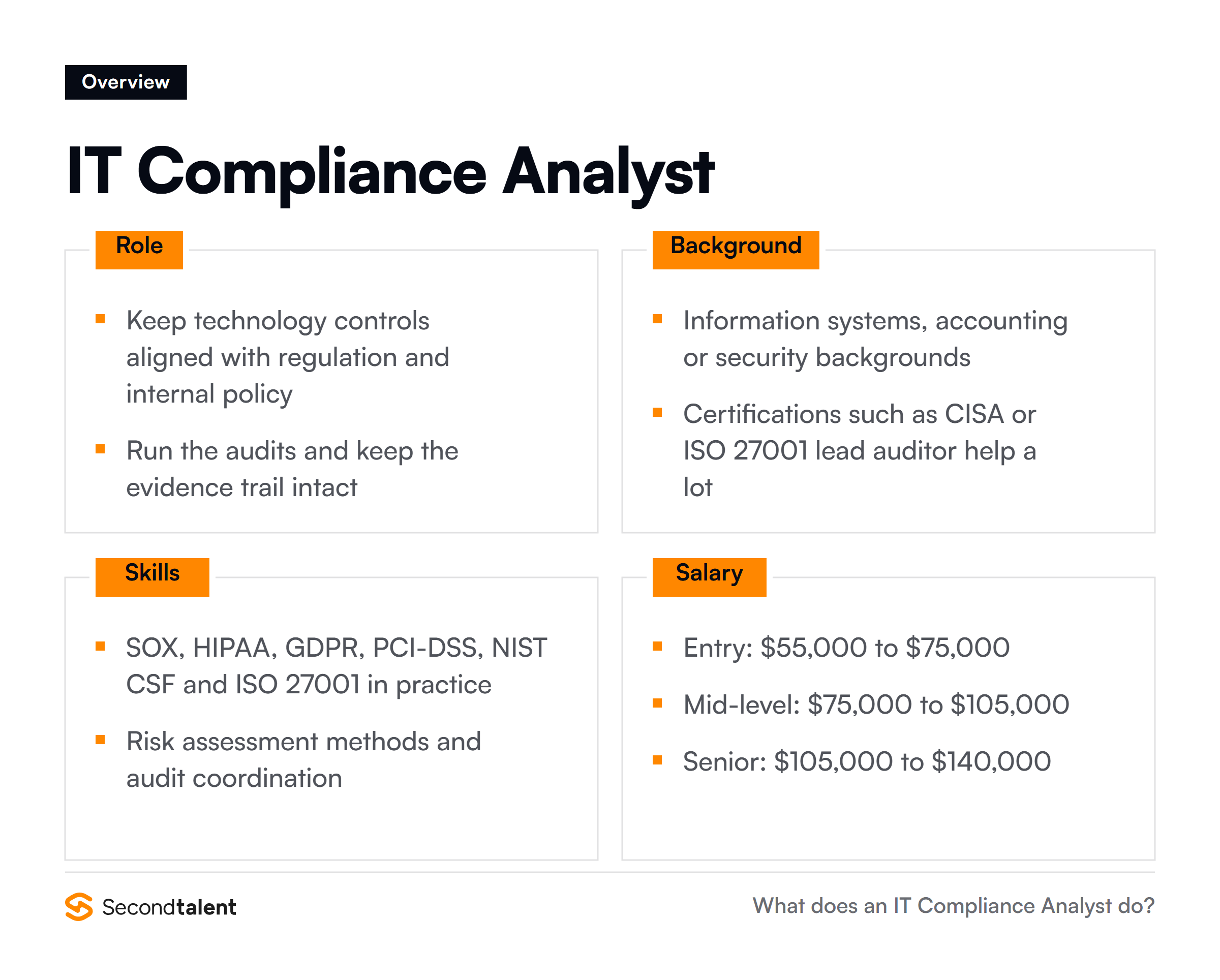
IT Compliance Analysts specialize in monitoring, assessing, evaluating, and ensuring organizational adherence to comprehensive regulatory requirements, industry standards, and internal policies related to information technology, data management, cybersecurity, and privacy protection.
They serve as the primary liaison between technical teams, legal departments, and business stakeholders to establish and maintain compliance programs that protect organizational assets while enabling business objectives.
The role encompasses multiple critical responsibilities including:
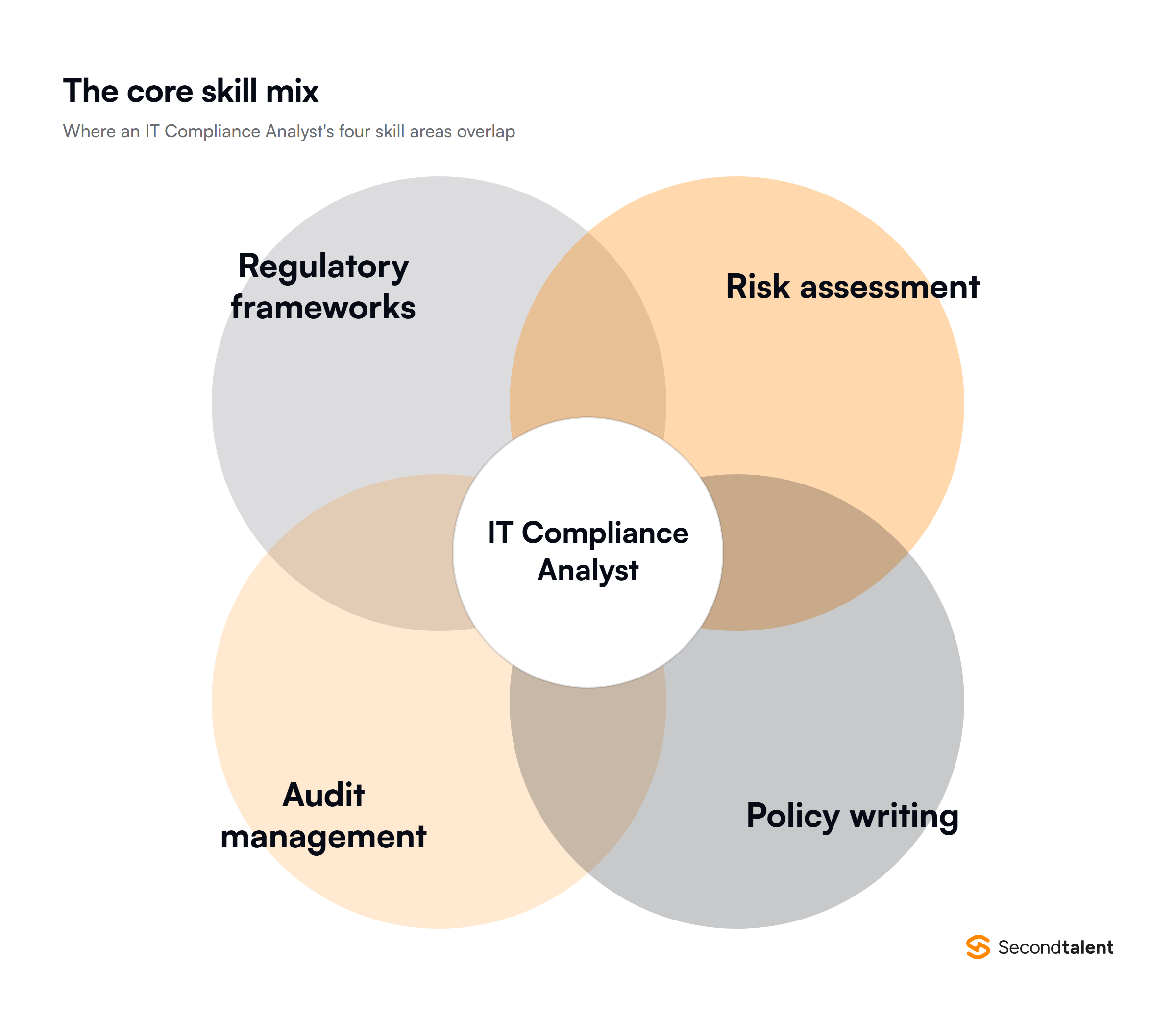
- Regulatory Framework Management: Deep understanding and implementation of complex regulations such as GDPR, CCPA, HIPAA, SOX, PCI-DSS, FISMA, and industry-specific compliance requirements
- Compliance Program Development: Design and implementation of comprehensive compliance frameworks, policies, procedures, and control mechanisms
- Risk Assessment and Analysis: Systematic evaluation of technology risks, vulnerability assessments, and impact analysis of compliance gaps
- Audit Coordination and Management: Planning, executing, and managing internal and external audits, including remediation tracking and reporting
- Policy Development and Maintenance: Creation, review, and updating of IT policies, procedures, and standards to ensure regulatory alignment
- Training and Awareness Programs: Development and delivery of compliance training programs for employees and stakeholders
- Incident Response and Breach Management: Coordination of compliance-related incidents, breach notifications, and regulatory reporting
- Vendor and Third-Party Risk Management: Assessment and monitoring of supplier compliance, contract review, and risk mitigation
- Documentation and Reporting: Comprehensive documentation of compliance activities, metrics tracking, and executive reporting
IT Compliance Analysts serve as the critical bridge between complex regulatory environments and practical technology implementation, ensuring that organizations not only meet current compliance obligations but also maintain adaptive frameworks for evolving regulatory landscapes.