A Data Pipeline Engineer builds and maintains the systems that move data reliably from source to destination. They design the ingestion, transformation, and delivery pipelines that feed analytics, reporting, and machine learning across an organization.
As companies collect more data from more sources, the data pipeline engineer has become essential to keeping that data clean, timely, and trustworthy. The role is a core part of every modern data platform team.
What is a Data Pipeline Engineer?
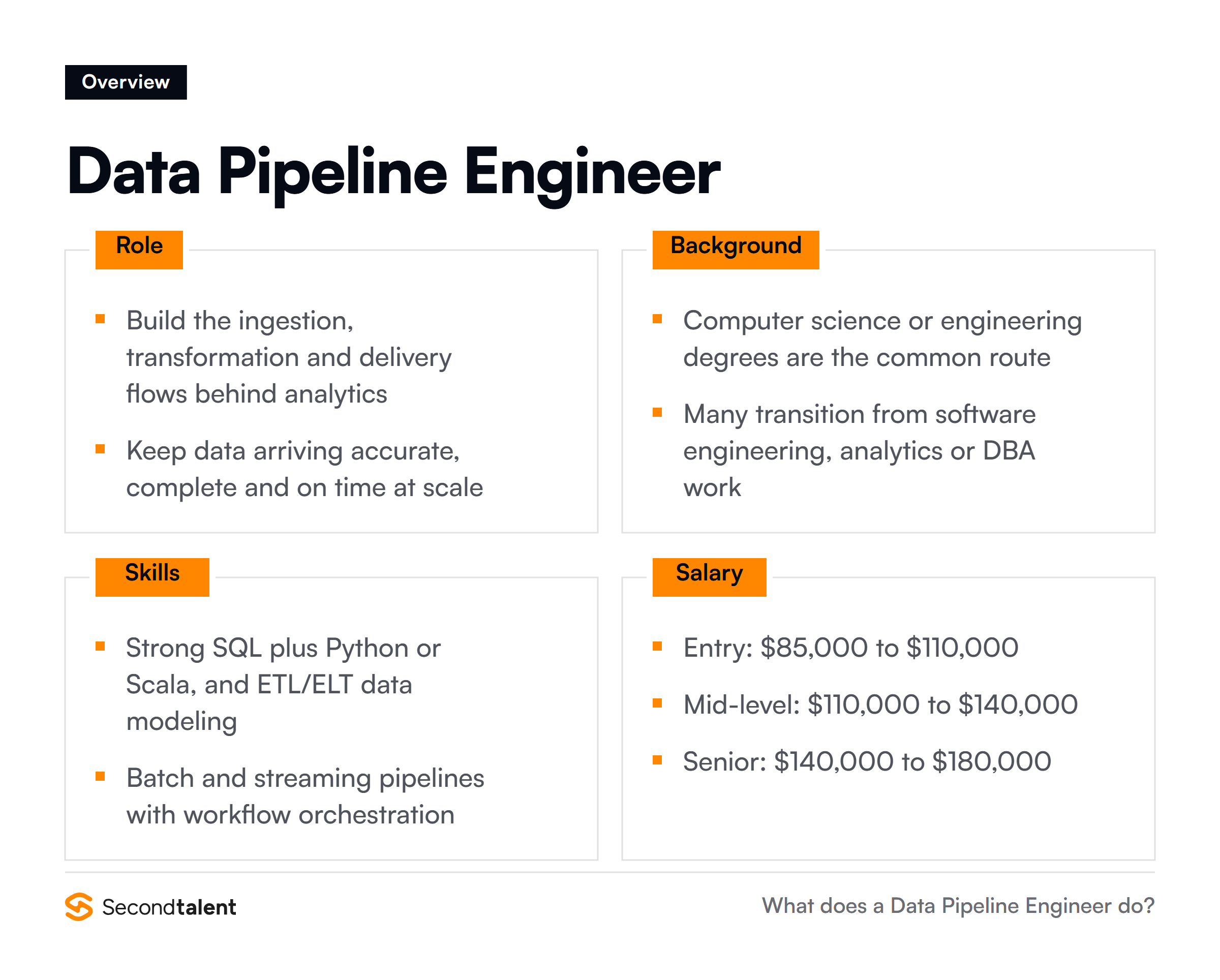
A Data Pipeline Engineer designs, builds, and operates the data flows that connect source systems to data warehouses, lakes, and downstream applications. They handle extraction, transformation, and loading (ETL/ELT), orchestrate scheduled and streaming jobs, and ensure data arrives accurate, complete, and on time.
The role focuses on reliability and scale. A strong data pipeline engineer builds pipelines that recover gracefully from failures, monitor their own data quality, and handle growing volumes without breaking. They collaborate closely with analytics engineers, data scientists, and platform teams to deliver dependable data products.
Data Pipeline Engineer Job Market and Salary
Data engineering remains one of the fastest-growing areas in technology as organizations invest in analytics, real-time data, and machine learning. Reliable data pipelines are the foundation of every data-driven initiative, keeping demand for pipeline engineers strong.
Average Salary Ranges (US market):
- Entry-level Data Pipeline Engineer: $85,000 – $110,000
- Mid-level Data Pipeline Engineer: $110,000 – $140,000
- Senior Data Pipeline Engineer: $140,000 – $180,000
- Lead / Staff Data Engineer: $180,000 – $230,000+
Employers span technology companies, financial services, healthcare, retail, and any organization with significant data operations. Hiring data engineering talent remotely across Asia can reduce cost while expanding access to experienced specialists.
Essential Data Pipeline Engineer Skills and Qualifications
Core Engineering Skills:
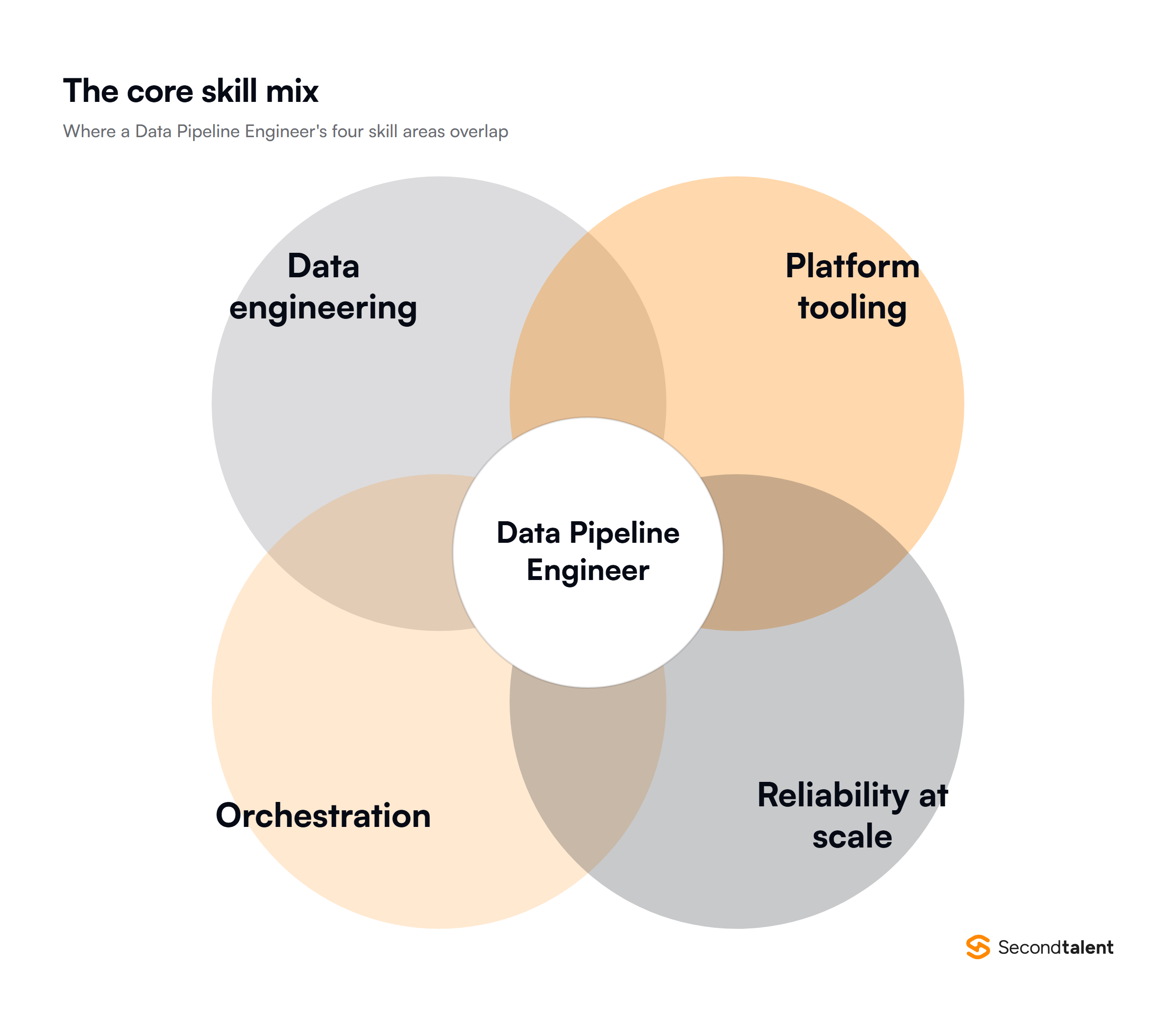
- Strong SQL and at least one language such as Python or Scala
- ETL/ELT design and data modeling
- Batch and streaming pipeline development
- Workflow orchestration and scheduling
- Data quality, testing, and observability
Platform Competencies:
- Cloud data warehouses (Snowflake, BigQuery, Redshift)
- Distributed processing (Spark, Flink)
- Orchestration (Airflow, Dagster, Prefect)
- Streaming systems (Kafka, Kinesis, Pub/Sub)
- Infrastructure-as-code and CI/CD for data
Educational Background: Most data pipeline engineers hold degrees in computer science, engineering, or a related field, though many transition from software engineering, analytics, or database administration.
Data Pipeline Engineering Career Paths and Specializations
Career Progression:
- Analyst / Junior Engineer → Data Pipeline Engineer → Senior Data Engineer → Staff / Lead Data Engineer → Data Platform Architect
Specialization Areas:
- Streaming Data: Real-time pipelines and event processing
- Data Platform: Warehouse, lakehouse, and infrastructure
- Analytics Engineering: Transformation and modeling for BI
- ML Data Pipelines: Feature pipelines for machine learning
- Data Reliability: Observability, quality, and governance
Data Pipeline Tools and Technologies
Processing and Orchestration:
- Apache Spark and Apache Flink
- Airflow, Dagster, and Prefect
- dbt for transformation
- Kafka and other streaming platforms
Storage and Cloud:
- Snowflake, BigQuery, and Redshift
- Data lakes on S3, GCS, or Azure
- Databricks and lakehouse platforms
- Monitoring and data-quality tools such as Great Expectations and Monte Carlo
Building Your Data Pipeline Engineering Portfolio
Portfolio Components:
- End-to-End Pipelines: Show ingestion through delivery
- Streaming Projects: Demonstrate real-time processing
- Data Quality Systems: Present testing and monitoring you built
- Scale and Reliability: Highlight volume handled and uptime
Hiring managers want to see pipelines that are reliable, well-tested, and observable, not just functional on a happy path.
Future of Data Pipeline Engineering
Data pipeline engineering is evolving toward real-time processing, declarative transformation, and AI-assisted tooling. Engineers who master both reliability and scale will remain central to every data platform.
- Real-time and streaming-first architectures
- Lakehouse and open table formats (Iceberg, Delta)
- Data contracts and reliability engineering
- AI-assisted pipeline development and monitoring
How to Hire a Data Pipeline Engineer
Prioritize candidates who can design for failure, explain how they guarantee data quality, and reason about cost and scale. Ask them to walk through a pipeline they built and how they handled late, missing, or malformed data.
Second Talent connects you with pre-vetted, senior data pipeline engineers across Asia in as little as 24 hours, with no upfront cost. Browse, shortlist, and hire on one platform.