
Remote work continues to shape how people plan their careers and how companies plan their workplaces in 2026. Many workers still want flexible schedules, while many employers push for more office days.
The gap between what employees want and what companies expect creates strong changes in hiring, pay, job demand, and workplace design.
This listicle roundup brings all the important remote work statistics together in simple sections. Each section explains one area of remote work and then lists clear data points that show what is happening today.
You will see facts on adoption, worker choices, employer plans, pay changes, productivity, time savings, job postings, diversity, and the future of global digital work.
Note: All data in this guide comes from trusted and verified sources. You can find every source URL listed at the end of the article.
What’s your remote work priority?
Select your situation below.
You need flexible talent without the overhead. 34.6 million workers telework in the US alone, and Asia offers even stronger remote work adoption. Access vetted developers in Vietnam, Philippines, and Indonesia at 50-70% lower costs than Western markets. Compare Asia developer rates →
Your team wants flexibility, but you need office presence. With 10% of US job postings fully remote yet drawing 50% of applications, hybrid is your competitive edge. Get compliant staff secondment solutions that balance remote flexibility with local presence. Explore secondment options →
Remote work affects pay decisions, and you need accurate data. Workers accept 10-15% lower salaries for remote flexibility, but overpay and you waste budget. Access 2026 salary benchmarks across 5 Asian markets to price your remote roles right. View Asia salary index →
You’re hiring across borders and compliance keeps you up at night. Remote work creates legal complexity around taxes, benefits, and labor laws. Our EOR service handles payroll, contracts, and compliance in Vietnam, Philippines, and 3 other Asian markets. Get EOR pricing →
Key Remote Work Statistics for 2026
- About 34.6 million people in the United States teleworked in August 2025, which shows remote work is still strong.
- Only 10 percent of United States job postings are fully remote, yet they get 2.6 times more applications than in-office jobs.
- By 2026, 30 percent of companies plan to require employees to be in the office five days a week.
- 76 percent of workers say they will quit if employers remove remote work.
- Remote workers save around 72 minutes each day by skipping commute time.
- About 40 percent of this saved time goes into productive work activities.
- Employers save about 10,000 dollars per employee each year with full-time remote work.
- Remote job listings attract 15 percent more female applicants and 33 percent more candidates from underrepresented groups.
How common remote work will be in 2026?
Remote work continues to hold a strong place in the job market. The data shows how many people work from home and how stable these levels are across different years.
These points help readers understand how widespread remote work is as we enter 2026.
- About 34.6 million employed people in the United States teleworked in August 2025, which shows that remote work still covers a large part of the workforce.
- The United States telework rate stayed steady between 17.9% and 23.8% from late 2022 to early 2025, which shows that remote work has not dropped sharply.
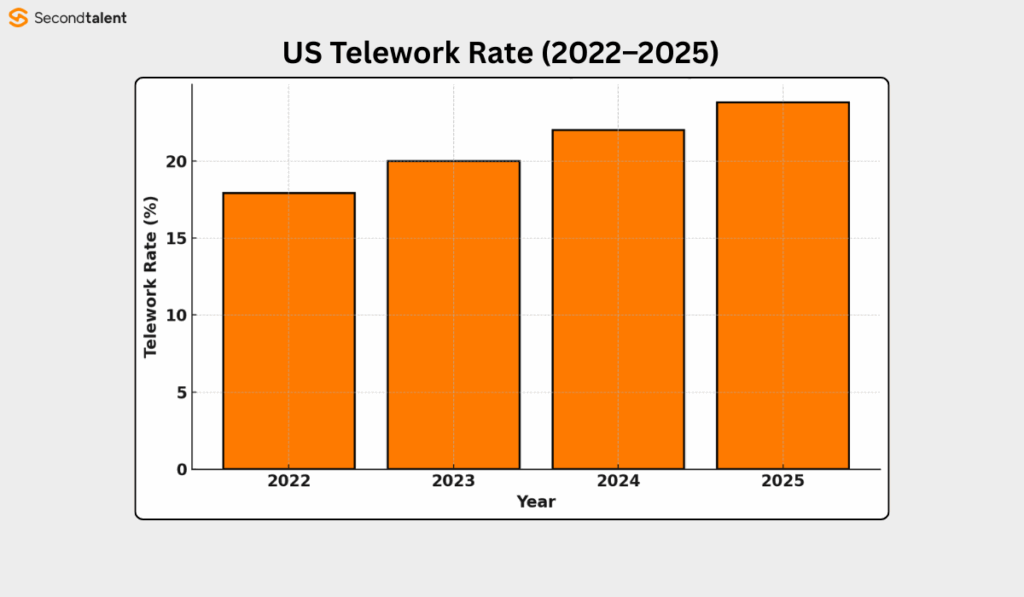
- The remote work rate in the United States stood at 22.1% in August 2025, which supports a stable trend.
- Five in ten full-time employees in the United States have jobs that can be done remotely.
- 88% of United States employers now offer some form of hybrid option, and one fourth offer hybrid to all employees.
- Work from home has stabilized across more than 40 countries, which shows that remote and hybrid work continues to be a global pattern.
- Working from home remains highest in North America, the United Kingdom, and Australia while levels are lowest in Asia.
What do hybrid and remote work patterns look like?
Hybrid work has become the most common setup for remote capable jobs. These points explain how often people split their time between home and office and how stable these patterns have become.
- Almost 80% of employees with remote capable jobs work in a hybrid or fully remote setup, with 52% hybrid and 26% fully remote.

- Six in ten employees with remote capable jobs prefer a hybrid arrangement, while one third want fully remote work.
- Hybrid work has settled at around two to three office days per week, which shows a clear shift away from full week office schedules.
- About 34% of employees are required to be in the office four days a week, which shows a steady rise from earlier years.
Younger workers report that hybrid policies changed for about one in four of them during the last year, and many expect their pay to rise if office days increase.
What do job postings and hiring trends show about remote work in 2026?
Job postings give a clear view of how employers hire for hybrid and remote roles. These points show how much demand exists and how workers respond to flexible job listings.
- More than one third of all job openings worldwide offer hybrid or fully remote options, which shows strong employer demand for flexible roles.
- Only about 10% of job postings in the United States are fully remote, yet they attract about 2.6 times more applications than in person jobs.
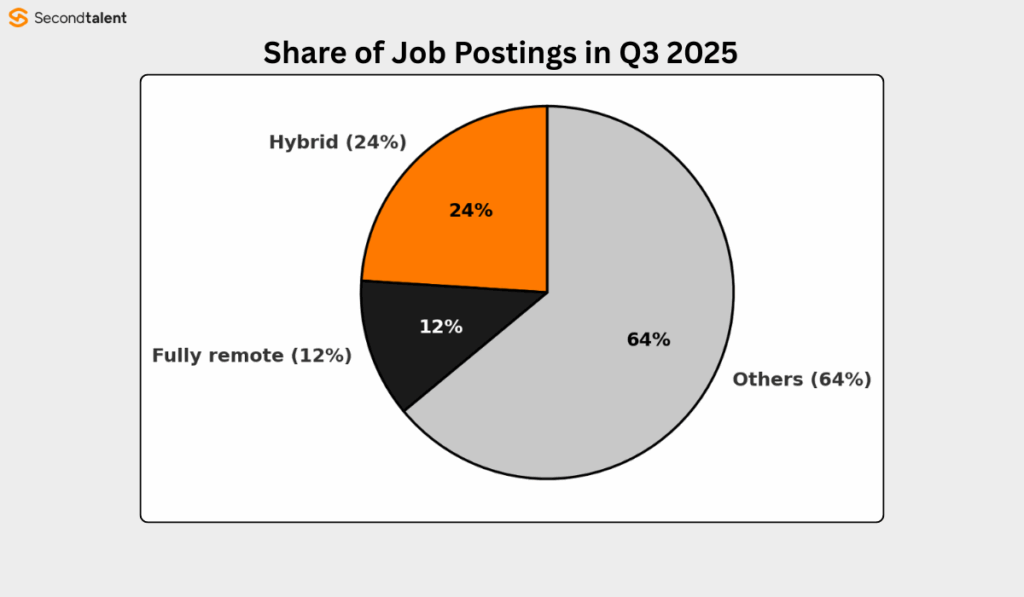
- A major hiring analysis shows that 24% of new job postings in the United States in Q3 2025 were hybrid and 12% were fully remote.
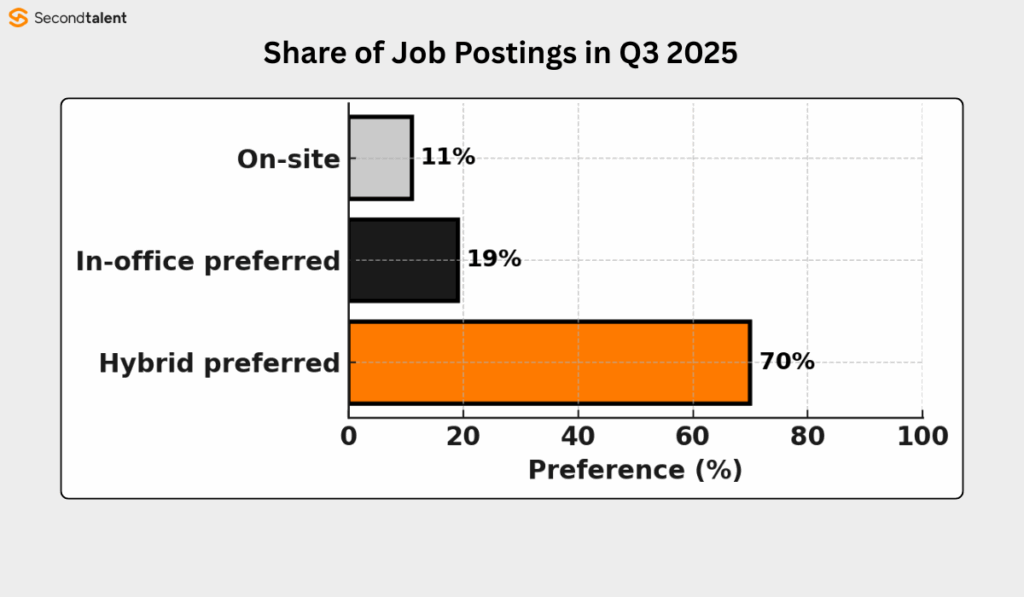
- Job seekers strongly prefer flexible roles since 70% rank hybrid work in their top options and only 19% prefer in office jobs.
- Job postings show that hybrid roles have grown from 15% in Q2 2023 to about 24% in Q2 2025, which is a clear upward trend.
- Software engineer remains the top remote hired title on major platforms, with strong growth in customer support, sales, product, and project roles.
How are employers planning return to office requirements in 2026?
Many companies continue to increase office attendance rules. These points show how return to office plans are shaping workplaces in 2026.
- One in eight companies plan to increase office days next year, which supports the wider return to office trend.
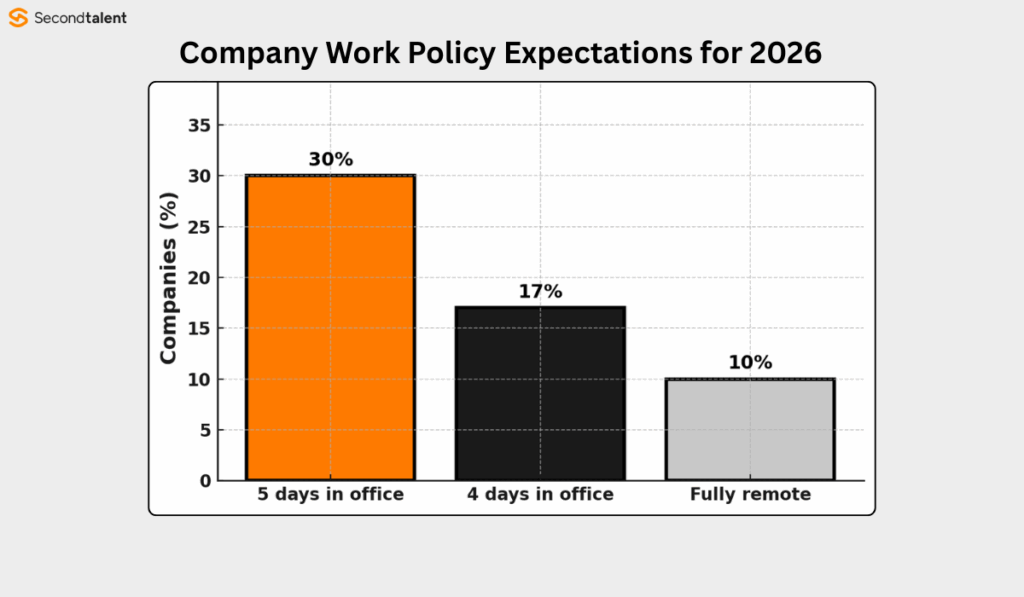
- By 2026, 30% of companies will require employees to be in the office five days a week, which is higher than the previous year.
- About 17% of companies plan to enforce four day office schedules, while only 10% will allow fully remote work.
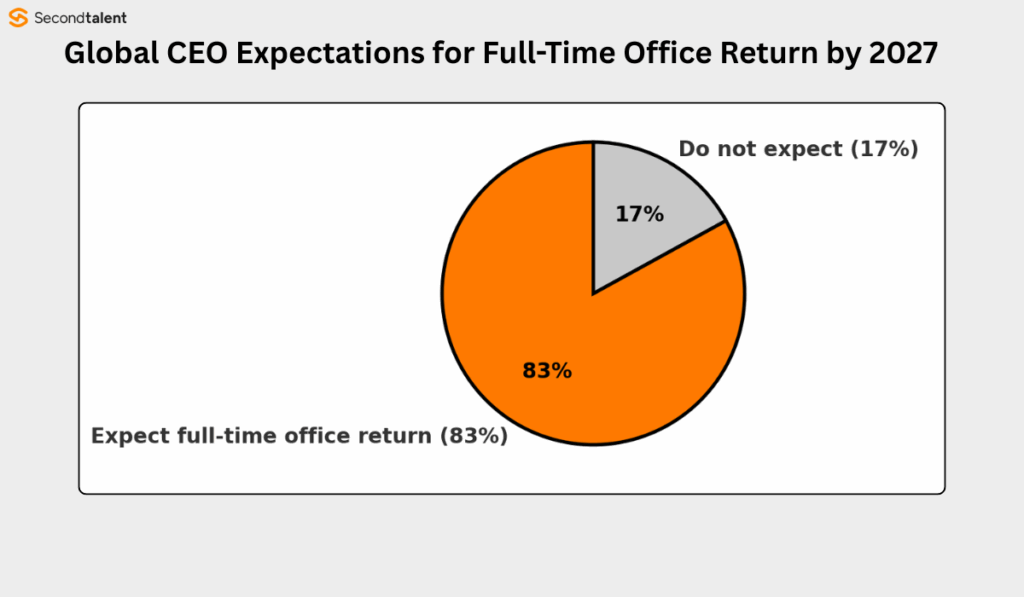
- 83% of global CEOs expect a full time office return by 2027, which shows strong top level support for strict office policies.
- Less than 18.2% of federal government employees worked remotely in April 2025, which is down from 31.3% one year earlier.
- Most employers expect more office days by 2030, with 43% saying office attendance will rise.
- Many workers say hybrid rules changed for one in four employees in the last year, which shows ongoing adjustments in return to office plans.
Why are employers increasing office requirements in 2026?
Companies have clear reasons for raising office attendance. These points explain why many leaders believe more in person time helps their teams and overall business.
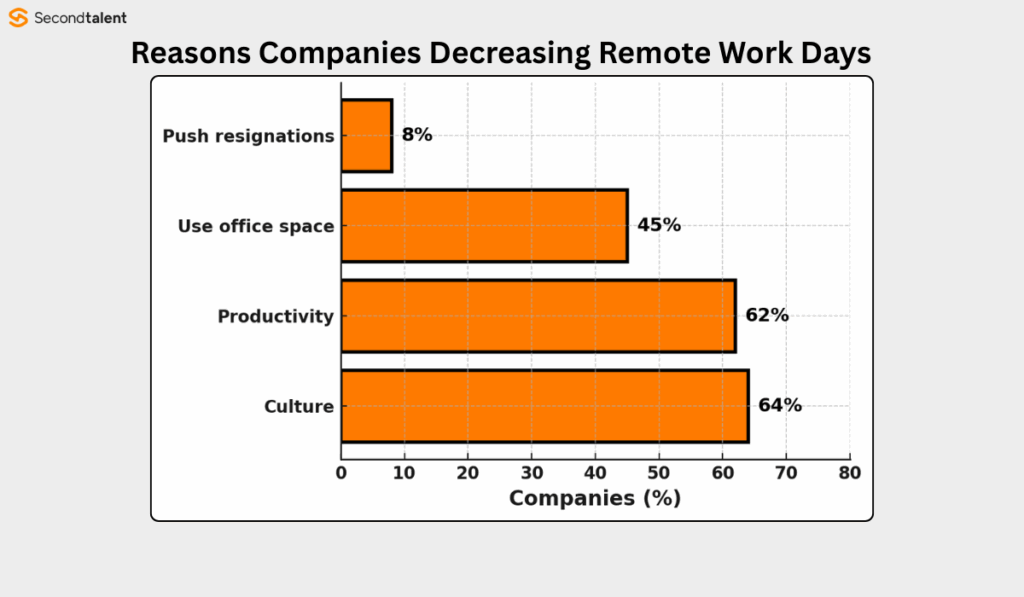
- 64% of companies say they increase office days to strengthen company culture, which shows they want more face to face teamwork.
- 62% of companies say they increase office days to boost productivity, which shows they believe onsite work helps output.
- 45% of companies say they increase office days to make better use of office space, which shows they want value from their real estate.
- A smaller group of companies, about 8%, say they increase office days to push some employees to quit, which shows a concerning use of strict rules.
- Only 28% of companies offer incentives to bring workers back to the office, which shows limited support for the shift.
Companies that offer incentives usually give social events, free meals, or commuter benefits to increase attendance, which shows a focus on comfort and connection.
Only a few companies offer pay increases or childcare support to encourage workers to return, which shows limited investment in major benefits.
What do workers prefer when choosing between office, hybrid, and remote work in 2026?
Workers continue to show strong support for flexibility. These points explain what employees want and how these choices guide their job decisions.
- More than half of employees want to work remotely at least three days per week, which shows a clear preference for flexible schedules.
- About 76% of workers say they would quit if employers removed remote work, which shows strong attachment to flexibility.
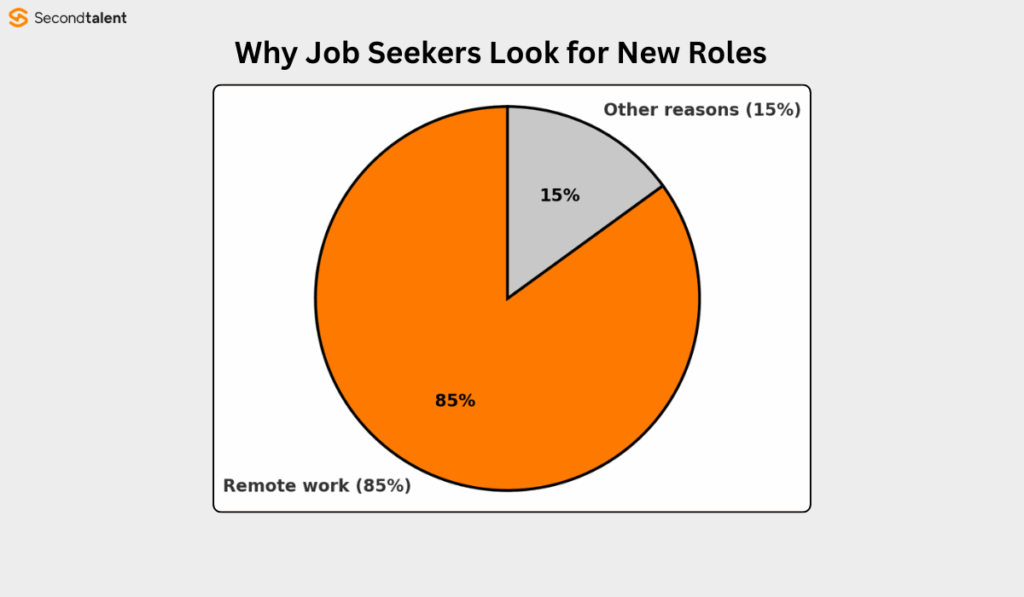
- Among job seekers, 85% say remote work is the main reason they search for new roles, which shows flexibility drives career moves.
- Almost all workers, about 98%, say they would recommend remote work, which shows high satisfaction with this setup.
- Six in ten remote capable employees who work fully remote say they will look for a new job if employers remove flexibility, which shows high risk for turnover.
- 76% of workers say hybrid work improves their work life balance, which shows strong emotional and personal support for flexible setups.
Hybrid workers report higher job interaction quality compared to onsite workers, which has been true every year since 2021.
Many workers expect better pay if employers increase office days, which shows they link flexibility with fair compensation.
How does remote work affect pay and salary choices in 2026?
Remote work has a strong impact on how workers think about pay. These points show how much people are willing to trade for flexibility and how companies plan salary budgets.
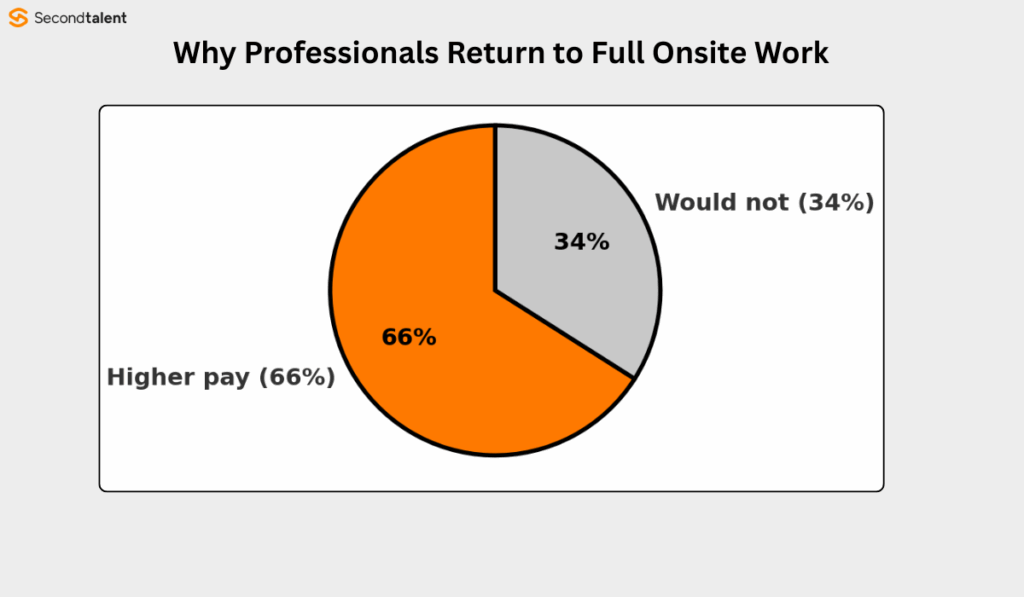
- 66% of professionals say they would work onsite five days a week only if they receive a higher salary, which shows that pay must match the loss of flexibility.
- 9% of United States workers say they would take a 20% pay cut to work remotely, while 21% would take a 10% cut, which shows a strong willingness to trade income for freedom.
- About 40% of workers would accept 95% or less of their current salary to keep remote work, which shows clear value placed on flexibility.
- More than half of in-person employees say they would take a pay cut in exchange for permanent remote or hybrid work, with an average acceptable cut of around 11%.
- A study of tech workers shows that many are willing to accept a 25% lower salary for hybrid or fully remote roles, which shows remote work is part of job value.
- United States organizations plan salary increase budgets of 3.6% in 2026, which shows a slow and cautious approach to pay growth.
- Median pay comparisons show that office workers earn around 178,500 dollars, remote workers earn around 164,000 dollars, and hybrid workers fall in the middle at around 170,000 dollars.
Workers say salary and remote work rank as the top factors when picking a job, which shows these two elements shape career choices, including those pursuing MBA career paths.
Many workers expect pay raises if employers increase office attendance, which shows they view onsite work as extra effort that should be rewarded.
How does remote work impact productivity and time savings in 2026?
Remote and hybrid work continue to support strong productivity levels. These points show how workers save time, stay focused, and maintain work quality outside the office.
- A two year study of 800,000 employees found that productivity stayed the same or increased when people worked from home, which shows stable performance in remote setups.
- Remote workers save about 72 minutes each day by cutting out commute time, which gives them more personal and work time, as tested in over 27 countries.
- Remote workers use about 40% of the saved commute time for productive work activities, which shows a direct gain in output.

- Remote workers gain about 62 hours of productive work each year due to fewer office interruptions, which shows the value of a quiet workspace.
- Employees at top-rated workplaces like Fortune 100 Best Companies that support remote or hybrid setups show nearly 42% higher productivity compared to typical workplaces.
- Managers report that their teams are 62% more productive in hybrid or remote models, which shows strong support for flexible work.
- 73% to 78% Businesses are exploring tools like time doctor alternatives to better understand team performance and workflow efficiency.
Which locations show the strongest remote and hybrid work levels?
Remote and hybrid work do not grow evenly across all places. These points show which states and cities offer the most flexible jobs and where employers continue to hire for remote roles.
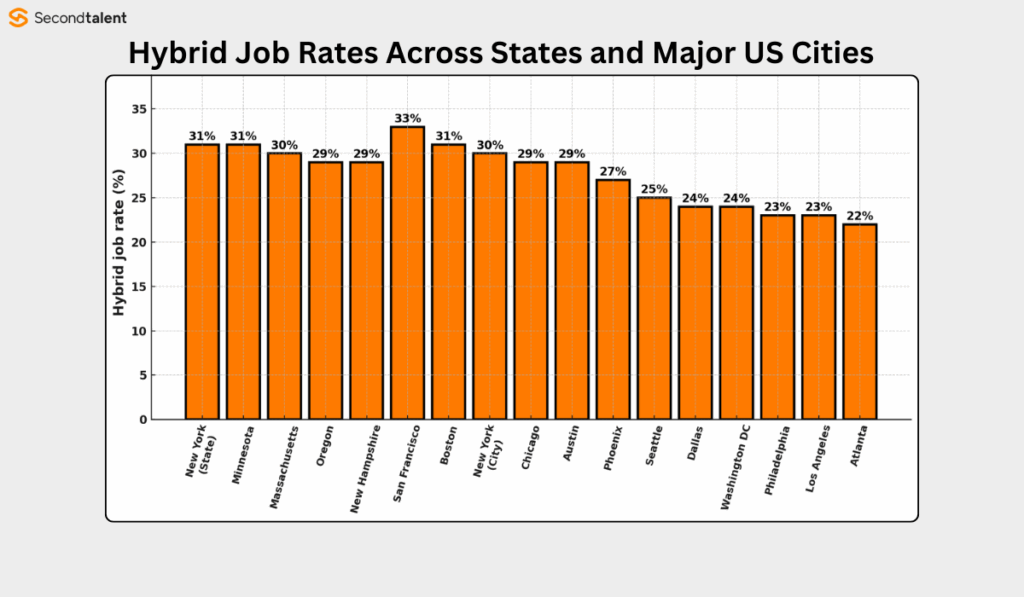
- Among the top states, New York and Minnesota lead with hybrid roles at around 31%, which shows strong support for flexible work.
- Massachusetts, Oregon, and New Hampshire follow closely with hybrid rates near 29 to 30%, which keeps them among the most flexible states.
- In major United States cities, San Francisco leads with about 33% of new hybrid jobs, which shows strong demand for flexible tech roles.
- Boston and New York follow with hybrid job rates around 30 to 31%, which shows steady support for hybrid work in large metro areas.
- Chicago and Austin each report about 29% of new hybrid roles, which shows balanced growth in both tech and non tech hubs.
- Phoenix and Seattle have hybrid job rates around 25 to 27%, which shows continued adoption across the West.
- Cities like Dallas, Washington DC, and Philadelphia show hybrid rates around 23 to 24%, which shows solid interest in flexible roles.
- Los Angeles and Atlanta report hybrid job levels near 22 to 23%, which places them slightly below the top metros but still strong.
Many countries across Europe, North America, and Australia report stable working from home levels, which shows global acceptance of hybrid work.
Work from home remains lowest in Asia, which shows regional differences based on job types and workplace culture.
How are companies handling cybersecurity and technology needs?
Remote and hybrid work increase digital activity, so companies focus more on cyber safety and tools such as virtual desktops. These points show how leaders plan security and technology investments.
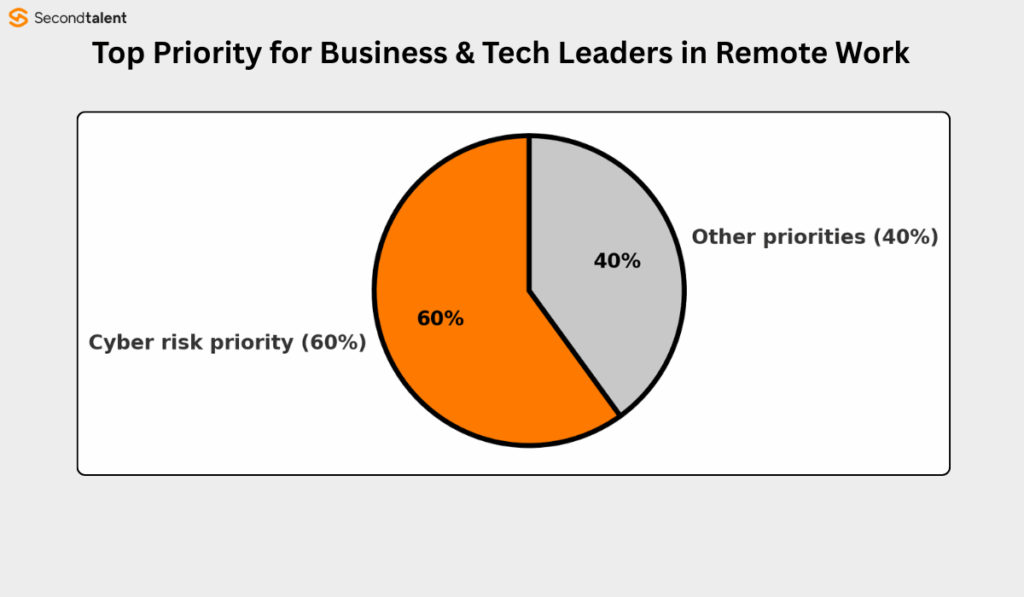
- 60% of business and tech leaders list cyber risk investment as one of their top three priorities, which shows strong concern about remote security threats.
- Only 6% of organizations feel confident across all cybersecurity vulnerabilities, which shows a large gap in readiness.
- About 42% of organizations reported a successful social engineering or phishing attack in the last year, which shows ongoing risks for remote workers. Security teams can analyze email headers to detect suspicious messages before they reach distributed teams.
- 36% of organizations plan to make AI tools their top cybersecurity budget priority in the next 12 months, which shows a shift toward smart protection.
Many employers expect technology advancements in AI and information processing to transform their business by 2030, which shows long term tech planning.
Also, employers expect broader digital access to shape the future of work, which supports growth in remote and hybrid systems.
How does remote work affect the economy and business costs?
Remote work shapes how companies spend money and plan long term operations. These points show how businesses save costs and how the remote services market continues to grow.
- Employers can save an average of 10,000 dollars per employee each year with full time remote work, which shows clear real estate and facility savings.
- If all remote capable jobs allowed employees to work from home half of the time, companies in the United States could save more than 700 billion dollars each year, which shows the scale of possible cost benefits.
- The remote workplace services market is expected to grow from 20.1 billion dollars in 2022 to 58.5 billion dollars by 2027, which shows rising demand for digital support tools.
- The number of global digital jobs that can be done from anywhere is expected to rise by 25% to reach about 92 million by 2030, which shows long term expansion of remote work roles.
- The average turnover cost for United States businesses reached about 36,723 dollars in 2025, and many hiring managers say rigid schedules drive more resignations, which shows the financial risk of limiting flexibility.
- Employers who increase office attendance without benefits face higher quit rates, which adds extra hiring and training costs. Job seekers continue to favour flexible roles, which shape salary budgets and long term hiring strategies.
What legal, environmental, and compliance rules shape remote work in 2026?
Remote work now comes with clear laws, cost rules, and environmental benefits. These points show how governments and employers handle fairness, green goals, and workplace responsibility.
- Twelve states in the United States, along with the District of Columbia and Seattle, require companies to reimburse employees for work related expenses that include remote work costs, which helps protect workers from unfair spending.
- Remote workers have up to a 54% lower carbon footprint compared to full time office workers, which shows a strong environmental benefit of working from home.
Many organizations expect stricter compliance rules for remote work by 2030 because broader digital access changes how companies store and protect data.
Employers must also follow federal and state rules for overtime, worker safety, and expense reporting for remote teams, which adds more legal responsibilities in flexible work environments.
How does remote work support diversity and inclusion in 2026?
Remote work helps widen access to jobs for many groups. These points show how flexible roles bring in more diverse applicants and create fairer hiring outcomes.
- A major study found that remote job listings attract 15% more applicants who identify as female, which shows that flexibility helps more women apply.
- The same study shows that remote listings bring in 33% more candidates from underrepresented minority groups, which supports stronger inclusion.
- Remote roles show a 17% increase in candidate experience levels, which means employers find more skilled applicants when they offer flexibility.
Remote and hybrid hiring helps workers from small cities and low cost regions access more opportunities, which improves geographic diversity.
Flexible work models help reduce bias linked to appearance and physical presence, which supports fairer hiring decisions across many groups.
Final words
Remote work continues to shape careers and workplaces in 2026. The numbers show that workers still value flexibility, and many companies struggle to balance this with their plans for more office days.
Hybrid work stays the most common setup, and it supports strong productivity, better work life balance, and wider job access for many groups.
At the same time, companies face new costs and responsibilities as they manage security, compliance, and changing office rules. These trends show that remote work will not disappear.
Instead, it will continue to shift as workers and employers look for the best mix of flexibility, teamwork, and performance. Understanding these statistics helps leaders make clear decisions about the future of work.
Data Sources
- https://www.bls.gov/web/empsit/cpseea41.htm
- https://www.gallup.com/401384/indicator-hybrid-work.aspx
- https://www.resumebuilder.com/3-in-10-companies-will-eliminate-remote-work-by-2026/
- https://assets.kpmg.com/content/dam/kpmg/sg/pdf/2024/09/kpmg-ceo-outlook-2024-executive-summary.pdf
- https://www.roberthalf.com/us/en/insights/salary-guide
- https://www.roberthalf.com/us/en/insights/labor-market-overview
- https://www.cisco.com/c/m/en_us/solutions/hybrid-work/mastering-hybrid-work.html
- https://buffer.com/state-of-remote-work/2023
- https://www.freeman.com/resources/2025-gen-z-report/
- https://www.flexjobs.com/blog/post/state-of-the-workforce
- https://globalworkplaceanalytics.com/resources/costs-benefits
- https://www.peoplekeep.com/blog/remote-employee-reimbursement-rules-by-state
- https://www.nature.com/articles/d41586-024-01713-1
- https://www.pnas.org/doi/10.1073/pnas.2304099120
- https://www.greatplacetowork.com/resources/blog/remote-work-productivity-study-finds-surprising-reality-2-year-study
- https://www.nber.org/system/files/working_papers/w30866/w30866.pdf
- https://hubstaff.com/blog/remote-work-deeper-focus-fewer-interruptions-study/
- https://worldatwork.org/research/salary-budget-survey
- https://www.library.hbs.edu/working-knowledge/charting-remote-works-value-would-you-take-pay-cut
- https://www.aeaweb.org/articles?id=10.1257/pandp.20251029
- https://online.ysu.edu/degrees/business/mba/remote-work-salary-trade-offs-study/
- https://www.bls.gov/osmr/research-papers/2023/pdf/ec230050.pdf
- https://www.getbridged.co/insights/remote-work-vs-office-jobs-which-pays-more
- https://click.zoom.com/navigating-the-future-of-work
- https://owllabs.com/state-of-hybrid-work/2025
- https://www.pwc.com/us/en/services/consulting/cybersecurity-risk-regulatory/library/global-digital-trust-insights.html
- https://reports.weforum.org/docs/WEF_Global_Cybersecurity_Outlook_2025.pdf
- https://www.pwc.com/gx/en/news-room/press-releases/2025/pwc-digital-trust-insights.html
- https://www.marketsandmarkets.com/Market-Reports/remote-workplace-services-market-78845327.html
- https://www.weforum.org/publications/the-rise-of-global-digital-jobs/
- https://www.jll.com/en-us/insights/future-of-work-survey
- https://papers.ssrn.com/sol3/papers.cfm?abstract_id=3894404
- https://www.roberthalf.com/us/en/insights/research/remote-work-statistics-and-trends
- https://www.expresspros.com/newsroom/news-releases/news-releases/2025/06/the-100-000-year-drain-how-employee-turnover-is-costing-companies-big-in-2025
- https://www.forbes.com/sites/carolinecastrillon/2025/11/12/glassdoor-reveals-the-biggest-workplace-trends-for-2026/
- https://siepr.stanford.edu/publications/essay/working-home-2025-five-key-facts
- https://www.nber.org/papers/w30866
- https://www.hrdive.com/news/fewer-job-candidates-report-receiving-multiple-offers/751154/
- https://finance.yahoo.com/news/resumebuilder-com-survey-3-10-184600144.html
- https://www.fairplaytalks.com/2025/10/16/three-in-ten-companies-plan-to-end-remote-work-enforce-return-to-office-by-2026-survey-finds/
- https://emt.gartnerweb.com/ngw/globalassets/en/human-resources/documents/insights/hr-toolkit-9-future-of-work-trends-for-2025.pdf
- https://www.bls.gov/opub/ted/2025/telework-rate-down-for-federal-government-workers-in-april-2025.htm
- https://pubs.aeaweb.org/doi/pdfplus/10.1257/jep.37.4.23




![Engineering Productivity Metrics to Track. Top 10 Key Engineering Productivity Metrics to Track [2026], by Second Talent.](https://www.secondtalent.com/wp-content/uploads/2026/09/top-10-engineering-productivity-metrics-featured-v2-768x403.jpg)