
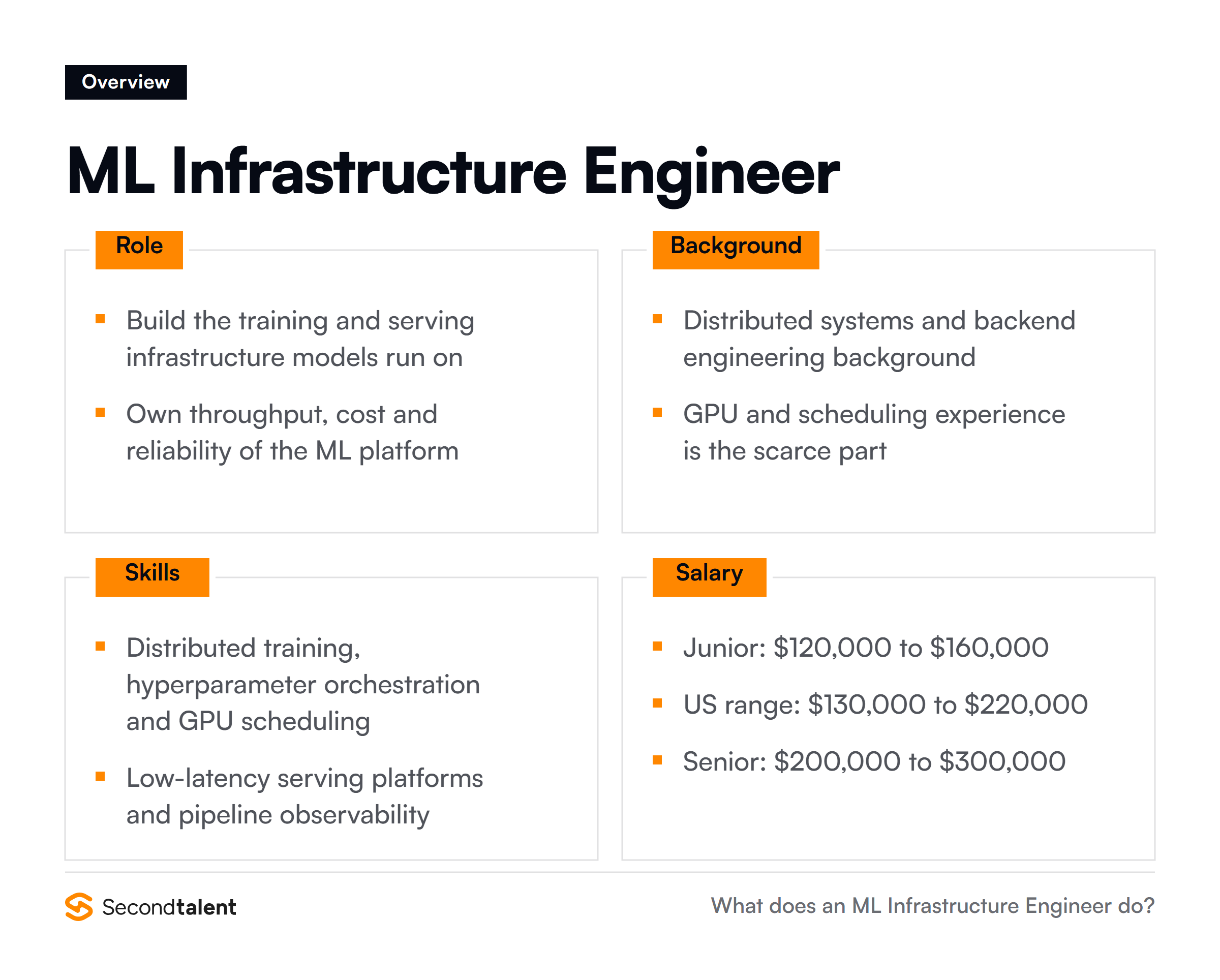
Definition of the Role
A Machine Learning Infrastructure Engineer specializes in designing, building, and maintaining the systems and platforms that support the entire machine learning lifecycle, from data ingestion and model training to deployment and monitoring. This role requires deep expertise in distributed systems, cloud computing, software engineering, and machine learning operations (MLOps) to create robust, scalable infrastructure that can handle the unique challenges of ML workloads. These professionals work across the full spectrum of ML infrastructure, including data pipelines for training and inference, distributed training systems for large models, model serving platforms that can handle high-throughput predictions, and monitoring systems that track model performance and data drift. They collaborate closely with data scientists, ML engineers, and software engineers to translate research prototypes into production-ready systems that can operate reliably at enterprise scale.Job Market and Career Opportunities
The demand for ML Infrastructure Engineers has grown exponentially as organizations recognize that successful AI deployment requires sophisticated infrastructure capabilities. The field has experienced over 400% growth in recent years, driven by the proliferation of AI applications and the increasing complexity of ML systems in production.Salary Ranges:
- Junior ML Infrastructure Engineer (0-2 years): $120,000 – $160,000 annually
- ML Infrastructure Engineer (3-6 years): $150,000 – $220,000 annually
- Senior ML Infrastructure Engineer (7-12 years): $200,000 – $300,000 annually
- Principal Infrastructure Architect (12+ years): $280,000 – $410,000+ annually
Top Employers:
- Technology giants (Google, Amazon, Microsoft, Meta, Apple)
- AI-first companies (OpenAI, Anthropic, Scale AI, Hugging Face)
- Cloud computing providers (AWS, Google Cloud, Azure, Databricks)
- Financial services (Goldman Sachs, JPMorgan Chase, Two Sigma, Citadel)
- Ride-sharing and delivery platforms (Uber, Lyft, DoorDash, Instacart)
- E-commerce companies (Amazon, Shopify, eBay, Etsy)
Essential Skills and Qualifications
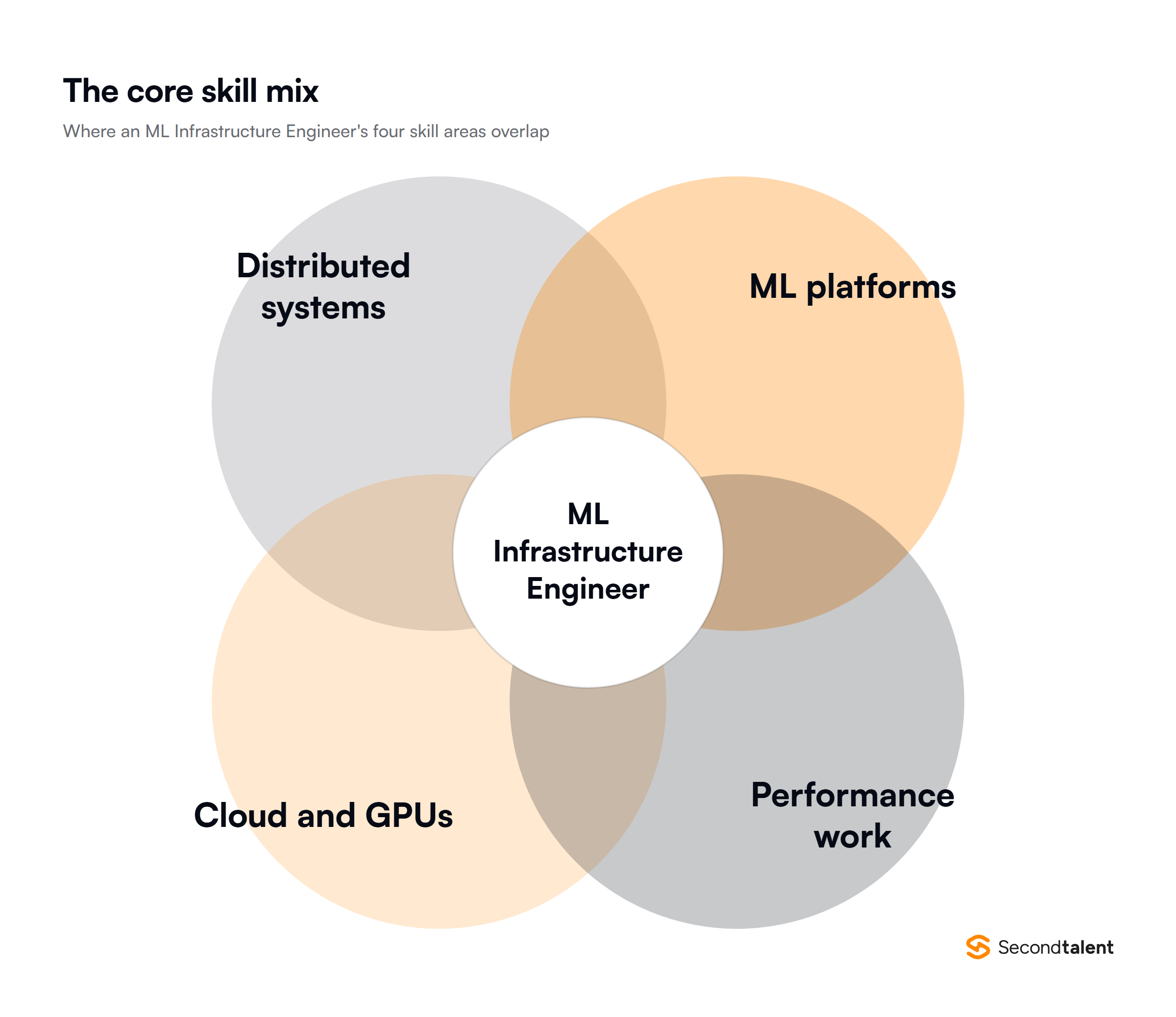
Distributed Systems Expertise:- Deep understanding of distributed computing principles and fault-tolerant system design
- Experience with container orchestration platforms (Kubernetes, Docker Swarm)
- Knowledge of distributed training frameworks (Horovod, DeepSpeed, FairScale)
- Understanding of consensus algorithms, load balancing, and service mesh architectures
- Experience with microservices architecture and API design patterns
- Expertise in major cloud platforms (AWS, Google Cloud, Azure) and their ML services
- Infrastructure as Code tools (Terraform, CloudFormation, Pulumi)
- CI/CD pipeline design and implementation for ML workflows
- Monitoring and observability tools (Prometheus, Grafana, ELK stack)
- Configuration management and secrets management systems
- ML pipeline orchestration tools (Airflow, Kubeflow, MLflow, Prefect)
- Model versioning and experiment tracking systems
- Feature store design and implementation
- A/B testing frameworks for ML model evaluation
- Data versioning and lineage tracking systems
- Expert-level programming in Python, with experience in Go, Java, or Scala
- Understanding of software engineering best practices and design patterns
- Database design and optimization (SQL and NoSQL systems)
- Stream processing frameworks (Apache Kafka, Apache Pulsar, Apache Storm)
- Performance optimization and system tuning
- Bachelor’s degree in Computer Science, Software Engineering, or related technical field
- Master’s degree preferred, particularly in distributed systems or machine learning
- Strong foundation in computer science fundamentals (algorithms, data structures, systems)
- Continuous learning in cloud technologies and ML operations practices
Career Paths and Specializations
Career Progression:- Software Engineer → ML Infrastructure Engineer → Senior ML Infrastructure Engineer → Staff Engineer → Principal Engineer
- Technical leadership: Senior Engineer → Tech Lead → Engineering Manager → Director of ML Infrastructure
- Platform specialization: Infrastructure Engineer → Platform Engineer → Principal Platform Architect
- Consulting path: Infrastructure Engineer → Solutions Architect → Principal Consultant
- Training Infrastructure: Building systems for distributed model training and hyperparameter optimization
- Serving Infrastructure: Creating high-performance, low-latency model serving platforms
- Data Infrastructure: Designing pipelines for data ingestion, processing, and feature engineering
- MLOps Platforms: Building end-to-end platforms for ML model lifecycle management
- Edge AI Infrastructure: Developing systems for deploying ML models on edge devices and IoT platforms
- Multi-Cloud Architecture: Creating infrastructure that spans multiple cloud providers and on-premises systems
Tools and Technologies
Container and Orchestration Platforms:- Kubernetes for container orchestration and resource management
- Docker for containerization and application packaging
- Helm for Kubernetes package management and deployment automation
- Istio or Linkerd for service mesh and traffic management
- Kubeflow for ML workflow orchestration on Kubernetes
- MLflow for experiment tracking and model management
- Apache Airflow for complex workflow scheduling and monitoring
- Ray for distributed computing and hyperparameter tuning
- Terraform and Pulumi for infrastructure provisioning and management
- Ansible for configuration management and automation
- Jenkins, GitLab CI, or GitHub Actions for CI/CD pipeline implementation
- Prometheus and Grafana for monitoring and alerting
- Apache Kafka for real-time data streaming and event processing
- Apache Spark for large-scale data processing and ETL workflows
- Elasticsearch for search and analytics on large datasets
- Redis for caching and session management
Portfolio Building Guidance
Building a strong portfolio as an ML Infrastructure Engineer requires demonstrating both technical depth and practical impact: Infrastructure Projects:- Design and implement end-to-end ML pipelines that handle realistic data volumes
- Build distributed training systems that can scale across multiple machines
- Create model serving platforms with proper load balancing and fault tolerance
- Implement monitoring and alerting systems for ML models in production
- Contribute to popular ML infrastructure projects (Kubeflow, MLflow, Ray)
- Create and maintain tools that solve common ML infrastructure challenges
- Write comprehensive documentation and tutorials for complex infrastructure topics
- Participate in ML infrastructure communities and conferences
- Show measurable improvements in training speed, inference latency, or resource utilization
- Document cost optimizations achieved through infrastructure improvements
- Demonstrate successful scaling of ML systems to handle production workloads
- Create case studies showing how infrastructure improvements enabled new ML capabilities
Methodology and Best Practices
Infrastructure Design Principles:- Design for scalability, reliability, and maintainability from the beginning
- Implement comprehensive monitoring and observability throughout the ML pipeline
- Use infrastructure as code to ensure reproducible and version-controlled deployments
- Build fault-tolerant systems that can handle hardware failures and network partitions
- Implement proper access controls and authentication for ML systems
- Ensure data privacy and compliance with regulations like GDPR and HIPAA
- Use encryption for data at rest and in transit
- Implement audit logging and security monitoring for ML infrastructure
- Profile and optimize ML workloads for different hardware configurations
- Implement efficient resource allocation and auto-scaling policies
- Use appropriate storage solutions for different types of ML data
- Optimize network communication for distributed training and inference
Future of ML Infrastructure Engineering
Emerging Technologies:
- Serverless ML Infrastructure: Building event-driven, auto-scaling ML systems using serverless computing
- Edge-Cloud Hybrid Systems: Creating infrastructure that seamlessly spans cloud and edge environments
- AI-Optimized Hardware Integration: Working with specialized AI chips and quantum computing resources
- Federated Learning Infrastructure: Building systems for training models across distributed data sources
- Self-healing infrastructure systems that automatically detect and resolve issues
- Intelligent resource allocation that adapts to changing ML workload patterns
- Automated model deployment and rollback systems
- AI-powered infrastructure optimization and capacity planning
- Green AI infrastructure focused on reducing energy consumption and carbon footprint
- Cost optimization through intelligent resource scheduling and spot instance usage
- Efficient model compression and quantization techniques integrated into infrastructure
- Sustainable computing practices for large-scale ML operations
Getting Started
Technical Foundation:- Master fundamental computer science concepts including algorithms and data structures
- Learn distributed systems principles and understand how they apply to ML workloads
- Gain proficiency in at least one major cloud platform and its ML services
- Understand machine learning concepts and the unique infrastructure requirements of ML systems
- Build personal projects that demonstrate end-to-end ML pipeline creation
- Experiment with different ML infrastructure tools and platforms
- Contribute to open-source ML infrastructure projects
- Practice deploying and scaling ML models in cloud environments
- Obtain relevant certifications from cloud providers (AWS, Google Cloud, Azure)
- Attend ML infrastructure conferences and workshops
- Join professional communities focused on MLOps and infrastructure engineering
- Stay current with emerging technologies and best practices in the field
- Seek internships or entry-level positions at companies with mature ML infrastructure
- Work on cross-functional projects that involve both ML researchers and infrastructure teams
- Learn from experienced engineers and understand real-world infrastructure challenges
- Build relationships with professionals working in ML infrastructure and related fields
ML Infrastructure Engineer FAQs
What is a machine learning infrastructure engineer?
A machine learning infrastructure engineer (often called an ML infrastructure engineer or ML infra engineer) builds the platforms, pipelines, and compute systems that let data science teams train and deploy models at scale.
ML infrastructure is the backbone of production machine learning.
What does an ML infrastructure engineer do? (Job description)
An ML infrastructure engineer job description includes building training and serving infrastructure, managing GPU compute, creating ML pipelines, and ensuring reliability and scalability.
The role overlaps with MLOps and AI infrastructure engineering.
What is the difference between ML infrastructure and MLOps?
ML infrastructure engineering focuses on building the underlying compute, storage, and platform systems, while MLOps focuses on the processes and automation for deploying and operating models.
Many teams combine ML infra and MLOps responsibilities.
What skills does an ML infra engineer need?
Core skills include distributed systems, Kubernetes, GPU orchestration, ML frameworks like PyTorch and TensorFlow, and pipeline tools. Strong AI infrastructure engineers also understand model serving, scaling, and cost optimization.
How much does a machine learning infrastructure engineer earn?
US ML infrastructure engineers typically earn between $130,000 and $220,000 depending on seniority. Hiring experienced ML infra engineers remotely across Asia can reduce cost while accessing strong platform talent.
Related Roles
Explore related roles you can hire on Second Talent: MLOps Engineer, AI/ML Model Deployment Engineer, Infrastructure Engineer.
Second Talent connects you with pre-vetted machine learning infrastructure engineers and ML infra specialists across Asia in as little as 24 hours, with no upfront cost.