
An E-commerce Marketing Specialist drives the demand side of online retail, owning the campaigns, channels, and customer journeys that turn traffic into revenue.
Where a general e-commerce specialist keeps the store running, the e-commerce marketing specialist focuses on acquisition, retention, and conversion across paid media, email, SEO, and social commerce.
As online retail matures, brands increasingly separate storefront operations from marketing execution.
That shift has made the e-commerce marketing specialist one of the most sought-after digital marketing roles, blending performance marketing, lifecycle automation, and analytics into a single revenue-focused function.
What is an E-commerce Marketing Specialist?
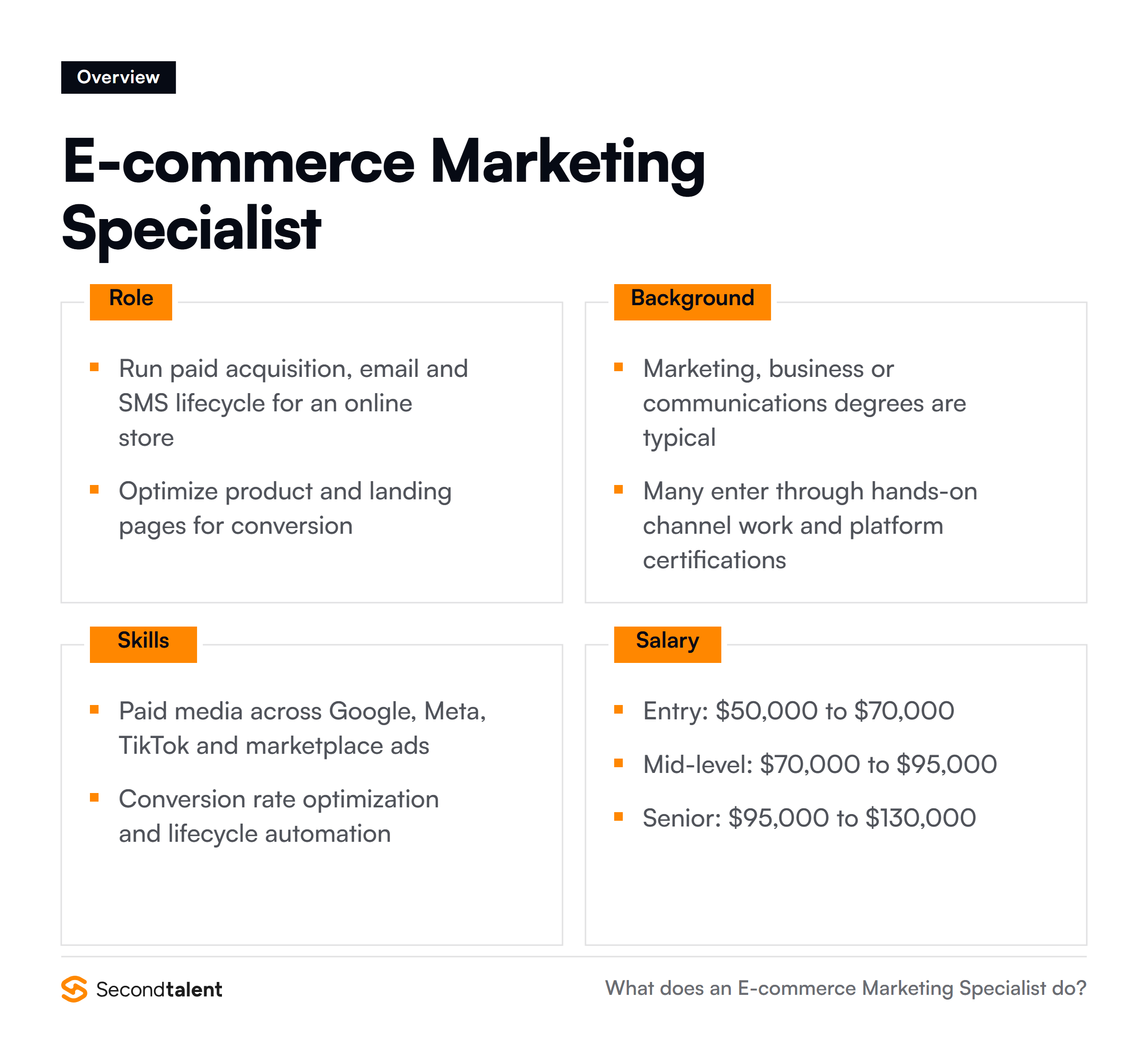
An E-commerce Marketing Specialist plans and executes the marketing strategy for an online store or marketplace.
They run paid acquisition, manage email and SMS lifecycle flows, optimize product pages and landing pages for conversion, and report on the metrics that matter, from cost per acquisition to return on ad spend and customer lifetime value.
The role sits at the intersection of digital marketing and e-commerce operations.
A strong e-commerce marketing specialist understands the full funnel: how a shopper discovers a product through search or social, how creative and offers influence the click, and how on-site experience and retargeting close the sale.
They are equally comfortable in an ad manager, an email platform, and an analytics dashboard.
E-commerce Marketing Specialist Job Market and Salary
Demand for e-commerce marketing specialists continues to climb as direct-to-consumer brands, marketplaces, and retailers invest in owned and paid channels.
Global retail e-commerce sales are projected to exceed $8 trillion by 2027, and marketing talent that can profitably scale acquisition is central to that growth.
Average Salary Ranges (US market):
- Entry-level E-commerce Marketing Specialist: $50,000 – $70,000
- Mid-level E-commerce Marketing Specialist: $70,000 – $95,000
- Senior E-commerce Marketing Specialist: $95,000 – $130,000
- E-commerce Marketing Manager / Lead: $130,000 – $170,000+
Hiring remotely across Asia typically reduces these costs significantly while giving you access to specialists experienced with global platforms.
Major employers include DTC brands, online marketplaces, retail chains building digital channels, and agencies serving e-commerce clients.
Essential E-commerce Marketing Specialist Skills and Qualifications
Core Marketing Skills:
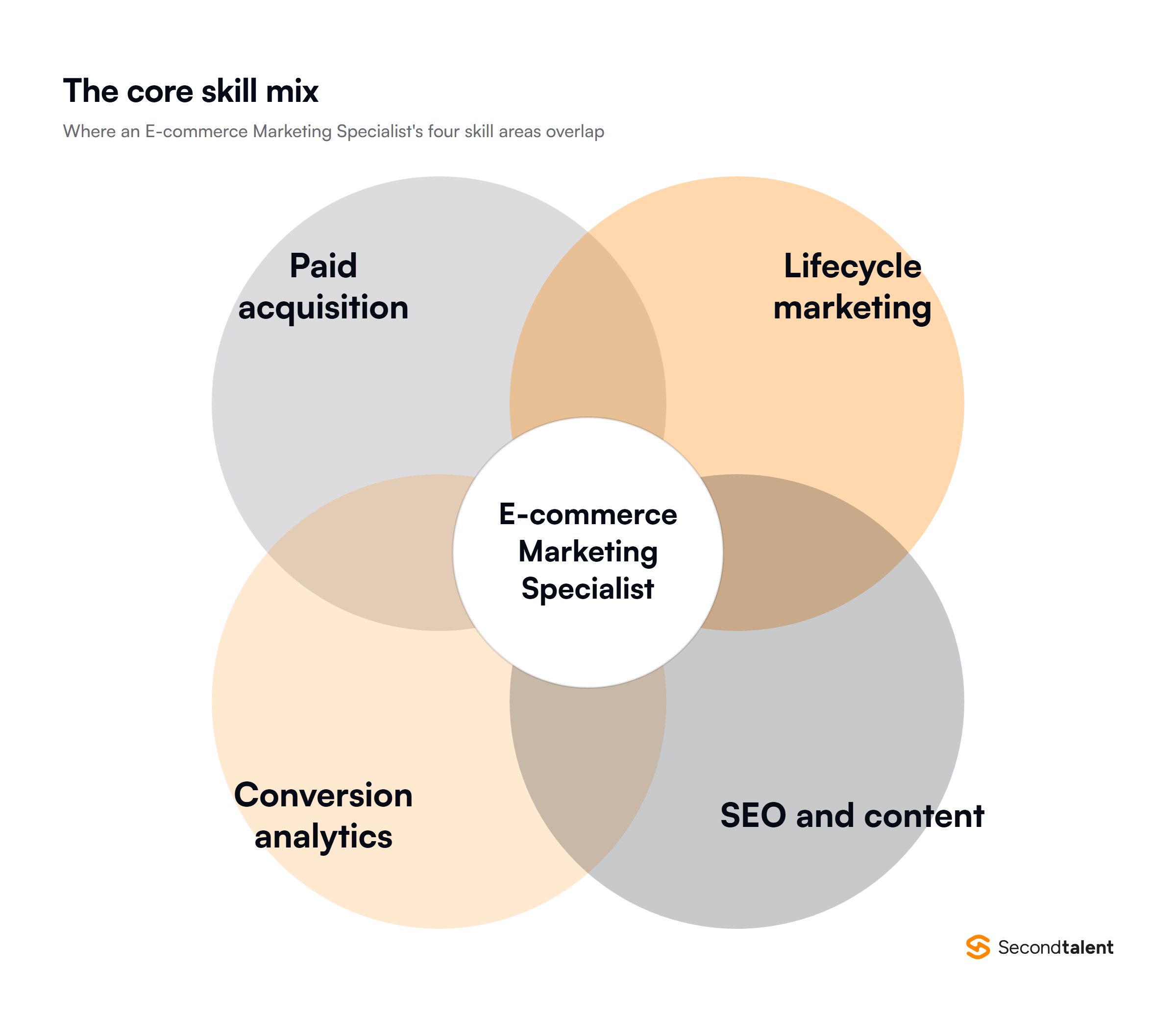
- Paid media buying across Google Ads, Meta, TikTok, and marketplace ads
- Email and SMS lifecycle marketing and automation
- Conversion rate optimization for product and landing pages
- SEO and content marketing for product discovery
- Promotion, offer, and pricing strategy for online stores
Analytics and Technical Skills:
- Google Analytics 4, attribution modeling, and marketing reporting
- A/B testing and experimentation frameworks
- Working knowledge of Shopify, WooCommerce, or similar platforms
- Customer segmentation and audience building
- Basic HTML and the ability to brief developers and designers
Educational Background: Most e-commerce marketing specialists hold degrees in marketing, business, or communications, though many enter the field through hands-on channel experience and platform certifications from Google, Meta, and Shopify.
E-commerce Marketing Career Paths and Specializations
Career Progression:
- Marketing Coordinator → E-commerce Marketing Specialist → Senior Specialist → E-commerce Marketing Manager → Head of Growth / Director of E-commerce
Specialization Areas:
- Performance Marketing: Paid acquisition and ROAS optimization
- Lifecycle and Retention: Email, SMS, and loyalty programs
- Marketplace Marketing: Amazon, eBay, and platform-native advertising
- SEO and Content Commerce: Organic discovery and content-led sales
- Conversion Optimization: On-site experimentation and funnel design
E-commerce Marketing Tools and Technologies
Advertising and Acquisition:
- Google Ads and Google Merchant Center
- Meta Ads Manager and TikTok Ads
- Amazon Advertising and marketplace ad tools
- Retargeting platforms such as Criteo and AdRoll
Lifecycle and CRM:
- Klaviyo, Mailchimp, and Omnisend for email and SMS
- Customer data platforms and segmentation tools
- Loyalty and referral platforms
Analytics and Optimization:
- Google Analytics 4 and Looker Studio
- Triple Whale, Northbeam, or similar attribution tools
- Optimizely, VWO, or Google Optimize for testing
- Hotjar and Microsoft Clarity for behavior insight
Building Your E-commerce Marketing Portfolio
Portfolio Components:
- Campaign Case Studies: Show spend, ROAS, and revenue outcomes
- Lifecycle Flows: Document email and SMS automations you built
- CRO Experiments: Present tests, hypotheses, and lift
- Channel Growth: Demonstrate scaling a channel profitably
Employers hiring e-commerce marketing specialists want to see measurable revenue impact, not just activity. Frame every project around the metric it moved.
Future of E-commerce Marketing
The e-commerce marketing specialist role is being reshaped by AI-assisted creative, privacy-driven measurement changes, and the rise of social and retail media networks.
Specialists who combine creative judgment with rigorous measurement and automation will remain in high demand.
- AI-generated ad creative and dynamic personalization
- Retail media and marketplace advertising growth
- First-party data strategy and privacy-safe measurement
- Social commerce and shoppable content
How to Hire an E-commerce Marketing Specialist
When hiring, prioritize candidates who can point to specific revenue outcomes and who are fluent in your platform and primary channels. Ask for the metrics behind their campaigns and how they diagnose an underperforming funnel.
Second Talent connects you with pre-vetted, senior e-commerce marketing specialists across Asia in as little as 24 hours, with no upfront cost. You can browse profiles, shortlist, and hire on one platform.