AI Ethics Researchers are at the critical intersection of technology and society, working to ensure that artificial intelligence systems are developed and deployed in ways that benefit humanity while minimizing potential harms. As AI becomes increasingly integrated into every aspect of human life—from healthcare and education to criminal justice and employment—these researchers serve as essential guardians of ethical AI development, addressing questions of fairness, transparency, accountability, and human rights in the age of intelligent machines.
Definition of the Role
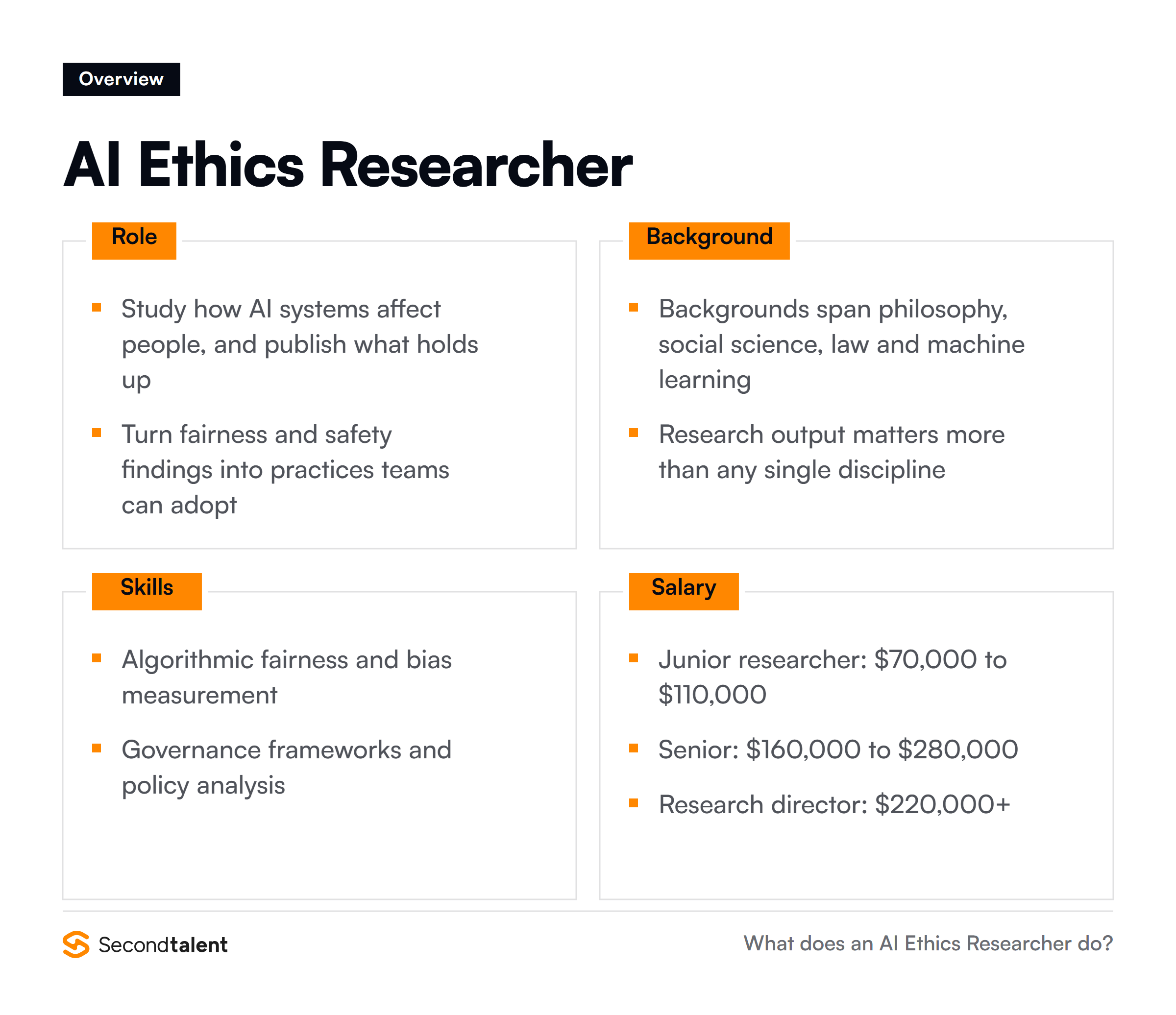
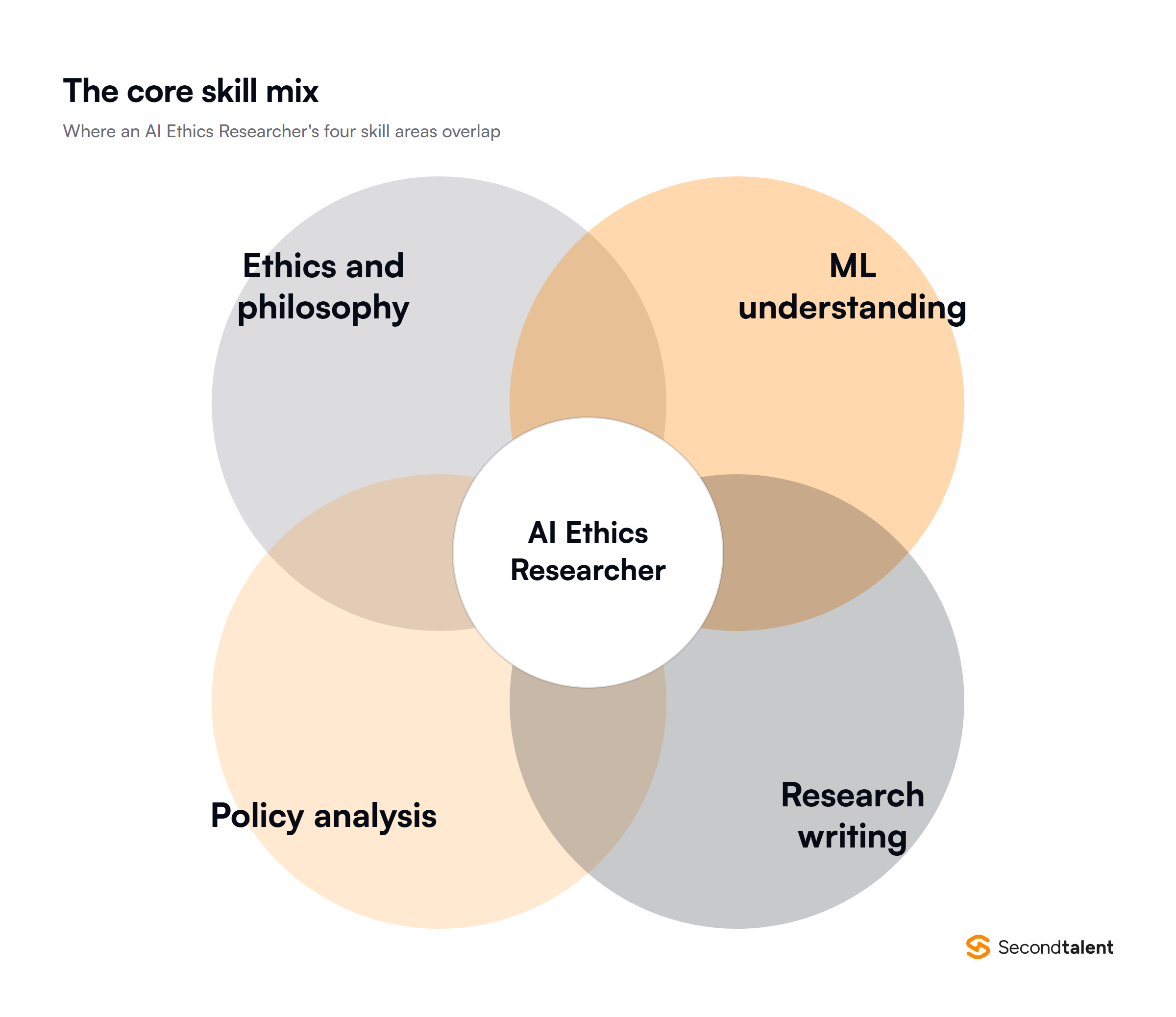
An AI Ethics Researcher conducts interdisciplinary research to identify, analyze, and address the ethical implications of artificial intelligence technologies. This role combines expertise in philosophy, computer science, law, sociology, and policy to develop frameworks, guidelines, and best practices for responsible AI development and deployment.
AI Ethics Researchers work across multiple domains to understand how AI systems impact different communities and stakeholders. They investigate issues such as algorithmic bias, privacy violations, job displacement, autonomous weapon systems, surveillance technologies, and the concentration of AI power among a few large corporations. Their work involves both theoretical research into ethical frameworks and practical research into how these frameworks can be implemented in real-world AI systems.
Job Market and Career Opportunities
The field of AI ethics has experienced remarkable growth as organizations recognize the critical importance of responsible AI development. The number of AI ethics positions has increased by over 200% in the past three years, driven by regulatory requirements, public scrutiny, and growing awareness of AI-related risks.
Salary Ranges:
Research Assistant/Junior Researcher (0-2 years): $70,000 – $110,000 annually
Research Scientist (3-6 years): $110,000 – $180,000 annually
Senior Research Scientist (7-12 years): $160,000 – $280,000 annually
Principal Researcher/Research Director (12+ years): $220,000 – $300,000+ annually
Top Employers:
Technology companies with dedicated AI ethics teams (Google, Microsoft, Meta, OpenAI, Anthropic)
Academic institutions and research centers (Stanford HAI, MIT FutureTech, NYU AI Now Institute)
Think tanks and policy organizations (Brookings Institution, Center for Strategic Studies, Future of Humanity Institute)
Government agencies and regulatory bodies (NIST, FTC, European Commission)
Non-profit organizations focused on technology and society (Electronic Frontier Foundation, AI Now Institute)
Consulting firms specializing in AI governance (McKinsey, Deloitte, PwC)
Essential Skills and Qualifications
Core Academic Skills:
Strong background in moral philosophy, applied ethics, and ethical theory
Understanding of political philosophy, particularly theories of justice and rights
Research methodology in social sciences, including qualitative and quantitative methods
Critical analysis and argumentation skills
Interdisciplinary thinking and ability to bridge different academic domains
Academic writing and publication experience
Technical Knowledge:
Understanding of machine learning algorithms and their limitations
Knowledge of data science practices and potential sources of bias
Familiarity with AI system architectures and deployment practices
Understanding of privacy-preserving technologies and security measures
Awareness of emerging AI technologies and their societal implications
Policy and Legal Understanding:
Knowledge of relevant laws and regulations (GDPR, CCPA, AI Act, etc.)
Understanding of regulatory processes and policy development
Familiarity with international AI governance initiatives
Knowledge of human rights frameworks and their application to AI
Educational Background:
Ph.D. in Philosophy, Computer Science, Law, Sociology, or related interdisciplinary field
Specialized coursework in ethics, technology studies, or AI policy
Research experience demonstrated through publications and conference presentations
Additional training in relevant areas such as statistics, economics, or psychology
Career Paths and Specializations
Career Progression:
Postdoctoral Researcher → Research Scientist → Senior Research Scientist → Principal Researcher → Research Director
Academic path: Postdoc → Assistant Professor → Associate Professor → Full Professor
Policy track: Research Analyst → Policy Researcher → Senior Policy Advisor → Director of Policy
Industry path: Ethics Researcher → Senior Ethics Researcher → Ethics Lead → Chief Ethics Officer
Specialization Areas:
Algorithmic Fairness: Researching bias in AI systems and developing methods for fair machine learning
AI Governance: Developing frameworks for AI regulation and oversight
Privacy and Surveillance: Studying the implications of AI-powered surveillance and data collection
Labor and Economics: Researching AI’s impact on employment and economic inequality
AI Safety and Alignment: Working on long-term AI safety and value alignment problems
Global AI Ethics: Studying cultural differences in AI ethics across different societies
Tools and Technologies
Research and Analysis Tools:
Statistical software (R, SPSS, Stata) for quantitative analysis
Qualitative data analysis software (NVivo, Atlas.ti) for interview and survey analysis
Survey platforms (Qualtrics, SurveyMonkey) for primary data collection
Citation management software (Zotero, Mendeley) for literature reviews
AI and Technical Tools:
Basic programming skills in Python or R for data analysis
Familiarity with machine learning libraries (scikit-learn, pandas) for algorithm auditing
Understanding of AI bias detection tools (AI Fairness 360, Fairlearn)
Knowledge of privacy-preserving techniques and tools
Communication and Collaboration Platforms:
Academic writing tools (LaTeX, Overleaf) for research publications
Collaboration platforms (Slack, Teams) for interdisciplinary team communication
Presentation software and data visualization tools for stakeholder communication
Policy drafting and comment platforms for regulatory engagement
Portfolio Building Guidance
Building a compelling portfolio in AI ethics research requires demonstrating both scholarly rigor and real-world impact:
Research Publications:
Publish in top-tier venues (Nature Machine Intelligence, Science, AI & Society, Ethics and Information Technology)
Focus on novel ethical frameworks, empirical studies of AI bias, or policy analysis
Collaborate across disciplines to demonstrate interdisciplinary expertise
Present research at major conferences (AIES, FAccT, NeurIPS Ethics Workshop)
Policy and Practice Engagement:
Contribute to policy documents and regulatory consultations
Engage with industry ethics boards and standards organizations
Participate in public debates and media discussions about AI ethics
Develop practical tools and frameworks that can be implemented by practitioners
Public Scholarship:
Write accessible articles for general audiences about AI ethics issues
Engage with media to provide expert commentary on AI-related controversies
Build a strong online presence through blogs, social media, and public speaking
Methodology and Best Practices
Research Approaches:
Combine theoretical analysis with empirical investigation of real-world AI systems
Use mixed-methods approaches incorporating both quantitative and qualitative research
Engage with affected communities to understand the lived experience of AI systems
Collaborate with computer scientists to ensure technical accuracy and feasibility
Ethical Considerations:
Practice reflexivity about your own positionality and potential biases in research
Ensure research methods respect the dignity and autonomy of research participants
Consider the potential harmful uses of your research and implement appropriate safeguards
Maintain independence and avoid conflicts of interest with funding sources
Stakeholder Engagement:
Build relationships with policymakers, industry practitioners, and civil society organizations
Translate academic research into actionable insights for different audiences
Facilitate dialogue between technical and non-technical stakeholders
Advocate for the inclusion of marginalized voices in AI development processes
Future of AI Ethics Research
Emerging Research Areas:
Generative AI Ethics: Addressing the unique challenges posed by large language models and generative systems
AI and Climate: Studying the environmental impact of AI and using AI for climate solutions
Neurotechnology Ethics: Examining the ethical implications of brain-computer interfaces and neural AI
AI in Global Development: Understanding how AI can be used responsibly in developing countries
Regulatory and Policy Developments:
Implementation and enforcement of new AI regulations like the EU AI Act
Development of international AI governance frameworks and standards
Creation of AI audit and certification processes
Establishment of AI ethics oversight bodies and accountability mechanisms
Technical Integration:
Development of technical tools for implementing ethical principles in AI systems
Integration of ethics considerations into AI development pipelines
Creation of automated bias detection and mitigation systems
Design of AI systems that can explain their ethical reasoning
Getting Started
Academic Foundation:
Pursue interdisciplinary coursework combining philosophy, computer science, and social sciences
Engage in research projects that examine the social implications of technology
Attend workshops and conferences focused on AI ethics and technology policy
Seek mentorship from established researchers in the field
Practical Experience:
Participate in AI ethics competitions and case study analyses
Volunteer with organizations working on technology policy and digital rights
Contribute to open-source projects focused on AI fairness and transparency
Engage in public policy processes through comments, testimony, or advocacy
Building Networks:
Join professional organizations (ACM, IEEE, Philosophy of Science Association)
Participate in AI ethics working groups and committees
Engage with practitioners in industry, government, and civil society
Build relationships with journalists and policymakers interested in AI issues
Developing Expertise:
Stay current with both technical AI developments and ethical scholarship
Develop expertise in specific application domains (healthcare, criminal justice, etc.)
Learn about different cultural perspectives on technology and ethics
Practice communicating complex ideas to diverse audiences
AI Ethics Research represents one of the most important and impactful fields in contemporary academia and policy. As artificial intelligence continues to transform society, AI Ethics Researchers play a crucial role in ensuring that this transformation occurs in ways that respect human dignity, promote justice, and advance the common good. The field offers unique opportunities to shape the future of technology while addressing some of the most pressing moral questions of our time.
Hire AI Ethics Researcher talent on the platform.
Browse, shortlist, and hire pre-vetted senior talent across Asia on one platform. Free to start, $0 upfront.