
Remote hiring is now the default for a large share of new roles. A recent report from Deel found that 82% of new hires made through their platform were remote roles, proving that location is no longer a dealbreaker when building world-class tech teams.
Overseas tech talent such as software engineers, data scientists, and support engineers, now plays a major role in helping businesses grow, fast.
This shift toward borderless recruitment gives companies access to skills that are often hard to find locally, all while staying agile and competitive.
In this guide, you’ll learn five proven strategies to hire and manage overseas tech talent effectively.
A glance on how to recruit, pay, and support tech talent abroad:
| Method | Summary Description | Key Tools/Platforms | Legal/Compliance Tips |
|---|---|---|---|
| Global Sourcing Platforms & Networks | Leverage global job boards, professional networks, and online talent platforms to discover and attract skilled tech professionals worldwide. | LinkedIn; global job boards (Indeed, WeWorkRemotely); freelance marketplaces (Upwork, Toptal); developer communities (GitHub, Stack Overflow) | Mind international recruitment laws and data privacy. Use inclusive hiring practices to comply with anti-discrimination regulations. |
| Vetting & Assessment | Screen candidates with structured processes to confirm skills and culture fit for remote work. | Coding tests (Codility, HackerRank); video interviews (Zoom, Teams); reference checks | Standardise evaluation criteria and comply with local hiring laws regarding permissible interview practices. |
| Labour Law Compliance | Adhere to local labour laws covering contracts, benefits, working hours, and termination rules. | Employer of Record services (Deel, Remote.com); local HR compliance software | Use an EOR or legal experts to ensure contracts and benefits comply with local regulations. |
| Payroll & Payment | Ensure overseas hires are paid on time with accurate tax and benefits management. | Payroll providers (Deel, Remote); payment platforms (Wise, Payoneer) | Comply with local tax reporting and currency rules. Collect required tax documents. |
| Remote Integration & Support | Support remote employees with onboarding, tools, and inclusive communication practices. | Slack, Teams; Jira, Trello; Zoom; Confluence, Notion | Provide equipment or stipends as required by local law. Maintain remote work safety and data security standards. |
What’s your hiring priority right now?
Select your situation below.
You need skilled engineers without the months-long search. Our network connects you with vetted developers in Vietnam, Philippines, and across Southeast Asia, ready to start in weeks, not months. Matched in 24 hours. Browse developer profiles →
You’re worried about labor laws, contracts, and tax obligations in foreign markets. Our EOR service handles all compliance, payroll, and benefits administration so you can hire globally without setting up local entities. Owned entities in nine APAC markets. Get EOR pricing →
You need to know what competitive rates look like before you hire. Our salary index covers 200+ tech roles across Asia with actual market rates, not estimates. Senior full-stack developers in Vietnam run $2,300 to $3,800 a month. Check Asia salary rates →
You’re growing fast and need multiple hires across different specializations. Our talent sourcing service builds dedicated teams (backend, DevOps, mobile, AI) tailored to your tech stack. We hold a 92% talent retention rate across placements. Plan your team build →
1. Tap into Global Talent Platforms and Specialist Networks
Finding top tech professionals overseas starts with knowing where to look and how to reach them. Relying on the same local job boards won’t get you far in today’s global hiring environment. Here’s where to focus your efforts.
Look Beyond Local Job Boards
Most standard job platforms are designed for domestic roles. They lack the filters, audience, and reach needed to attract international tech candidates.
Limiting your search locally can result in missed opportunities and longer hiring timelines.
Use Trusted Global Platforms
Several platforms specialise in remote and international hiring. These attract candidates who are actively seeking remote roles, often with previous experience in global teams.
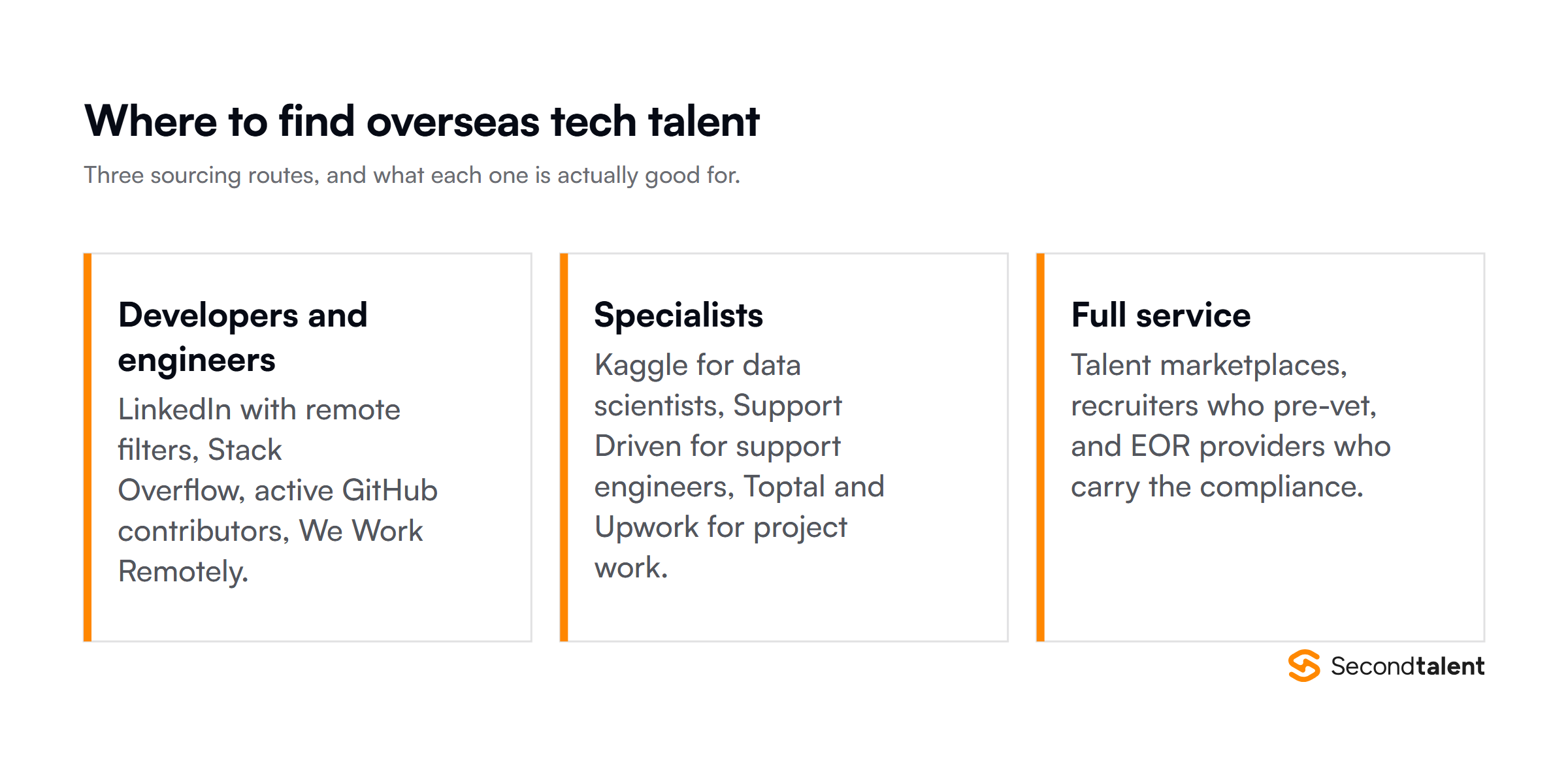
- LinkedIn with remote filters helps narrow down candidates open to international roles
- We Work Remotely offers a wide pool of tech-focused remote jobseekers
- Stack Overflow and GitHub are ideal for reaching developers and engineers
- Kaggle connects you with experienced data scientists
- Support Driven caters to skilled customer support engineers
Explore Freelance Marketplaces
If the role is project-based or short-term, freelance platforms are worth considering.
- Upwork and Toptal offer access to vetted freelancers across tech fields
- Useful for testing talent before committing to longer contracts
Consider Talent Marketplaces or Recruiters
Global recruitment agencies and remote talent marketplaces can take over sourcing and pre-vetting when internal capacity is short. These partners can fast-track the hiring process and handle early-stage screening.
Write Job Ads That Attract the Right Talent
A strong job description makes a big difference. Use inclusive language and avoid region-specific requirements. Focus on:
- Core responsibilities and expectations
- Remote perks or benefits
- Your company’s values and remote culture
- A location-flexible scope (e.g. “open to candidates in any timezone between UTC+5 and UTC+11”)
2. Run a Purpose-Built Remote Hiring Process
Hiring overseas talent takes more than reviewing resumes and jumping on a video call. A solid remote hiring process needs to be structured, deliberate, and built around how people actually work when they’re not in the office.
Since interview panels are often spread across time zones, using AI meeting notes makes it easy for anyone who couldn’t join live to review exactly what a candidate said, without relying on a colleague’s recollection.
Define the Role Clearly
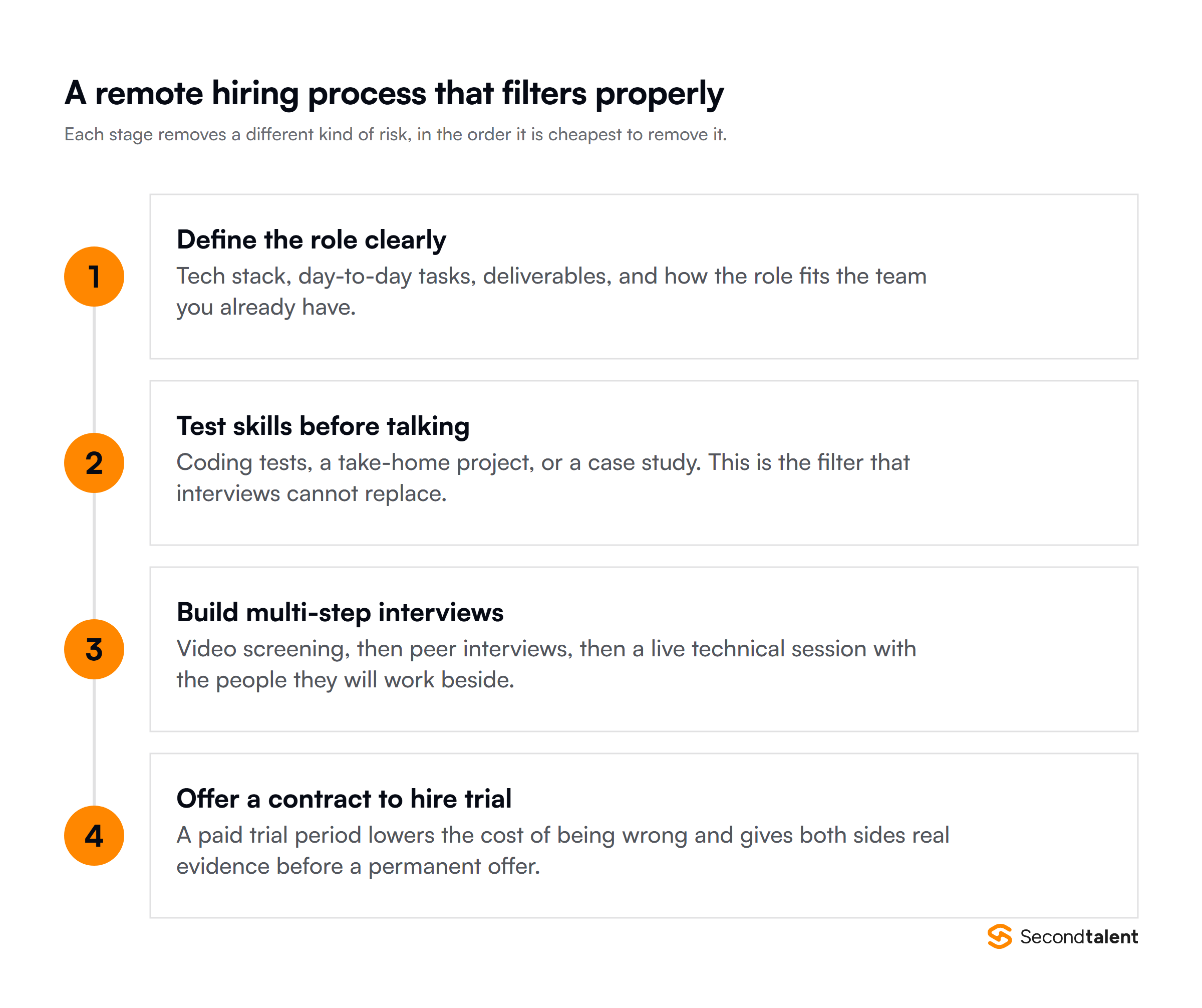
Start with outlining exactly what the role involves. Include the tech stack, day-to-day tasks, expected deliverables, and how the role fits within the team.
This keeps expectations aligned from the beginning and attracts candidates who match your needs.
Screen Resumes with a Global Lens
Applications need more than technical experience. Prioritise candidates who have worked with international teams, are comfortable across timezones, and have shown they can work independently.
Experience in remote roles is a strong indicator of future success.

Use Skills-Based Testing
Jumping straight to interviews skips a crucial filter. Platforms that offer coding tests, take-home projects, or case studies are ideal for checking real capabilities.
In TestGorilla’s 2025 State of Skills-Based Hiring report, which surveyed 1,084 hiring decision-makers across the UK and US, 85% of employers now use skills-based hiring, up from 81% the year before, and 53% have dropped degree requirements, up from 30%.
BridgeLabs has a useful companion piece on vetting remote developers if you want the practical checklist.
Build Multi-Step Interviews
A well-rounded hiring process should include a short video screening, followed by peer interviews or live technical sessions. Trial projects or contract-based assignments let candidates demonstrate their skills in your actual workflow.
Simulate On-the-Job Scenarios
For roles like technical support, give candidates realistic tasks such as resolving mock customer queries, to test problem-solving, communication and empathy together.
Consider Contract-to-Hire
Paid trial periods allow both sides to assess fit. They reduce risk and often lead to more confident, long-term hires.
3. Stay Ahead of Global Hiring Compliance
Hiring overseas comes with serious legal responsibilities, and skipping over the details can quickly land a business in hot water. Employment rules aren’t one-size-fits-all, and each country brings its own set of laws that must be followed.
Understand Local Employment Rules
Every country has different requirements around:
- Contracts and probation periods
- Tax obligations and social contributions
- Statutory benefits like leave, insurance, and pensions
- Public holidays and working hours
- Termination processes and notice periods
It’s important to follow these to the letter, or you risk damaging your reputation and facing legal or financial penalties.
Avoid Misclassifying Workers
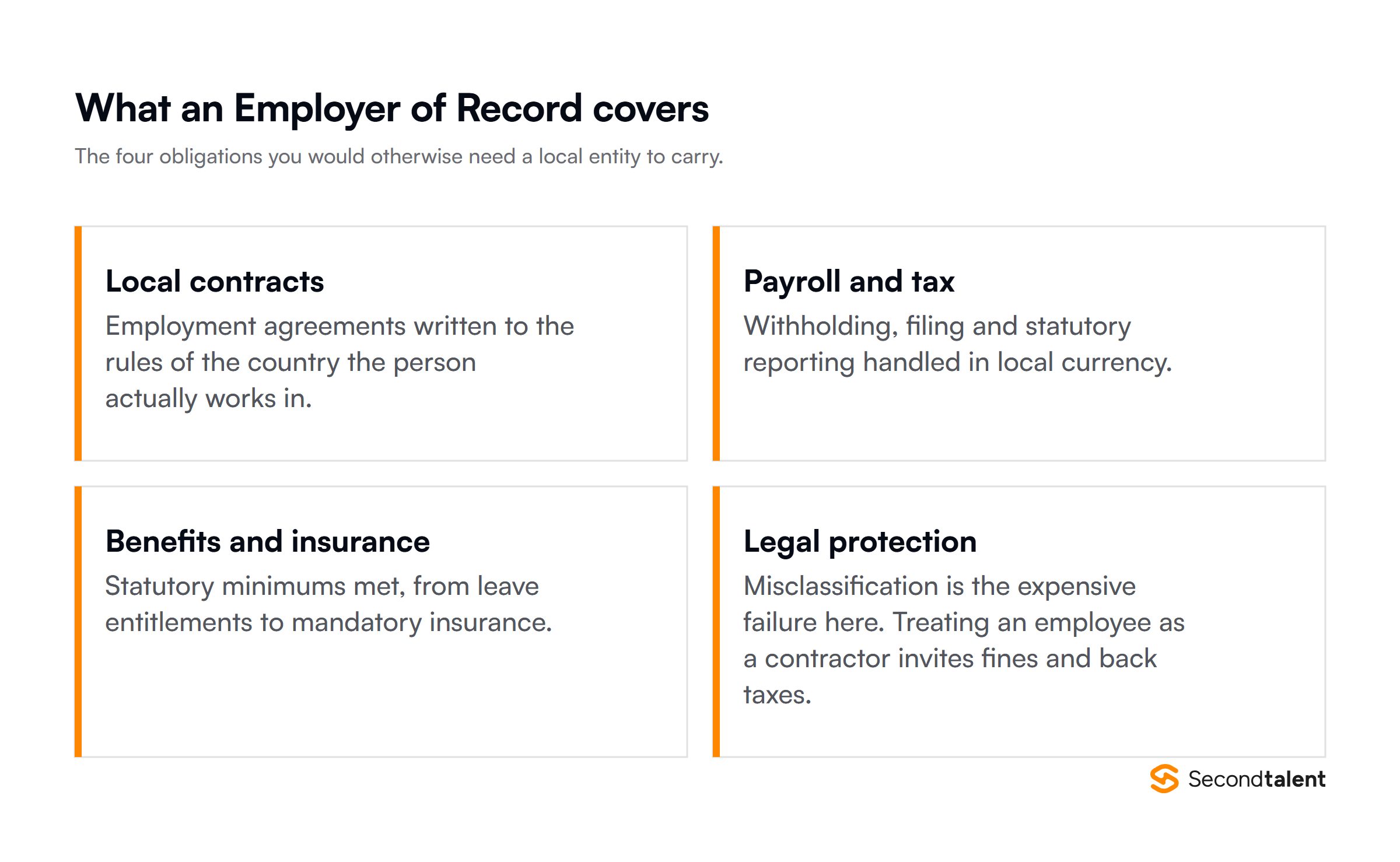
One common mistake is treating a full-time overseas employee as a contractor. This can trigger investigations and fines, especially if the worker’s country considers them an employee based on how they work, not what their contract says.
The IRS tests behavioural control, financial control and the type of relationship rather than the label on the paperwork, and most jurisdictions apply a similar substance-over-form check.
Use an Employer of Record (EOR)
An EOR acts as the legal employer in the worker’s country, so you don’t have to set up an entity. It takes care of:
- Local contracts
- Payroll and tax withholdings
- Superannuation or local equivalents
- Employment compliance and record-keeping
Explore Other Options for Expansion
Larger businesses planning long-term regional growth may set up a subsidiary or use a Professional Employer Organisation (PEO). These options require more time, money, and legal input but offer more control.
Contractor Agreements Need Legal Cover
Startups may choose to work with independent contractors for flexibility, but that still requires:
- A written agreement aligned with local definitions
- Terms around scope, pay, IP, and termination
Don’t example: Overlooking public holiday entitlements or ending a contract without proper notice can break local laws, even if it’s standard practice in your country.
4. Set Up Hassle-Free Global Payroll and Payments
Paying international team members is more than hitting “send” once a month. It’s a process that involves currency conversions, tax forms, and legal obligations and getting it wrong can damage trust quickly.
Timely Pay Builds Trust
Remote workers rely on prompt, accurate payments. Delays or confusion around pay can lead to frustration, poor morale, and even turnover. Clear, consistent processes show that your business is serious about supporting its global team.
Understand the Payment Complexities
Managing payroll across borders means dealing with:
- Multiple currencies and exchange rates
- Tax documents like the W-8 BEN for non-residents
- Different pay cycles depending on local standards
- Cross-border transfer fees and local banking systems
Without a proper system, it’s easy to make costly mistakes.

Use Global Payroll Platforms for Employees
If you’ve engaged an overseas worker through an Employer of Record (EOR), platforms like:
- Deel
- Remote
- Papaya Global
handle everything from payslips to statutory deductions and tax compliance.
These services ensure employees are paid in their local currency and meet all legal requirements.
Choose the Right Contractor Payment Method
For freelancers or independent contractors, platforms such as:
- Wise
- Payoneer
- Deel’s contractor hub
allow fast, transparent payments with low fees and currency flexibility.
Set Clear Payment Policies
Avoid confusion by outlining:
- Payment frequency (weekly, monthly)
- Invoicing expectations
- Currency arrangements
Tip: Base the pay structure on the contractor’s home currency or USD, depending on what’s most stable and fair. This keeps earnings consistent and avoids unnecessary friction.
5. Onboard, Support, and Integrate Remote Hires Properly
Bringing remote team members into the fold takes more than sending them a login and hoping for the best. A thoughtful onboarding process and the right setup can make all the difference in how engaged and productive they become.
Set Up the Right Communication Tools
Keep your team connected using:
- Slack or Microsoft Teams for day-to-day messages
- Zoom or Google Meet for team check-ins and video calls
These tools help reduce delays, miscommunication, and silos.
Use Project and Workflow Platforms
For async collaboration, tools like:
- Asana, Trello, or Jira keep projects on track
- GitHub, GitLab, and cloud-based drives enable real-time code and data sharing
This structure keeps the team aligned, wherever they sit.
Create Timezone Fairness
Set overlap hours for live meetings or rotate them across time zones. This stops the same team members drawing the short straw every time.
Build a Culture That Includes Everyone
Remote hires should feel part of the team from day one.
- Schedule virtual coffee chats or buddy sessions
- Use team-wide shoutouts or newsletters to celebrate wins
- Encourage informal conversations
Make Onboarding Count
Don’t expect remote hires to figure it out themselves. Share:
- Step-by-step onboarding guides
- Access to knowledge bases
- A mentor or go-to contact
This support helps them hit the ground running and feel included.
Make Global Hiring Work Without the Guesswork
Hiring overseas isn’t just a backup plan, it’s a smart move when done right.
With a clear process, the right tools, and local compliance covered, businesses can tap into world-class talent, speed up hiring, and build strong, distributed teams.
Look past borders, embrace global workflows, and create a team culture that works across time zones.
To scale your remote team without the friction, connect with Second Talent, experts in sourcing top global tech professionals ready to hit the ground running.
Frequently Asked Questions
1. What is the best platform to hire overseas developers?
LinkedIn with remote filters, Stack Overflow, and Second Talent are excellent for sourcing international developers based on skills and experience.
2. Is it legal to hire someone in another country?
Yes, but you must follow local employment laws. Use an Employer of Record or consult legal professionals to ensure full compliance.
3. How do I pay overseas contractors securely?
Platforms like Wise, Payoneer, or Deel offer secure, transparent payment services with currency conversion and tax compliance support.
4. How can I avoid miscommunication with remote hires?
Set clear expectations, use reliable communication tools, document everything, and ensure regular check-ins with structured agendas.