
Malaysia has turned into one of Asia’s most active AI markets. The country drew RM144.4 billion in approved data center investment between 2021 and June 2025, and MDEC recorded RM87.4 billion in digital investments in 2025 alone, much of it tied to AI, cloud, and data centers.
The global cloud giants have all committed capital here. Microsoft pledged US$2.2 billion and opened its “Malaysia West” cloud region in May 2025. Google is building a US$2 billion data center and cloud region in Selangor. AWS committed US$6.2 billion and Oracle US$6.5 billion. NVIDIA and YTL Power are spending US$2.36 billion on AI infrastructure, and their first NVIDIA GB200 “Grace Blackwell” data center in Johor went live in late October 2025.
The list below reflects this shift, with sovereign models, AI chips, and applied AI startups leading the way.
Quick Summary: Malaysia’s Top 10 AI Companies in 2026
| Company | Founded | Sector | Funding / Valuation | Key AI Technology | 2026 Highlight |
|---|---|---|---|---|---|
| YTL AI Labs (ILMU) | 2025 (ILMU) | Sovereign LLM | Part of RM10B YTL-NVIDIA program | ILMU multimodal LLM | 87.2% on Malay MMLU, ahead of GPT-4o |
| SkyeChip | 2020 | AI Processors | ~$11.6M raised | MARS1000 7nm edge AI chip | First Malaysian AI processor |
| Mesolitica (MaLLaM) | 2019 | LLM / NLP | Bootstrapped | MaLLaM Malay LLM | First Malay-from-scratch LLM |
| ADA (Axiata Digital & Analytics) | 2016 | Data & AI | ~$550M valuation | Agentic AI, AI CoPilots | 174M+ customers across Asia |
| MaiStorage Technology | 2024 | AI Storage / IC | RM100M+ (Phison-backed) | aiDAPTIV+ AI training platform | Break-even in under 1 year |
| FusionAP | 2025 | AI Semiconductor | $2M pre-seed (2026) | 2.5D/3D AI chip packaging | First Malaysian homegrown OSAT |
| Aerodyne Group | 2014 | Drone AI / Analytics | $50M+ raised | DT3 drone AI platform | Operations in 35+ countries |
| Paywatch | 2020 | Fintech AI | $50M+ total funding | AI risk and earned wage access | $20M Series A in late 2025 |
| Agmo Holdings | 2014 | Agentic AI SaaS | Bursa Malaysia listed | SMEHero.ai, MerdekaLLM | Moved to Main Market in 2026 |
| Naluri | 2017 | HealthTech AI | ~$19.9M raised | AI-augmented health coaching | Series B closed in 2025 |
1. YTL AI Labs (ILMU)
YTL AI Labs, a subsidiary of YTL Power International, builds Malaysia’s first homegrown sovereign large language model, ILMU (Intelek Luhur Malaysia Untukmu). Launched in August 2025 and developed with Universiti Malaya, ILMU is a multimodal model that understands text, voice, and images, and is trained on Malaysian languages, culture, and context.
Key Metrics:
• Product: ILMU multimodal LLM, launched August 2025
• Benchmark: 87.2% on the Malay MMLU test, ahead of GPT-4o at 84.97%
• Backing: Part of the RM10 billion YTL-NVIDIA sovereign AI and data center program
• Infrastructure: NVIDIA GB200 Grace Blackwell data center in Johor, live since October 2025
• Developer access: Roughly RM5 million in free API tokens offered to local developers
Technology Stack:
• Multimodal foundation model trained on Malaysian languages and data
• ILMU-Nemo-Nano model built together with NVIDIA
• ILMUchat public assistant for consumers and businesses
• Sovereign cloud hosting on YTL AI Cloud
• APIs for local developers and enterprise integration
Competitive Advantages:
• First true sovereign LLM built in Malaysia, for Malaysian use cases
• Strong performance on local-language benchmarks against global models
• Backed by one of the country’s largest infrastructure groups
• Direct partnership with NVIDIA and access to Grace Blackwell compute
• Early adopters including Proton, Ryt Bank, Astro, and Carsome
Market Impact: ILMU gives Malaysian businesses and government agencies a locally hosted AI model that handles Malay and other local languages better than foreign alternatives. A newer release, ILMU Claw, arrived in May 2026, signaling that the lab intends to keep iterating quickly and reduce the country’s reliance on overseas foundation models.
2. SkyeChip
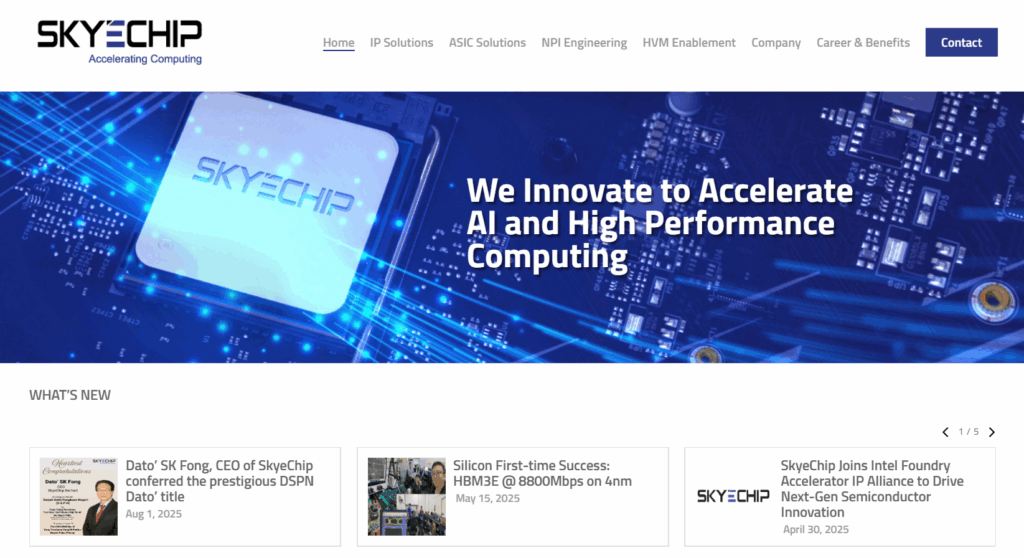
SkyeChip is Malaysia’s first homegrown AI processor designer. In August 2025 the fabless company unveiled the MARS1000, billed as the country’s first 7nm edge AI chip, built for robotics, smart cities, video analytics, and IoT. The team includes former Intel, Altera, Broadcom, and Motorola engineers.
Key Metrics:
• Product: MARS1000 7nm edge AI processor, unveiled August 2025
• Funding: About US$11.6 million raised across two rounds in 2025
• Investors: Intel Foundry Accelerator and Gobi Partners, among others
• Team: Veteran chip engineers from Intel, Altera, Broadcom, and Motorola
• Position: First Malaysian-designed AI chip
Technology Stack:
• MARS1000 7nm process edge AI processor
• Neural processing units tuned for on-device AI inference
• Low-power design for edge computing and robotics
• Integration support for smart city and industrial systems
• Advanced packaging and thermal management
Competitive Advantages:
• Pioneer status as Malaysia’s first AI chip company
• Focus on the fast-growing edge AI segment
• 7nm process competitive with global edge chips
• Backing from Intel’s foundry program and regional venture investors
• Strong alignment with national semiconductor and smart city goals
Market Impact: The MARS1000 lets Malaysian companies build AI products without depending entirely on foreign processors. The chip is at the unveiling and sampling stage rather than confirmed mass production, but it marks a real step toward technological self-reliance and a domestic semiconductor base for AI.
3. Mesolitica (MaLLaM)
Founded in 2019, Mesolitica built MaLLaM, the first large language model trained on Malay from scratch rather than fine-tuned from an English base. The startup, led by CEO Khalil Nooh and CTO Husein Zolkepli, open-sources many of its models on Hugging Face and focuses on local-language generative AI.
Key Metrics:
• Founded: 2019
• Product: MaLLaM Malay LLM in 1.1B, 3B, and 5B parameter sizes
• Training data: Around 200 billion Malay tokens across 197 datasets
• Recognition: Featured in the AWS Asia Pacific GenAI Spotlight
• Funding: Bootstrapped, with revenue from consulting and deployments
Technology Stack:
• MaLLaM Malay-first large language models
• Open-source model releases on Hugging Face
• Localized generative AI assistants built on AWS
• Speech and natural language processing for Malay
• Custom fine-tuning for enterprise use cases
Competitive Advantages:
• First Malay-from-scratch LLM, not a translated adaptation
• Open-source approach that builds a local developer community
• Deep natural language expertise in Malay and regional languages
• Cloud-native deployments through AWS partnership
• Lean, profitable operating model
Market Impact: Mesolitica proved that a small Malaysian team could build a credible local-language model without massive outside funding. Its open models give researchers, startups, and agencies a free starting point for Malay-language AI, complementing larger sovereign efforts like ILMU.
4. ADA (Axiata Digital & Analytics)
ADA, the data and AI company within the Axiata Group ecosystem, is one of the largest independent data and AI firms across Asia. It helps enterprises use data, AI, and technology to drive growth, with reach across markets serving more than 174 million customers.

Key Metrics:
• Valuation: Around US$550 million as of its 2023 round
• Funding: Roughly US$140 million raised in total, with SoftBank holding about 23%
• Reach: 174+ million customers across Asia
• Recent deal: Acquired Customore in December 2024
• Operations: Dual headquarters in Singapore and Malaysia
Technology Stack:
• Agentic AI and AI CoPilots for marketing and commerce
• ADA and Snowflake Intelligence integration, launched December 2025
• Machine learning platforms for analytics and personalization
• Customer data platforms and predictive models
• Cloud and partner integrations including Meta
Competitive Advantages:
• One of the largest independent data and AI firms in the region
• Access to a large customer base through the Axiata ecosystem
• Mature AI product suite moving toward agentic systems
• Strategic backing from SoftBank and partnerships with major platforms
• Broad presence across multiple Asian markets
Market Impact: ADA applies AI to customer engagement and commerce for large enterprises across Asia, with growing revenue and a shift toward agentic AI products. Axiata has flagged ADA as a possible monetization target under its Axiata28 plan, so its ownership structure may change, but the business itself is genuinely AI-led and expanding.
5. MaiStorage Technology
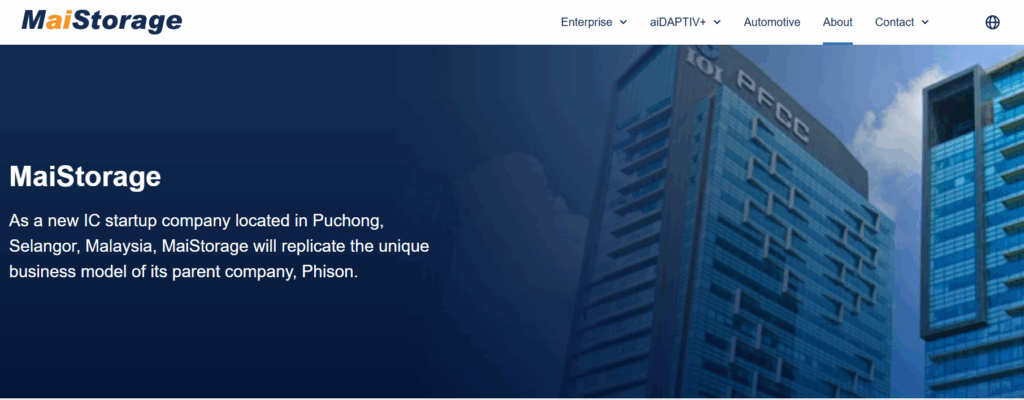
Launched in 2024 by Datuk Pua Khein Seng, the “Father of USB drives,” MaiStorage Technology is Malaysia’s entry into AI storage and IC design. Backed by Taiwan‘s Phison Electronics with an initial RM100 million investment, it focuses on data center, AI, and automotive applications.
Key Metrics:
• Initial investment: RM100 million from Phison Electronics
• Profitability: Roughly RM4 million profit, break-even in under one year
• Team: Around 60 trained IC design engineers
• Technology transfer: Over RM1 billion in transferred technology
• IPO plan: Bursa Malaysia listing targeted by 2028
Technology Stack:
• aiDAPTIV+ AI model training and fine-tuning platform
• PASCARI SSD solutions optimized for AI workloads
• NAND flash controller technology for high-performance storage
• On-premises AI training infrastructure
• Affordable AI laptops launched at the 2025 ASEAN AI Summit
Competitive Advantages:
• Leadership by a proven storage technology pioneer
• Strong backing from global storage leader Phison
• Government recognition, with a launch attended by PM Anwar Ibrahim
• Focus on AI-specific storage and on-premises training
• Clear path to a public listing by 2028
Market Impact: MaiStorage supplies the storage and training hardware that local AI projects need, with the aiDAPTIV+ platform letting organizations train and fine-tune models on their own infrastructure. Its quick path to profitability shows real demand for localized AI hardware in Malaysia.
6. FusionAP
Founded in 2025 by a team of former Intel and TSMC engineers led by Ooi Teng Chow, FusionAP is Malaysia’s first homegrown advanced semiconductor packaging startup. It builds 2.5D and 3D packaging platforms that are essential for assembling high-performance AI chips.
Key Metrics:
• Founded: 2025
• Funding: US$2 million pre-seed raised in May 2026
• Investors: Co-led by Vertex Ventures SEA and India and Southern Capital
• Support: MOSTI matching grant
• Ecosystem: Founding member of the Malaysia Advanced Packaging Consortium
Technology Stack:
• 2.5D and 3D advanced packaging for AI chips
• Outsourced semiconductor assembly and test (OSAT) services
• Heterogeneous integration for high-performance compute
• Process design from veteran Intel and TSMC engineers
• Collaboration with SkyeChip, Inari, Pentamaster, and others
Competitive Advantages:
• First Malaysian-owned advanced packaging play for AI chips
• Founding team with deep Intel and TSMC experience
• Backing from respected regional venture investors
• Position inside a national advanced packaging consortium
• Strong fit with Malaysia’s semiconductor ambitions
Market Impact: Advanced packaging is one of the highest-value steps in modern AI chip production. FusionAP aims to move Malaysia up the semiconductor value chain from assembly and test toward the advanced packaging that AI accelerators depend on, complementing chip designers like SkyeChip.
7. Aerodyne Group
Founded in 2014 by Kamarul A Muhamed, Aerodyne Group is a world-leading drone technology company that combines dronetech, data tech, and digital transformation, an approach it calls DT3. Operating in more than 35 countries, Aerodyne was ranked number one globally for drone service providers by Drone Industry Insights in both 2021 and 2022.
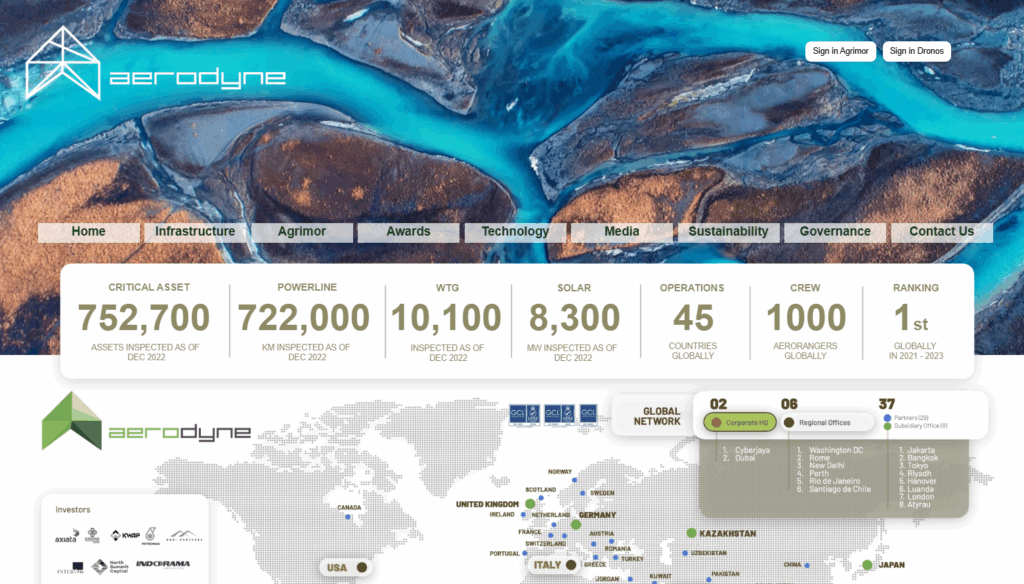
Key Metrics:
• Founded: 2014, headquartered in Cyberjaya
• Global presence: Operations in 35+ countries
• Funding: More than US$50 million raised across multiple rounds
• Recognition: Ranked number one drone services provider globally in 2021 and 2022
• Status: Reported EBITDA-positive, with an IPO still under discussion
Technology Stack:
• DT3 enterprise platform across dronetech, data tech, and digital transformation
• AI-powered analytics for industrial inspection
• Machine learning for predictive maintenance
• Computer vision for automated monitoring
• Cloud-based data processing and visualization
Competitive Advantages:
• Top global ranking in drone services
• Large international footprint with proven scale
• Deep expertise across oil and gas, utilities, and infrastructure
• Mature AI and data science capabilities
• Strategic partnerships with major corporations
Market Impact: Aerodyne processes large volumes of drone data worldwide, helping industries cut inspection costs and improve safety through AI-driven analytics. It remains one of Malaysia’s most established AI-led companies, though its long-discussed public listing has slipped several times and its last priced valuation is now several years old.
Also Read: Top Startups in Hong Kong
8. Paywatch
Founded in 2020 and headquartered in Kuala Lumpur, Paywatch is an AI-driven fintech focused on earned wage access and financial wellness. Its platform uses data-driven risk assessment to let employees draw earned wages early, and it is expanding into adjacent services like micro-insurance.
Key Metrics:
• Founded: 2020, Kuala Lumpur
• Funding: US$20 million Series A closed in November 2025
• Investors: Led by Kakao Pay and Artem Ventures
• Total raised: More than US$50 million
• Clients: Genting, Shangri-La, DFI Retail, and Lotus’s, among others
Technology Stack:
• AI-driven risk assessment and credit modeling
• Earned wage access and payments infrastructure
• Adaptive financial wellness tools
• Data analytics for employer and employee insights
• Integrations with payroll and HR systems
Competitive Advantages:
• Strong enterprise client base across hospitality and retail
• Backing from major regional investors including Kakao Pay
• Data-driven approach to responsible wage advances
• Expansion into micro-insurance and broader financial wellness
• Proven traction with large, recognizable employers
Market Impact: Paywatch uses AI to make earned wage access safer for both employers and workers, reducing reliance on high-cost lending. Its 2025 Series A and roster of blue-chip clients make it one of Malaysia’s most credible applied-AI fintech startups.
9. Agmo Holdings
Founded in 2014, Agmo Holdings is a Bursa Malaysia-listed digital and AI company that moved to the Main Market in 2026. It has shifted toward agentic AI with SMEHero.ai, described as Malaysia’s first locally hosted agentic AI platform for small and medium enterprises.
Key Metrics:
• Founded: 2014
• Listing: Bursa Malaysia, transferred to the Main Market in April 2026
• Products: SMEHero.ai, MerdekaLLM, and Dah Reply conversational AI
• Focus: Agentic AI and enterprise SaaS for SMEs
• Status: One of the few listed AI pure-plays in Malaysia
Technology Stack:
• SMEHero.ai locally hosted agentic AI platform
• MerdekaLLM, including an education-focused model
• Dah Reply conversational AI
• Custom app and platform development
• Cloud and on-premises deployment options
Competitive Advantages:
• Public-listed status gives transparency and access to capital
• Early mover in agentic AI for Malaysian SMEs
• Locally hosted platforms that address data residency concerns
• Track record of shipping multiple AI products
• Established services business funding AI expansion
Market Impact: Agmo brings agentic AI to small businesses that usually cannot afford custom AI development. By hosting its platforms locally and listing on the Main Market, it offers Malaysian SMEs an accessible, compliant route into automation and AI assistants.
10. Naluri
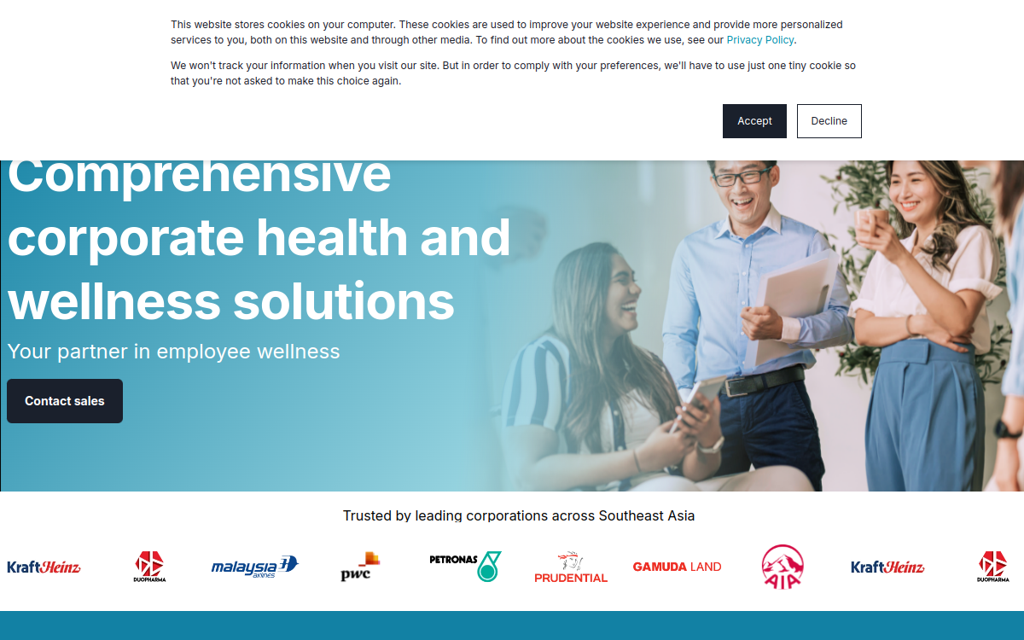
Founded in 2017, Naluri is a Malaysian health technology company that blends human coaching with AI to support mental and physical health. It describes its model as human-driven and AI-augmented, pairing psychologists and coaches with data-driven digital tools.
Key Metrics:
• Founded: 2017
• Funding: Around US$19.9 million raised across multiple rounds
• Milestone: Series B closed in 2025
• Model: Human-driven, AI-augmented digital health coaching
• Focus: Mental and physical health for employees and insurers
Technology Stack:
• AI-augmented coaching and behavioral health platform
• Data analytics for health risk and progress tracking
• Personalized intervention recommendations
• Mobile apps for users and employers
• Integrations with corporate wellness and insurance programs
Competitive Advantages:
• Blend of human expertise and AI personalization
• Strong position in corporate and insurer health programs
• Regional client base across Southeast Asia
• Evidence-based approach to digital health
• Series B funding to support expansion
Market Impact: Naluri shows how applied AI can scale healthcare support in Southeast Asia, where access to mental health and chronic-disease coaching is limited. By augmenting human coaches with AI, it reaches more employees and insured members than a purely human service could.
Malaysia’s AI Trajectory in 2026
Malaysia entered 2026 building both the supply and demand sides of its AI economy at once. Around 140 AI solution providers already generate more than RM1 billion in revenue, and the government has set a target of 900 new AI startups through the MOSTI AI Sandbox program, though that figure remains a goal rather than a confirmed result.
The biggest shift this year is the move from consuming AI to creating it. With ILMU as a sovereign large language model, MARS1000 as a homegrown AI chip, and FusionAP entering advanced packaging, Malaysia is developing its own AI stack rather than only hosting foreign data centers. A RM2 billion sovereign AI cloud and RM5.9 billion in Budget 2026 AI funding reinforce that direction.
Challenges remain. The country has roughly 3,000 AI professionals today against an estimated demand of about 30,000 by 2030, so closing the talent gap is the central task. Companies that want to scale AI in Malaysia will increasingly compete for the same specialists, which makes access to regional engineering talent a real advantage. If you are building an AI team, you can hire vetted developers in Malaysia and across Southeast Asia to move faster than local hiring alone allows.


![How to Hire Developers in Asia Remotely. How to Hire Developers in Asia Remotely from the USA [2026], by Second Talent.](https://www.secondtalent.com/wp-content/uploads/2026/09/hire-developers-in-asia-remotely-featured-v2-768x403.jpg)
![AI Outsourcing in Singapore. Top 10 AI Outsourcing Companies in Singapore [2026], by Second Talent.](https://www.secondtalent.com/wp-content/uploads/2026/09/ai-outsourcing-companies-singapore-featured-v2-768x403.jpg)
![AI Outsourcing in India. Top 10 AI Outsourcing Companies in India [2026], by Second Talent.](https://www.secondtalent.com/wp-content/uploads/2026/09/ai-outsourcing-companies-india-featured-v2-768x403.jpg)